

Reviewed · HOBART
48 Hour Hobart City Hop-On Hop-Off Tour
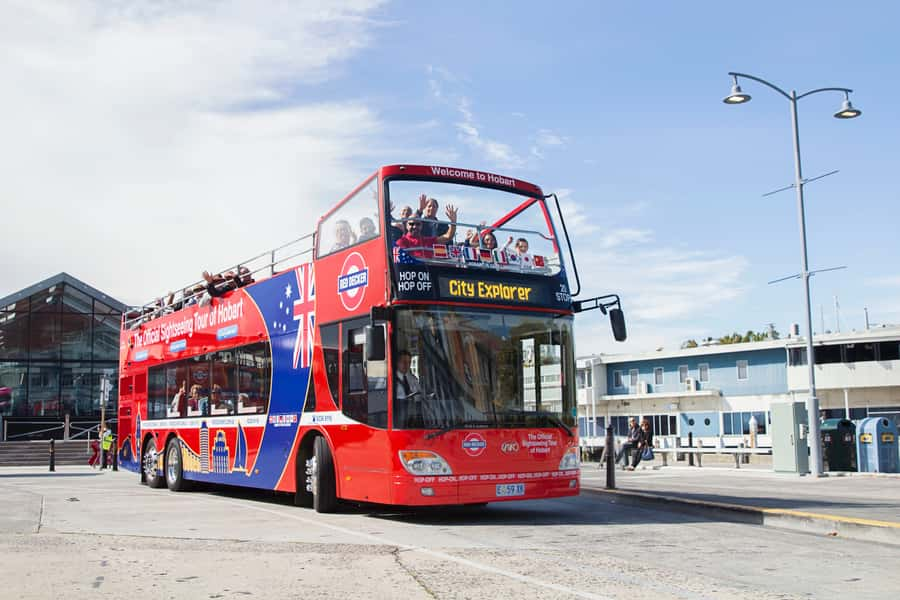
Hobart’s Red Decker bus is a practical way to get your bearings, especially from the open-top upper deck where you can see the city, harbor, and surrounding hills without wrestling with a map. The 90-minute loop passes 20 stops, and your ticket remains valid for 48 hours after you first board.
I like the freedom to hop off at places such as Salamanca Place and Cascade Brewery, then catch a later bus instead of arranging separate transport. I also like the multilingual GPS commentary, which is available in English, Spanish, Chinese, French, German, Italian, Japanese, and Korean. The main caution is timing: buses run from 9:00 to 16:30, and service gaps can make a short visit feel less flexible than expected.
Key points to know before boarding
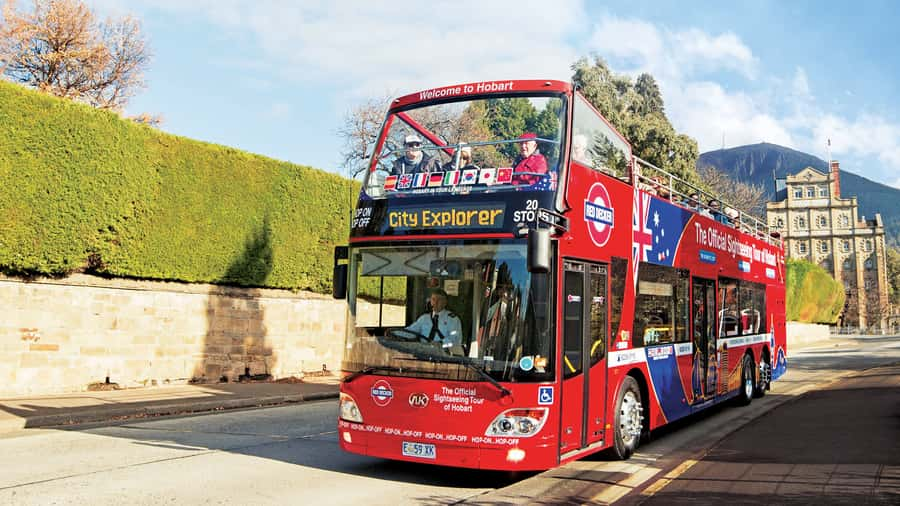
- The full loop takes 90 minutes: Stay aboard for a quick overview, or use the bus as transport between selected sights.
- Your ticket lasts 48 hours: The value is best if you board on two separate days and make several stops.
- Twenty locations are included: The route covers central Hobart, Battery Point, Sandy Bay, Cascades, the waterfront, and the botanical gardens.
- Tony adds extra personality: One guide, Tony, was singled out for funny and useful extra commentary beyond the recorded information.
- Check the exact stop for Cascades Female Factory: One passenger found the bus did not stop directly at the site, leaving a longer walk than expected.
- The upper deck gives the best views: It is the place to sit for photos, but you should be ready for Hobart’s changeable weather.
Hobart is compact enough to explore on foot, but its sights are spread across several distinct areas. Salamanca Place, Battery Point, Sandy Bay, Cascade, the waterfront, and the Royal Tasmanian Botanical Gardens do not all fit neatly into one easy stroll.
That is where the Red Decker City Loop earns its keep. You can use it as a sightseeing ride, a simple transport link, or both. I would board once without getting off, listen to the commentary, and note the places that deserve more time. Then I would use the second day for selected stops.
At $38 per person, this is not the cheapest way to move around Hobart if you only want one ride. It becomes more reasonable when you use the 48-hour validity properly. A single 90-minute loop costs the same as the two-day ticket, so the poor-value approach is to ride once and leave it at that. The good-value approach is to ride on day one, return to a few sights, and hop off several times.
Starting at the Tasmanian Travel and Information Centre

The main meeting point is the Tasmanian Travel and Information Centre at the corner of Elizabeth and Davey Streets. You can also board at any marked stop along the route, which is useful if you are already near the waterfront, Salamanca Place, or another listed location.
For a first ride, I would start near the central Hobart meeting point if practical. It gives you the cleanest introduction to the complete loop and makes it easier to hear the commentary from the beginning.
You receive a complimentary sightseeing guidebook, and Wi-Fi is available onboard. Earphones are provided by the driver for the recorded commentary. On some buses, you can select from eight languages, though the supplied details describe the additional languages as available on select vehicles, so English may be the safest choice if a particular language matters to you.
More City Tours in Hobart
- Hobart History, People & Places – 2 hour city walk
★ 5.0 · 224 reviews - Hobart: 3-Hour City Sightseeing Tour
★ 4.6 · 179 reviews - Hobart City Sightseeing Tour including MONA Ticket
★ 4.4 · 153 reviews
The 90-minute city loop from the upper deck
The complete circuit takes about 90 minutes. You can remain on board for the whole ride, which is a useful choice if you have only one spare block of time or want a broad first look at Hobart.
The upper deck is the main reason to choose this format over an ordinary city bus. You get an open view toward the harbor, central streets, Battery Point, Sandy Bay, and the hills around Hobart. The view is much better than sitting behind a standard bus window, though the open top also means sun, wind, and rain are part of the deal.
The commentary supplies facts about the city and points out places along the way. It is informative rather than a private walking tour, so do not expect long stops or a guide beside you explaining each building. The quality can also vary by bus and driver. Tony received special praise for adding useful information and humor, while the recorded commentary provides the more consistent base layer.
Salamanca Place and the waterfront stops

Salamanca Place is one of the most useful early stops for visitors. It puts you near Hobart’s waterfront setting and gives you a good place to begin walking on your own.
The nearby MONA ferry terminal at Brooke Street Pier is also part of the route. This is especially helpful if you want to combine the bus with a ferry trip to MONA, although the bus ticket itself is not presented as a MONA admission or ferry ticket.
Victoria Docks and the Maritime Museum of Tasmania add more waterfront interest. The route lets you see how close these places are to the center without spending your first hour trying to work out Hobart’s street layout.
The Tench Penitentiary Chapel is another listed stop. If you are interested in Tasmania’s convict-era sites, this gives you another option beyond the Cascades Female Factory. The stop names alone do not tell you how long to spend at each place, so I would use the guidebook and commentary to choose according to your interests.
Battery Point and Sandy Bay
Battery Point is one area where you should manage expectations. The bus passes through or near it, but one disappointed passenger found that the commentary did not cover the historical points of interest in the way they had expected.
I would not treat the bus ride as a substitute for a proper Battery Point walk. Use the bus to reach the area, then explore at your own pace if Battery Point’s streets and history are high on your list. The route is helpful for orientation, but the most rewarding details may require you to get off and walk.
The Sandy Bay Village stop and Wrest Point Casino take the loop farther from the central waterfront. This helps show how Hobart spreads beyond the core sightseeing area. If you are staying around Sandy Bay, the route may also be more convenient than returning to the city center before visiting another stop.
More Hop-On Hop-Off Tours in Hobart:
- Hobart: 24-Hour Hop-on Hop-off Sightseeing Bus Ticket
★ 4.5 · 770 reviews - Hobart Hop-on Hop-off Bus Tour
★ 4.5 · 565 reviews - Hobart: Kunanyi/Mt Wellington Hop-on Hop-off Bus Pass
★ 4.8 · 343 reviews - Sydney: Big Bus Hop-On Hop-Off Tour with Optional Cruise
★ 4.4 · 2,697 reviews
Cascade Brewery and the Cascades Female Factory
Cascade Brewery is one of the more distinctive stops on the route. Even if you do not plan to visit the brewery, its inclusion takes the bus beyond the central streets and gives you a reason to explore Hobart’s southern side.
The Cascades Female Factory is a more serious and focused visit. It is a former female convict site, and it is one of the places where getting off the bus can add real value to the ticket.
There is an important practical warning here. One passenger found that the bus did not drop visitors directly at the Female Factory and that the remaining walk was difficult for elderly relatives. The published route lists Cascades Female Factory as a stop, but the real-world experience suggests you should confirm the exact drop-off point with the driver before relying on it for someone with limited mobility.
The site itself was described as well worth visiting, so the issue is not the attraction. It is the last stretch between the bus and the entrance. If you are traveling with older family members, allow extra time and ask about the walking distance before you board.
Hobart CBD and central museums

The Hobart CBD stop is the most useful base for combining several shorter visits. The Tasmanian Museum & Art Gallery, Maritime Museum of Tasmania, and Tench Penitentiary Chapel are all included among the route’s central locations.
You can use the bus to make a quick survey, then return to the museum or waterfront stop that interests you most. This is where the 48-hour ticket can beat a fixed sightseeing itinerary. You are not forced to decide in advance how long each museum deserves.
The commentary also helps you connect the central sights into one picture. Do not expect every stop to receive equal detail. The ride gives you a framework, while the attraction itself supplies the deeper visit.
The Royal Tasmanian Botanical Gardens
The Royal Tasmanian Botanical Gardens are another reason to consider the hop-on, hop-off format rather than a single panoramic ride. Gardens need time, and a 90-minute circuit does not leave room for much exploration if you simply remain on the bus.
Get off here if the gardens are a priority, then allow enough time to walk before catching a later bus. The supplied information does not give a precise frequency, so check the next departure with the driver or at the stop. The operating window ends at 16:30, and that cutoff matters if you are making several stops.
The route also includes the Hobart Aquatic Centre. This is useful as a local reference point and another option for visitors whose plans include that area, though it may not be a major sightseeing stop for everyone.
How good is the hop-on, hop-off system?

The idea is simple: board at any stop, get off where you like, and repeat as often as you wish during the 48-hour period. In practice, the value depends on matching your plans to the operating hours.
The buses run seven days a week from 9:00 to 16:30. That is a solid daytime window, but it does not help with evening plans, late museum visits, or dinner. You should also leave a buffer before the final service, especially if you are far from the center.
A 15-minute wait was reported at the wharf, which is not disastrous but can feel long when you are standing with children or older relatives. I would not build a tightly timed day around the bus. Use it with some slack.
The bus is best for a relaxed plan with two or three main stops. It is less useful if you want to race around all 20 locations. The route covers a lot, but hopping off at every interesting place would take much longer than two days.
Commentary, drivers, and the human touch

The multilingual GPS commentary is a clear advantage for international visitors. English is included, along with Spanish, Chinese, French, German, Italian, Japanese, and Korean. Complimentary earphones make it easy to follow without trying to hear a speaker over traffic.
The live element depends on the driver. Tony was particularly good at adding humor and extra information, making the ride feel less mechanical. Another guide was described as friendly and informative, which is exactly what you want on a city orientation ride.
You should still think of this as a recorded sightseeing tour with occasional driver input, not a fully guided private experience. Some buses may offer a livelier ride than others. If the driver is engaging, stay on for the full circuit. If the commentary feels thin, use the bus mainly as transport and spend your attention at the stops.
Accessibility, weather, and family use
The tour is wheelchair accessible, which makes it a useful option for some visitors who cannot manage a full day of walking. Accessibility at the vehicle does not guarantee that every stop has a short or easy route to the attraction, however. The Cascades Female Factory warning is the clearest example.
The open top deck is excellent for photos and views, but you should dress for outdoor conditions. A lower-deck seat may be more comfortable in poor weather, while the upper deck is the obvious choice on a clear day.
Families can use the bus to reduce walking between scattered sights. Older relatives may appreciate the break, but you need to ask about stop locations and walking distances. The route is not automatically effortless simply because it is a bus tour.
Who gets the most value from $38?
I think the ticket suits first-time visitors who want a city overview before choosing where to spend their time. It also works well for people staying in Hobart for two days and planning to visit sights in different directions.
The value is strongest for:
- First-time visitors who want a quick orientation
- Families who need to limit long walks between areas
- International visitors who want multilingual audio
- Visitors planning several stops across two days
- People who enjoy open-air sightseeing and flexible plans
The value is weaker if you already know Hobart well, plan to stay around the central waterfront, or only want one 90-minute ride. One person found that 24 hours would have been enough, and that is a fair point. If your schedule is short and focused, the extra day may not change much.
Booking, cancellation, and practical details
You can reserve now and pay later, which is useful when your Hobart plans are still moving. The activity also lists free cancellation up to 24 hours in advance, but the supplied booking information includes a separate warning about cancellation fees based on how close you are to the arrival date. Read the exact terms shown at checkout before paying, particularly if your plans may change.
The ticket begins when you first board, not simply when you purchase it. That means you should avoid activating it too early if you want the full 48-hour period across two sightseeing days.
Should you book the Red Decker Hobart tour?
I would book it if this is your first time in Hobart and you want to see how the city’s main areas fit together. Start with the complete 90-minute ride, then use the second day to visit Salamanca Place, the waterfront museums, Cascade, the botanical gardens, or another stop that caught your attention.
I would not book it expecting a detailed walking tour of Battery Point or door-to-door access at every attraction. Confirm the Cascades Female Factory stop, allow for waits, and keep your schedule loose.
At $38, the tour is fair value when you use the 48-hour ticket for several rides and stops. It is poor value for a single loop. Used as a flexible city map on wheels, it can save time and walking while giving you a pleasant first look at Hobart.
FAQ
How long is the complete Hobart City Loop?
The full city loop takes 90 minutes if you stay on the bus for the entire circuit.
How long is the ticket valid?
The ticket is valid for 48 hours from the time you first board the bus.
How many stops are included?
The route includes 20 stops around Hobart and nearby areas.
What languages are available for the audio commentary?
Commentary is available in English, Spanish, Chinese, French, German, Italian, Japanese, and Korean. The additional languages are available on select buses.
Where can I board the bus?
You can board at the Tasmanian Travel and Information Centre at the corner of Elizabeth and Davey Streets, or at any stop along the route.
What are the operating hours?
Red Decker operates seven days a week, with City Loop buses running between 9:00 and 16:30.
Just added around Hobart
- Tasmania: Wilderness and Wildlife Guided 6-Day Tour★ 4.6 · 60 reviews
- Tasmania: 7-Day West to East Tour★ 4.8 · 115 reviews
- From Hobart: 5-Day Tasmania West & East Coast Tour★ 4.9 · 369 reviews
- Signature Wine Tour – Hobart & SE Tasmania★ 4.9 · 48 reviews
- Mt Wellington: Ultimate Experience from Hobart★ 4.6 · 76 reviews
- Kunanyi & Mt Wellington Explorer Bus: One-Way Bus Pass★ 4.8 · 27 reviews
- Hobart: Tahune Airwalk & Hastings Caves – Active Day Tour★ 4.8 · 56 reviews
- Hobart: Morning River Cruise★ 4.3 · 22 reviews
City Tours, compared.




Morning or Afternoon Half-Day Sydney City Sightseeing Tour
Read our review →

Hot Air Balloon Flights over Melbourne City (optional breakfast)
Read our review →
Sunset City Lights Cruise 5.30pm or 6pm *seasonal
Read our review →
Browse the lists this tour appears in