

Reviewed · HOBART
Hobart History, People & Places – 2 hour city walk
Hobart’s past comes into focus on this compact walk from the waterfront to Salamanca Place. You’ll see Georgian and Victorian buildings, hear about convict-era Hobart and Indigenous responses to British invasion, and learn the stories behind statues and parks that are easy to pass without a guide.
I like the small-group format, which gives you room to ask questions, and the leisurely pace, which leaves time for photos and a seat when needed. The walk costs $27.26 and earns a 4.9 out of 5 rating from 224 ratings, though you should remember that it is still two hours on city pavements and runs in all weather.
Key points to know before you book

- Hunter Street and the waterfront: Begin among some of Hobart’s oldest buildings and hear how the port shaped the city.
- Stories beyond the usual postcard view: The walk covers colonial settlement, convict history, Indigenous responses, local characters, and lesser-known park secrets.
- A manageable two-hour route: You get a useful introduction without giving up an entire morning or afternoon.
- Guides who make the difference: Lisa is often praised for her warmth, clear explanations, photos, and storytelling. Deb and Jan have also led highly rated walks.
- Small groups: The tour normally feels personal, with a maximum of eight advertised in the tour description and up to 10 listed in the operating details.
- A practical finish: The route ends at Salamanca Place, where your guide can point you toward a café for coffee.
Starting at the Henry Jones Art Hotel
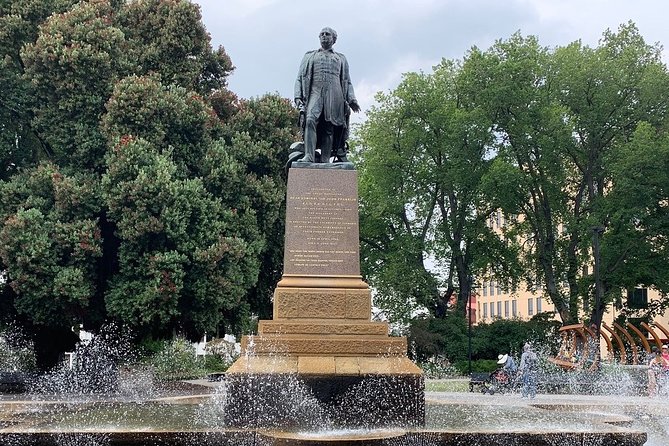
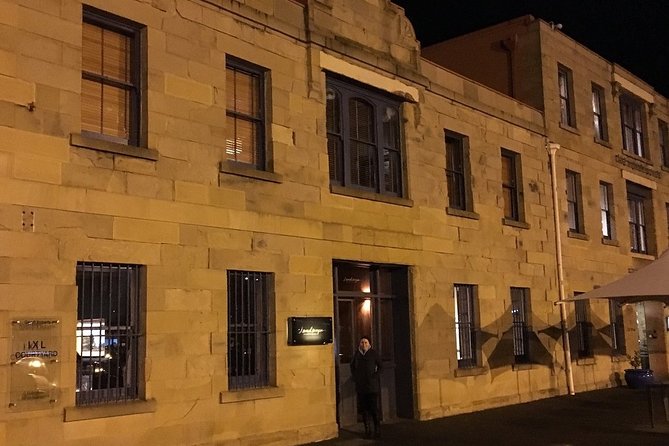
The walk begins at 25 Hunter Street, outside the Henry Jones Art Hotel. This is a useful starting point because you are already close to the waterfront and Hobart’s oldest central streets.
You meet your guide, receive a short orientation, and set off on foot. There is no hotel pickup, so you need to make your own way to Hunter Street. The end point is Salamanca Place, not the starting point, which is handy if you plan to continue sightseeing, browse the area, or find a café afterward.
The opening section establishes the tone of the walk. You are not simply being led from one attraction to another. The guide uses buildings, street layouts, old photographs, maps, and small details in the streetscape to explain how Hobart developed.
That approach suits you if you like to understand what you are looking at. A sandstone façade becomes more than a pretty backdrop when you learn who built it, what role it played, and how the city grew around it.
More City Tours in Hobart
- Hobart: 3-Hour City Sightseeing Tour
★ 4.6 · 179 reviews - Hobart City Sightseeing Tour including MONA Ticket
★ 4.4 · 153 reviews - 48 Hour Hobart City Hop-On Hop-Off Tour
★ 4.2 · 49 reviews
Hunter Street and Hobart’s waterfront
Hunter Street and the waterfront provide the first major setting. This is where Hobart’s connection to shipping, trade, settlement, and government comes together.
The route takes you past heritage-listed buildings and points out Georgian and Victorian design details. You may have walked past these buildings on your own without spotting their significance. A guide helps you slow down and look at windows, stonework, proportions, and the way older buildings sit within the modern city.
The waterfront section also gives the tour a strong sense of place. Hobart’s early growth was closely tied to its harbor, and the walk uses that setting to explain the city’s colonial beginnings. You hear about the successes and troubles faced by British settlers, rather than receiving a polished story that skips the difficult parts.
The discussion also includes the Indigenous people of the area and their responses to British invasion. That matters. It gives the walk a broader and more honest frame, placing settlement within the much longer story of the people who were already here.
If you enjoy taking pictures, this part of the route offers regular chances to stop. The pace is described as easy and unhurried, so you should not feel pushed along while trying to photograph the waterfront or older buildings.
Colonial Hobart, convict stories, and the seat of power
From the waterfront, the walk continues toward the center of town and the institutions that shaped early Hobart. The route includes a church, court, and prison, showing how religion, law, and punishment worked together in the young settlement.
This is one of the more useful parts of the tour for first-time visitors. You do not just hear dates and names. You get a sense of how authority was organized and how early Hobart functioned as a colonial town.
Convict history is an important part of the walk. The guide explains the founding and growth of Hobart through stories of the people who arrived, the difficulties they faced, and the systems that governed them. If you have come to Tasmania hoping to understand its convict past, this tour gives you a clear starting point.
The guide’s storytelling style is central here. Lisa is frequently praised for bringing Hobart’s past to life, answering questions, and using maps and historic photographs to support the stories. The visual material is especially useful if you find it hard to picture how a street or building looked in an earlier period.
You should not expect a museum lecture. The tour is conversational, and the group can stop for questions. That makes the experience work well for families and for people who want context without sitting through a long formal presentation.
City parks and the stories behind the statues
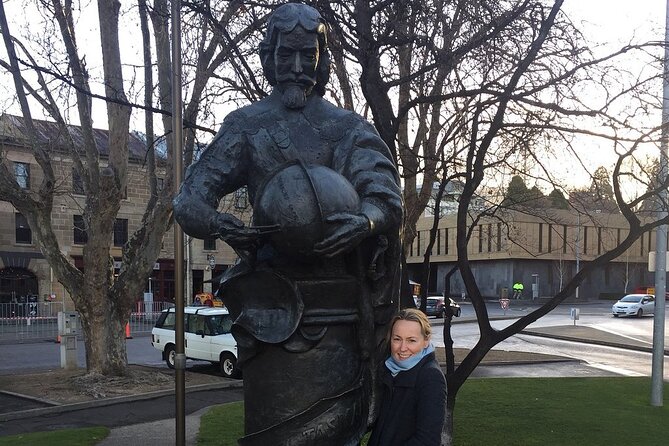
The route passes through a city-center park where statues provide another way into Hobart’s past. The guide explains who the figures represent and why they matter.
This section adds variety to the walk. After streets and buildings, a park gives you space to pause and look around. The statues also bring in the personal side of local history, moving beyond official buildings and major events.
A second park has a darker secret, one that many local people may not know. The details provided for the tour do not spell out the secret in advance, which is probably for the best. It gives the guide a chance to tell the story on location, where the setting adds something to the account.
There are places to sit or perch along the route. That does not turn the walk into a fully seated activity, but it is helpful if you need a short rest. The tour is wheelchair accessible, and most people can participate, though you should still be comfortable covering two hours on city pavements.
The relaxed pace is one of the strongest practical features. Several guide comments praise the walk for being easy and not arduous. You can listen, take photos, and ask questions without feeling that you are trying to keep up with a fast-moving group.
More History Tours in Hobart
- Derwent River Historic Harbour Cruise From Hobart
★ 4.5 · 570 reviews - Hobart: Historic Lunch Cruise
★ 4.6 · 271 reviews - Cascades Female Factory Historic Site [official]
★ 4.5 · 110 reviews
Salamanca Place and the end of the walk

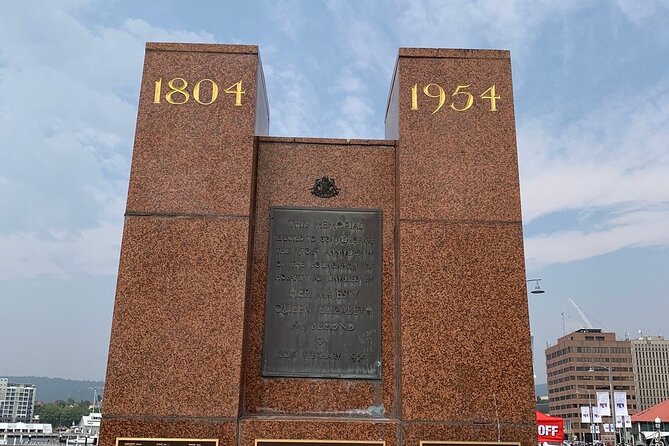
The final destination is Salamanca Place, one of Hobart’s best-known historic areas. The tour ends here after following the city’s story from the waterfront through its civic and older residential areas.
Salamanca Place is particularly lively on Saturdays, when the Salamanca Market fills the area. The market is described as the oldest in Australia, so the guide’s explanation helps you see it as more than a place to buy snacks and souvenirs.
If your walk takes place on another day, Salamanca Place still works well as an ending point. You can continue exploring on your own, look for food, or ask your guide for a recommended café. A coffee suggestion may sound minor, but it is useful after two hours outside, especially if the weather is cool.
The finish also makes planning easy. You do not need to return to Hunter Street, and you can connect the walk with more time around Salamanca, the waterfront, or nearby central Hobart.
How much value do you get for $27.26?
At $27.26 per person, this is priced as an affordable introduction rather than a full-day sightseeing commitment. You are paying for two hours with a professional local guide, not for transport, meals, or entry to a ticketed attraction.
The value comes from the interpretation. Hobart’s center is easy to walk through, but it is harder to understand without someone explaining why the buildings, streets, parks, and institutions matter. The tour helps you get that context early in your visit, which can make later independent sightseeing more rewarding.
I think the price works best if you are new to Hobart or have only a short stay. You cover several central areas in one outing and finish somewhere useful. If you already know Hobart well, the value depends on how much you enjoy local stories and lesser-known details.
The small group improves the value. A group of eight is more comfortable than a large procession, and the operating details allow up to 10 people. Either way, the format should give you a better chance to hear the guide and ask about something that catches your eye.
Food and drinks are not included, so plan to buy your own coffee or lunch afterward. Hotel pickup and drop-off are also excluded. Since the route begins and ends in central Hobart, that is unlikely to be a major issue if you are already sightseeing in town.
Which guide might lead your walk?

Guide assignments can change, but Lisa is the name most closely linked with this experience. She is described as warm, clear, funny, and especially good at using old photos and maps to explain what you are seeing.
The strongest praise focuses on her storytelling and her ability to answer questions without making the walk feel like a list of facts. That is important in a history tour. You want enough detail to understand the city, but not so much that the experience becomes a school lesson.
Deb and Jan have also led highly rated walks. Deb is noted for her informative style and sense of humor, while Jan is praised for taking time to explain Hobart’s past in detail.
No matter which guide leads your outing, you should expect the local guide to shape the experience. The route itself is worthwhile, but the stories, photographs, explanations, and responses to questions are what turn an ordinary city walk into a useful introduction.
Pace, weather, and practical comfort
This is an outdoor walking tour, so dress for Hobart’s changeable conditions. It operates in all weather conditions unless poor weather causes the experience to be canceled, and you should bring suitable clothing rather than assume the day will stay dry or warm.
The route runs along city pavements. There are places to sit or perch, but you should still expect to be on your feet for much of the two hours. Wear comfortable shoes and allow enough time to arrive at the meeting point without rushing.
The walk is wheelchair accessible, and service animals are allowed. Children must be accompanied by an adult. The tour is also near public transportation, which makes it easier to reach without arranging a private transfer.
Cruise passengers need to take timing seriously. A missed tour caused by a late or non-arriving cruise ship is not refundable, so this is not a good activity to book with an arrival schedule that leaves little room for delay.
You can cancel free of charge up to 24 hours before the start time for a full refund. Cancellations or changes made inside that window are not refunded, and poor-weather or minimum-participant cancellations offer a different date or a full refund.
Who will enjoy this Hobart walk?
I would choose this tour for a first day in Hobart. It gives you a basic map of the center, introduces the major themes of local history, and leaves you at Salamanca Place with plenty of time to continue exploring.
It also suits people who prefer stories to sightseeing checklists. The focus is on buildings, people, institutions, Indigenous history, colonial settlement, convict history, and unusual local tales.
Families can benefit from the shorter length and the mix of statues, parks, photographs, and stories. Children who like unusual historical facts may find it more engaging than a long museum visit, though adults remain responsible for accompanying them.
It is a good fit for cruise passengers only if your ship schedule gives you a safe time buffer. The tour itself is compact, but the no-refund rule for a late ship makes timing important.
You may want to skip it if you dislike walking, need a fully seated activity, or prefer to explore without a guide. You should also know that food, drinks, and transport are not included, and the walk still operates outdoors in poor conditions unless the provider cancels it.
Should you book the Hobart History, People & Places walk?
Yes, if you want a friendly, affordable introduction to central Hobart in two hours. The route covers the waterfront, Hunter Street, heritage buildings, parks, civic institutions, and Salamanca Place, while the guides add the stories that are easy to miss on your own.
The best reasons to book are the personal small-group feel, the comfortable pace, and the mix of official history with odd local details. Lisa, Deb, and Jan have each been praised for making the past clear and engaging.
Book it early in your Hobart stay if possible. You will understand the city better afterward, and you can return to the buildings, parks, and waterfront with sharper eyes. Just allow for the walking, dress for the weather, and leave a generous buffer if you are arriving by cruise ship.
FAQ
How long is the Hobart History, People & Places tour?
The walking tour lasts approximately two hours.
Where does the tour start?
The tour starts outside the Henry Jones Art Hotel at 25 Hunter Street, Hobart.
Where does the tour finish?
The walk ends at Salamanca Place on Salamanca Place.
What places does the tour visit?
The route includes Hunter Street, the Hobart waterfront, heritage-listed buildings, a city-center park, another park with a lesser-known dark story, the civic area with a church, court, and prison, and Salamanca Place.
Is the walking tour wheelchair accessible?
Yes. The tour is wheelchair accessible and follows city pavements. There are places to sit or perch along the route.
What is included in the price?
The price includes a professional local guide. Food, drinks, hotel pickup, and hotel drop-off are not included.
More Walking Tours in Hobart
- Southwest Tasmania Wilderness Experience: Fly Cruise and Walk Including Lunch
★ 5.0 · 233 reviews - Sydney Opera House Official Guided Walking Tour
★ 4.5 · 3,770 reviews - From Sydney: Blue Mountains Tour with Waterfall Walk & Lunch
★ 4.8 · 2,400 reviews - Sydney The Rocks Guided Walking Tour
★ 5.0 · 1,546 reviews
Just added around Hobart
- Tasmania: Wilderness and Wildlife Guided 6-Day Tour★ 4.6 · 60 reviews
- Tasmania: 7-Day West to East Tour★ 4.8 · 115 reviews
- From Hobart: 5-Day Tasmania West & East Coast Tour★ 4.9 · 369 reviews
- Signature Wine Tour – Hobart & SE Tasmania★ 4.9 · 48 reviews
- Mt Wellington: Ultimate Experience from Hobart★ 4.6 · 76 reviews
- Kunanyi & Mt Wellington Explorer Bus: One-Way Bus Pass★ 4.8 · 27 reviews
- Hobart: Tahune Airwalk & Hastings Caves – Active Day Tour★ 4.8 · 56 reviews
- Hobart: Morning River Cruise★ 4.3 · 22 reviews
Walking Tours, compared.
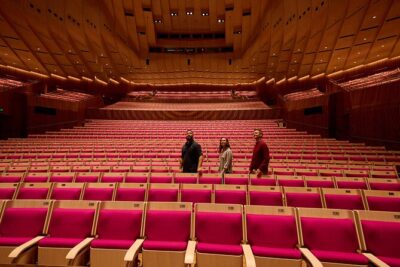
Sydney Opera House Official Guided Walking Tour
Read our review →
Blue Mountains Tour with Waterfall Walk & Lunch
Read our review →

Ultimate Melbourne Walking Tour: History, Laneways & Culture
Read our review →

Great Ocean Road Tour Plus Koalas, Forest Walk and Morning Tea
Read our review →
Blue Mountains Small Group Tour with Waterfall Walk & Fresh Lunch
Read our review →
Maria Island Cruise and Guided Walk Day Tour with Lunch and Drinks
Read our review →Browse the lists this tour appears in