
Reviewed · BLUE MOUNTAINS
Stargazing with an Astronomer in the Blue Mountains
The best part of this Blue Mountains evening is the chance to see the Southern Cross with your own eyes, then learn what else is overhead from an astrophysicist with more than ten years of experience. I like the mix of naked-eye stargazing and telescope time, and I like that the session stays small, with no more than 20 participants.
I also like the practical weather plan: you can choose a transferable credit for another date or an indoor planetarium session if conditions turn poor. The catch is that the activity is outdoors, the exact viewing spot can change in wind, and the tour is non-refundable if you simply decide not to attend.
Key points at a glance
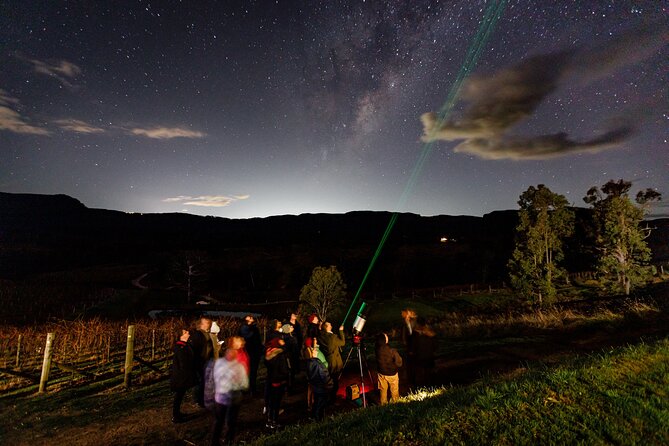
- Southern Hemisphere stars: Learn to find the Southern Cross and other constellations as the sky changes from sunset to full darkness.
- Real telescope viewing: A professional-grade telescope may reveal the Moon, planets, nebulae, star clusters, double stars, or distant galaxies.
- Astronomer-led storytelling: Guides such as Nathan, Tom, and Alka have led sessions with clear explanations and time for questions.
- Small evening group: The maximum group size is 20, which gives you a better chance to look through the telescope and ask questions.
- Weather backup: A bad-weather option may include a transferable credit or a 90-minute indoor planetarium session, subject to a minimum of eight people.
- Simple comforts: Hot chocolate, warm or cold drinks depending on conditions, and warm blankets can make a chilly night much easier.
Why the Southern Cross makes this more than a telescope tour
For many people from the Northern Hemisphere, the first clear view of the Southern Cross is the evening’s special moment. The constellation, also called Crux, is one of the key markers of the southern sky, and it does not look like the familiar star patterns of Europe or North America.
The session begins as the evening changes from sunset to twilight. That timing matters. You do not arrive under a fully black sky and immediately point at a telescope. Instead, your guide helps you notice the first bright stars, then shows how more of the sky appears as daylight fades.
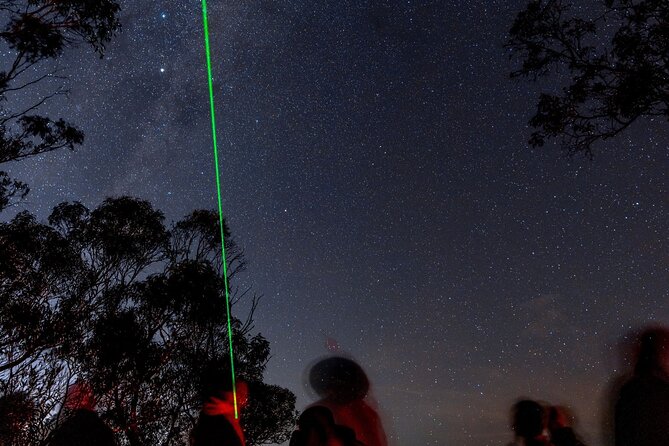
I like this gradual start because it gives you a way to read the sky without equipment. The guide uses a laser to point out constellations and explains the stories and patterns behind them. You learn where to look, rather than simply being shown a series of objects through a lens.
This is also a good fit if you know very little about astronomy. The format is interactive and includes a question-and-answer session, so you can ask about a bright object, a constellation, or something you have noticed through the telescope. The explanations are designed for a general audience, not for people who already know star charts.
More Stargazing Tours in Blue Mountains:
- Pinnacles Desert: Sunset BBQ & Stargazing Tour +Sandboarding
★ 4.8 · 1,555 reviews - Pinnacles Desert Sunset Dinner and Stargazing Tour
★ 5.0 · 1,034 reviews - From Perth: Pinnacles Sunset and Stargazing Tour with Dinner
★ 4.6 · 554 reviews
A 90-minute route from twilight to deep sky
The meeting point is on the Wentworth Falls Lookout Track in New South Wales, and the experience finishes at the same place. The location puts you in the Greater Blue Mountains World Heritage area, where the night sky is the main attraction rather than city lights or a stage show.
The exact viewing position may vary. One session had to move from the lookout to a park because strong wind made the lookout less suitable. That is worth knowing before you book. The headline location is attractive, but weather and wind can affect where the equipment is set up.
The first part focuses on orientation. Your guide identifies constellations with the naked eye and uses laser-guided storytelling to connect the stars. This gives the evening a clear shape: first learn the broad patterns, then use binoculars and the telescope to inspect individual objects.
Astronomy binoculars add a useful middle step. They show more stars than your eyes can see but remain easy to use. If you have never looked through a telescope before, this progression helps you understand the difference between simply spotting a bright point and seeing a structured object.
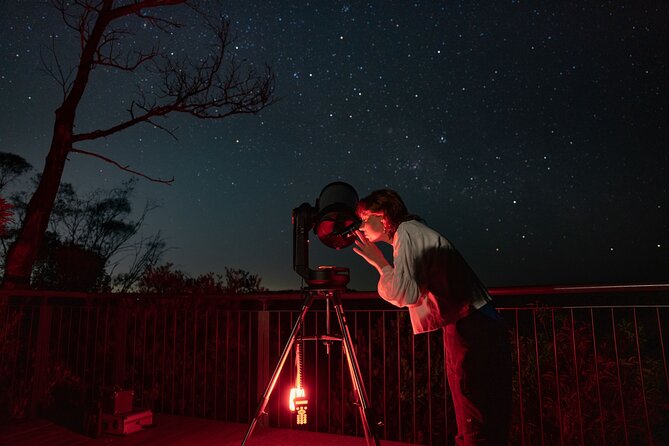
The main telescope viewing comes next. What you see depends on the date, time, and conditions. Possible targets include the Moon, Mars, Venus, Saturn and its rings, Jupiter and its moons, the Orion Nebula, star clusters, double and triple stars, galaxies, and sections of the Milky Way.
That list is a menu, not a promise. A planet may be below the horizon, too close to the Sun, or not visible at the time of your session. The Moon can also be bright enough to wash out some faint objects. Your guide will work with what the sky offers that night.
The final part is question time and continued viewing. The 90-minute length is long enough to cover the basics without turning into a late-night lecture. Still, telescope sessions move at the pace of the group, so you may need patience while each person takes a turn.
What you may see through the telescope
The Moon is often the easiest object to appreciate. Its craters have sharp shapes and strong contrast, making them rewarding even for a first-time viewer. If the Moon is visible during your session, it may be one of the clearest targets.
Planets offer a different kind of viewing. Venus can appear bright, Mars may show a small reddish disk, and Jupiter may be accompanied by several of its moons. Saturn’s rings are among the most memorable sights when the planet is in the right part of the sky.
The Orion Nebula gives you a chance to see a cloudy region where stars are forming. Star clusters can look like tight groups of points, while double and triple stars show how different objects can appear close together from Earth.
Fainter deep-space objects are more demanding. Galaxies and parts of the Milky Way can be subtle rather than dramatic, especially if the night is not perfectly dark or clear. I appreciate that the session includes these objects, but you should not expect every target to look like a colorful space photograph.
That distinction matters. A telescope reveals real structure, but your eye sees through changing conditions, not a long-exposure image from a space observatory. The guide’s explanation helps you understand what you are seeing and why some objects appear as faint patches or clusters of light.
The guides make the difference
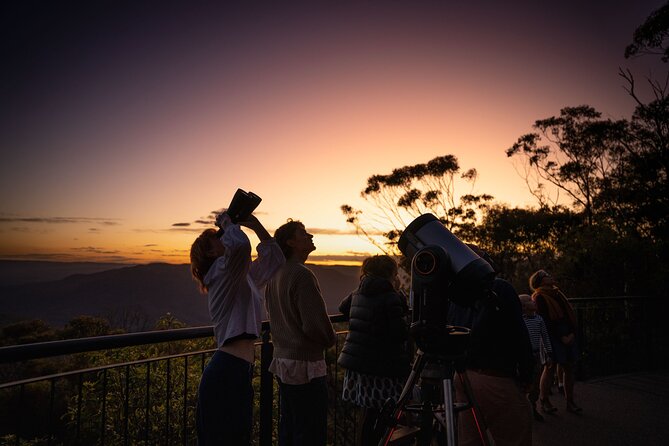
The experience is led by an astrophysicist, and that professional background gives the evening more depth than a basic star map talk. The guide is expected to explain how to identify constellations, operate the telescope, and answer questions about the objects overhead.
Nathan is named in feedback as an engaging guide who kept the astronomy clear and interesting, even when wind forced the session to move to a park. Tom and Alka are also named as friendly hosts who took time with questions and involved the group.
Because guides can vary by date, I would treat these names as examples rather than a guarantee. The consistent point is the value of a guide who can connect technical facts with simple observation. A good explanation can turn a faint smudge into a galaxy, or a set of bright stars into a useful point of reference.
The guides also bring enthusiasm to the event. That matters more than a stack of facts. Astronomy can become dry if every object is presented as a number, but storytelling and questions help keep the session accessible for families, couples, and adults who are simply curious.
English and French are available, which may help some groups follow the explanations more comfortably. The group limit of 20 is another plus. It is not a private tour, but it is small enough to keep the telescope queue manageable.
A few more Blue Mountains trips worth weighing up
- All Inclusive Blue Mountain,Scenic World,Lunch,Koalas,ferry
★ 5.0 · 7,832 reviews - From Sydney: Blue Mountains Full-Day Trip
★ 4.5 · 4,471 reviews - Blue Mountains Small-Group Tour from Sydney with Scenic World,Sydney Zoo & Ferry
★ 5.0 · 3,709 reviews - Blue Mountain: Small-Group Tour with Lunch & Scenic World
★ 4.8 · 3,009 reviews
Cold nights, hot chocolate, and practical comfort
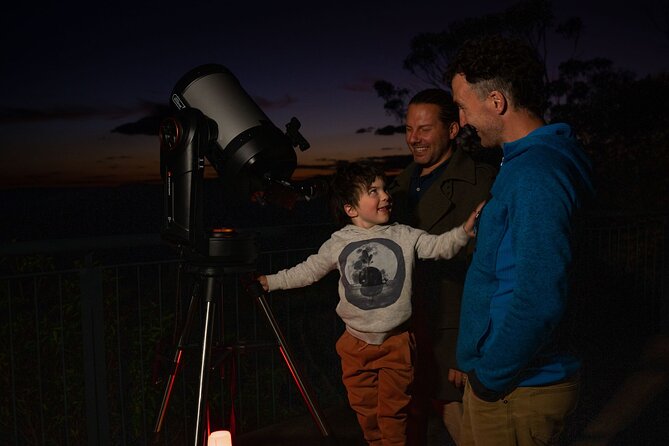
Blue Mountains evenings can feel cold, especially when you stand still beside a telescope. Warm blankets and hot chocolate have been provided during sessions, and drinks may be hot or cold depending on the weather.
I would still dress for an outdoor night rather than rely on the refreshments. The supplied information does not set out a clothing list, but sensible warm layers are a practical choice for any evening spent looking upward. The hot chocolate is a welcome touch, not a substitute for being prepared.
The drinks also help the social side of the experience. You have a natural pause between telescope views, and a warm cup makes it easier to stay comfortable while waiting for your turn. One participant admitted that the hot chocolate was the main attraction at first, then found the astronomy more interesting than expected. That is a good sign for reluctant companions.
The activity is wheelchair and stroller accessible, and service animals are allowed. It is also near public transportation. These details make the session workable for a wider range of visitors, though the changing outdoor setup means you may want to confirm any specific mobility needs before booking.
Price, value, and the group size
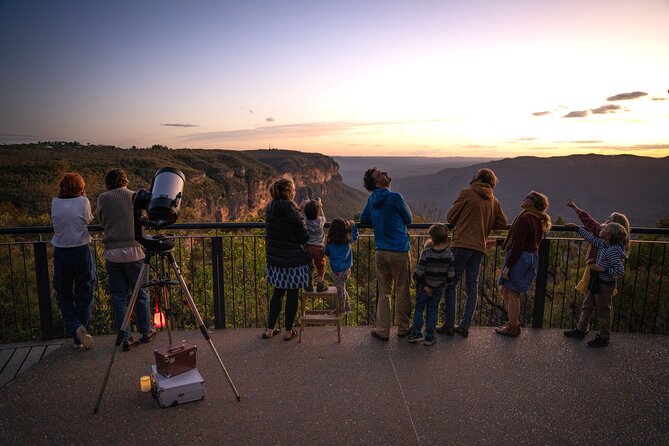
The price is $60.97 per person for about 90 minutes. I see this as fair value if you want guided telescope access and an expert explanation, rather than simply a dark place to look at the stars.
You are paying for several parts at once: a professional telescope, astronomy binoculars, laser-guided constellation instruction, an astronomer-led question period, and the work of setting up equipment in an outdoor location. The small maximum group of 20 also improves the experience compared with a large public talk.
The value depends on your expectations. If you want a guaranteed view of Saturn, the Orion Nebula, or a galaxy, astronomy cannot offer that promise. Sky conditions, seasons, wind, and the time of night all affect the program.
It is a particularly sensible purchase if you are already visiting the Blue Mountains and want an evening activity that feels tied to the place. It is less attractive if you need a fixed, weatherproof schedule or dislike standing outdoors at night.
The tour is booked on average 24 days ahead, so popular dates may require planning. Confirmation is sent within 48 hours, subject to availability. The maximum group size keeps the experience personal without private-tour pricing.
The weather policy needs careful reading
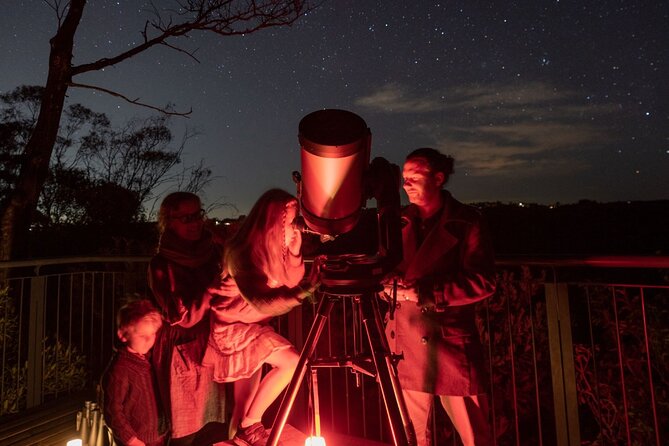
Weather is the main risk. If the sky is cloudy or conditions are unsuitable, the operator sends an update at 1 pm on the day of the tour. If you have not received an email by then, the stargazing session is confirmed.
For poor weather, you can choose a transferable gift voucher or credit to reschedule. It is valid for three years and can be transferred to another person. You may also be offered a 90-minute indoor planetarium astronomy session, held inside a dome with a powerful projector and cinema-style presentation.
The indoor option requires at least eight participants, so it is not guaranteed on every bad-weather date. The weather information also says no refund is offered in the bad-weather alternative arrangement. The wider cancellation terms state that if the operator cancels because of poor weather or because the minimum number is not reached, you may be offered another date or experience, or a full refund.
Because those options depend on how the cancellation is handled, read the current terms carefully before paying. Your own cancellation is non-refundable and cannot be changed for personal reasons. This is the biggest practical drawback of the booking.
Who will enjoy this Blue Mountains evening
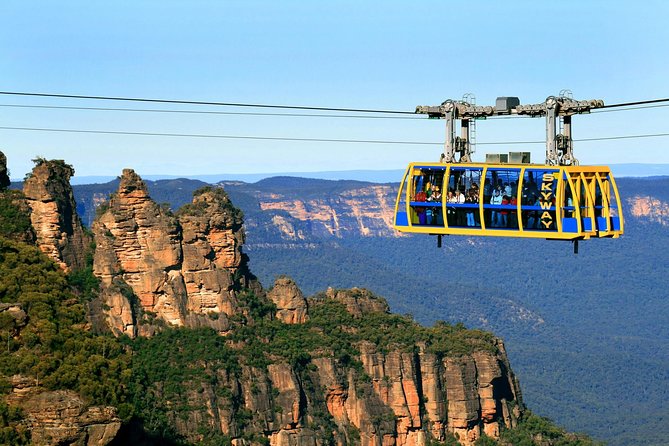
I would recommend it to first-time stargazers, families with older children, couples looking for a quiet evening activity, and anyone curious about the Southern Hemisphere sky. It also suits people who enjoy asking questions and learning the basic method behind what they are seeing.
The experience is especially appealing if you have never seen the Southern Cross. The change from sunset to twilight gives the session an emotional lift, and the constellation identification makes the memory more lasting than a quick glance at a bright star.
It works for serious astronomy fans too, but with a limit. You are joining a shared 90-minute session, not booking an advanced observing night with control over every target. The guide chooses objects based on the sky and the group.
I would be more cautious if you are booking around a tight schedule, need a guaranteed indoor activity, or are uncomfortable with the possibility of moving from the lookout to a nearby park. Wind can affect both the viewing site and the comfort of the evening.
Should you book Stargazing with an Astronomer?
Book it if you want a friendly introduction to the night sky, a chance to use a proper telescope, and a memorable look at Southern Hemisphere constellations. The combination of expert guidance, small group size, binoculars, telescope viewing, and hot chocolate gives the $60.97 price solid value.
Go in with realistic expectations. You may see the Moon, planets, nebulae, clusters, double stars, or galaxies, but the final list depends on the sky. Check the weather message at 1 pm, dress for an outdoor evening, and be comfortable with the stated credit or planetarium alternatives.
For most people visiting the Blue Mountains, this is a worthwhile night activity. It turns the sky into part of your trip, and you leave with enough practical knowledge to keep looking up after the telescope is packed away.
FAQ
Where does the stargazing tour begin?
It begins at Wentworth Falls Lookout Track in New South Wales, Australia.
How long does the experience last?
The stargazing session lasts approximately 90 minutes.
Where does the tour finish?
The activity ends back at the meeting point.
What equipment is included?
The experience includes a professional-grade telescope and astronomy binoculars. The guide also uses a laser for constellation storytelling.
What might I see through the telescope?
Depending on the season, time, and conditions, you might see the Moon, Mars, Venus, Saturn’s rings, Jupiter’s moons, the Orion Nebula, star clusters, double or triple stars, galaxies, and the Milky Way.
What happens if the weather is bad?
At 1 pm on the day of the tour, you may be offered a transferable credit to reschedule or an alternative 90-minute indoor planetarium astronomy tour. The indoor option requires a minimum of eight participants.
Is the tour available in languages other than English?
English and French are available.
Is the experience wheelchair and stroller accessible?
Yes. Wheelchair and stroller access is listed, and service animals are allowed.
Just added around Blue Mountains
- Army Truck Adventures – 3 Hour Guided Tour★ 5.0 · 50 reviews
- Blue Mountains Day Tour with Wildlife and Scenic World Entry★ 4.0 · 51 reviews
- Blue Labyrinth PRIVATE Tour: Sydney Blue Mountains by E-Bike★ 5.0 · 29 reviews
- Blue Mountains Day Tour With Bushwalks, Waterfalls & Featherdale★ 5.0 · 305 reviews
- Private Blue Mountains Escape The Crowds Mercedes Tour★ 5.0 · 72 reviews
- Blue Mountains Hop On Hop Off Tour★ 4.5 · 293 reviews
- Half-Day Abseiling Adventure in Blue Mountains National Park★ 5.0 · 59 reviews
- E-bike (electric) – Blue Mountains – Hanging Rock – SELF-GUIDED Hire Service★ 5.0 · 101 reviews
Stargazing Tours, compared.
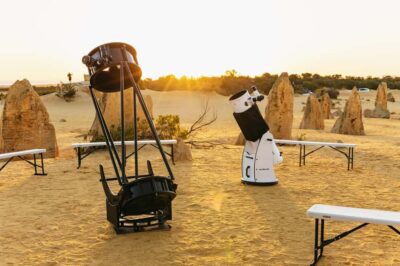
Pinnacles Desert: Sunset BBQ & Stargazing Tour +Sandboarding
Read our review →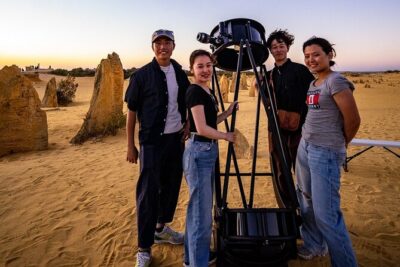
Pinnacles Desert Sunset Dinner and Stargazing Tour
Read our review →
Pinnacles Sunset and Stargazing Tour with Dinner
Read our review →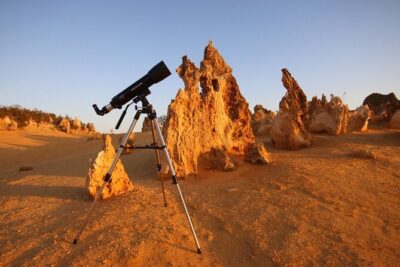
Pinnacles Sunset Stargazing Dinner Experience Small Group Tour
Read our review →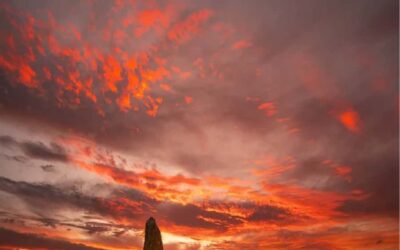
Pinnacles Desert Sunset & Stargazing with Dinner
Read our review →Browse the lists this tour appears in