
Reviewed · MELBOURNE
Melbourne: True Crime Walking Tour of Fitzroy
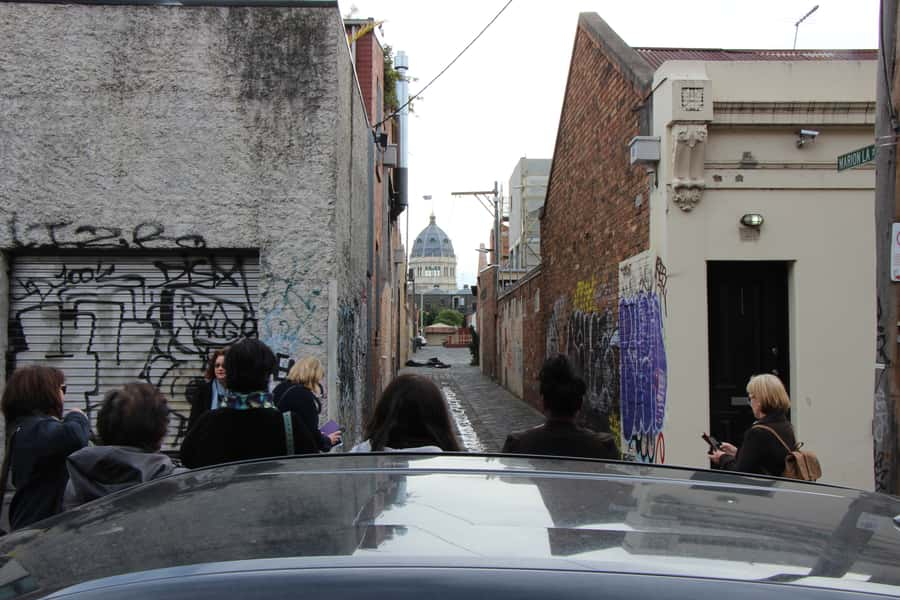
Fitzroy’s old crime district comes alive through sly grog shops, gang wars, and murder sites on this compact two-hour walk. You move through streets and back alleys where criminals lived, drank, fought, worked, and faced trial a century ago. The stories are drawn from original police files, giving the tour a firm footing beyond local legend.
I like the free booklet, which includes photographs of the people discussed, crime scene maps, and other documents. I also like the way the route puts the past under your feet: former brothels, illegal drinking dens, and homes linked to notorious figures become part of the story. The main consideration is that this is a serious true crime tour, so it may feel heavy if you prefer lighter city sightseeing. One older account also found that much of the walking took place within roughly four blocks, so do not expect a long, wide-ranging Fitzroy hike.
Key points before you book
- Police-file research: The tour is based on original police records rather than general folklore.
- Sly grog history: Learn how illegal drinking venues operated in Melbourne before licensed alcohol trading became easier.
- Real locations: See former brothels, sly grog shops, homes, and crime sites connected to Fitzroy’s underworld.
- Squizzy Taylor connection: Follow stories involving one of Melbourne’s best-known criminals.
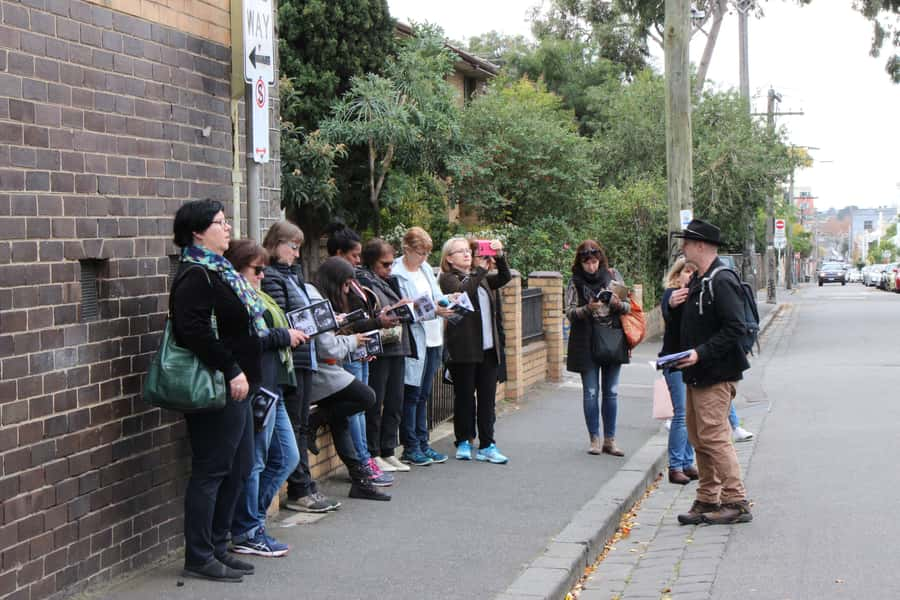
- Useful visual booklet: Keep photographs, maps, and crime-related documents in hand as the stories unfold.
- Accessible two-hour format: Meet outside Melbourne Museum, walk in English, and book with wheelchair accessibility listed.
Why old Fitzroy makes such a strong crime story
Fitzroy is not presented here simply as a collection of grim tales. The tour uses the suburb to show how crime grew out of crowded urban life, illegal businesses, hard economic conditions, and fierce local rivalries.
A century ago, southern Fitzroy had a reputation as the home of Melbourne’s criminals. That phrase gives you the basic mood, but the value of the tour is in the detail. You learn about the people who lived in the area and the places where they earned money, settled disputes, hid from the law, or came under police scrutiny.
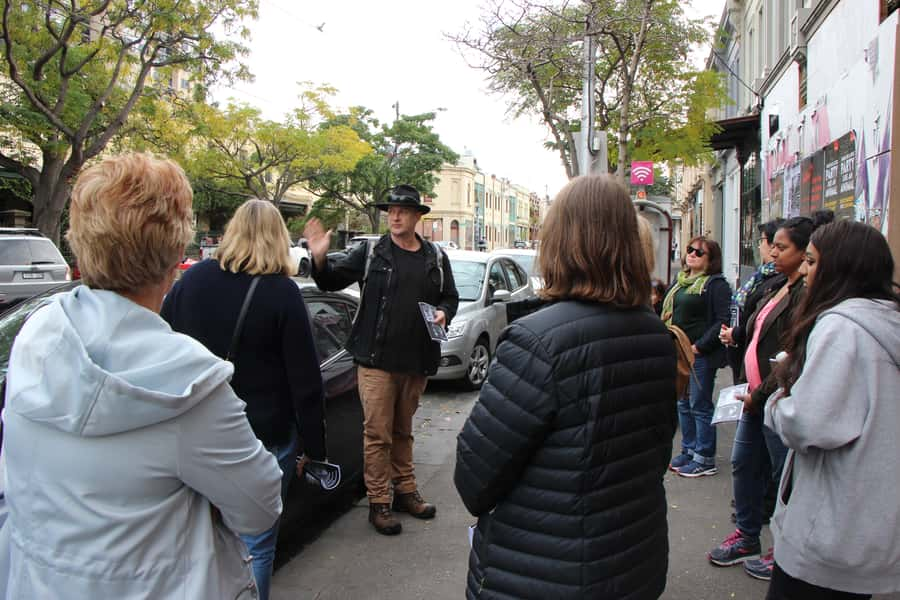
I appreciate tours that connect a city’s past to its ordinary streets. A murder site can be easy to miss when you pass it alone. Here, the guide explains what happened and why the location mattered, then points out the building or lane connected to the story. The modern street remains in view, which makes the past feel close without pretending that old Fitzroy still exists unchanged.
The tone is not simply sensational. The subject matter includes gangland violence, organised crime, brothels, and murder, but the tour also explores survival. You hear what life could be like for people who operated outside respectable work and legal business. That broader frame gives the stories more meaning than a list of shocking incidents.
More Walking Tours in Melbourne
- Ultimate Melbourne Walking Tour: History, Laneways & Culture
★ 5.0 · 1,451 reviews - Melbourne Foodie Discovery Walking Tour
★ 5.0 · 530 reviews - Original Melbourne Lanes and Arcades Walking Tour
★ 5.0 · 389 reviews
Meeting at Melbourne Museum and setting the scene
The meeting point is outside the entrance doors to Melbourne Museum, at the orange bench seat. This is a clear landmark, but arrive with enough time to find the correct side of the museum and settle in before the group leaves.
The tour then heads toward the southern part of Fitzroy. Exact stop-by-stop details can vary with the guide and conditions, but the central pattern is consistent: streets, lanes, former businesses, houses, and crime locations become stages for the stories.
The route is described as fairly compact. That helps you focus on the guide rather than spending much of the two hours marching between distant suburbs. It also means you can study the buildings and street layout more carefully. If you prefer a long walking workout, this may feel restrained. If you want a history talk tied closely to real places, the compact route works in your favour.
Wheelchair accessibility is listed for the activity. Since this is an outdoor walking tour through streets and alleys, it is sensible to raise any specific access needs when booking, but the activity is presented as wheelchair accessible.
Sly grog shops and Fitzroy’s illegal drinking trade
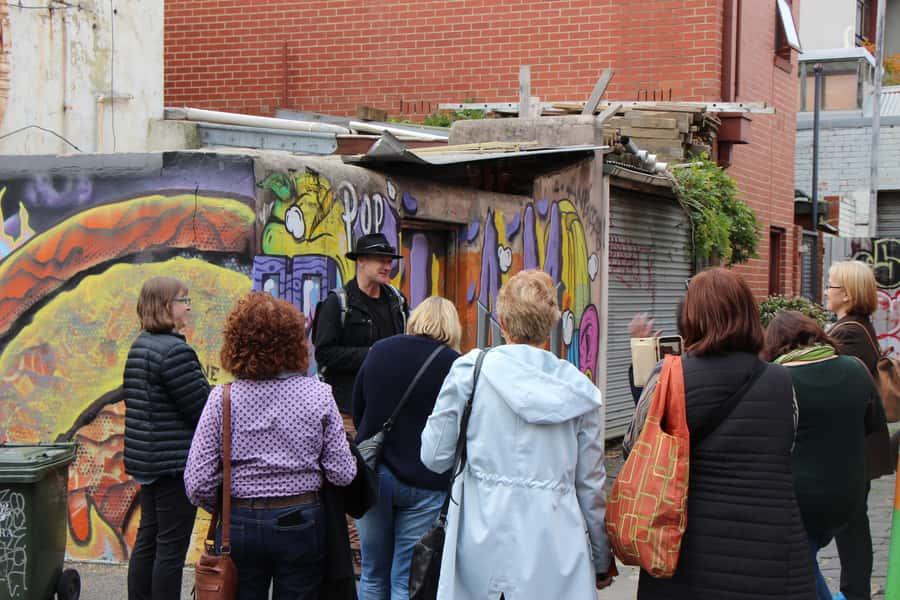
One of the most interesting parts is the look at Melbourne’s version of a speakeasy. These illegal drinking venues were known as sly grog shops, and the tour takes you to buildings that once served this purpose.
The term may sound quaint, but the business was not. A sly grog shop operated outside the law, giving people a place to drink when legal restrictions or licensing rules limited ordinary hotels and bars. The guide explains how these venues fitted into the local economy and criminal network.
This is where the tour moves beyond familiar gangster tales. You are not just hearing about a villain and a violent act. You are learning how a neighbourhood functioned, how illegal trade found customers, and how buildings could hold several roles over time.
The value of seeing the former sites is practical. A photograph in a book can tell you that a sly grog shop existed. Standing outside the building helps you consider its position, nearby streets, and relation to other businesses. The booklet adds further help by showing photographs of the characters and relevant crime documents while you listen.
Brothels, dens of thieves, and ordinary-looking buildings
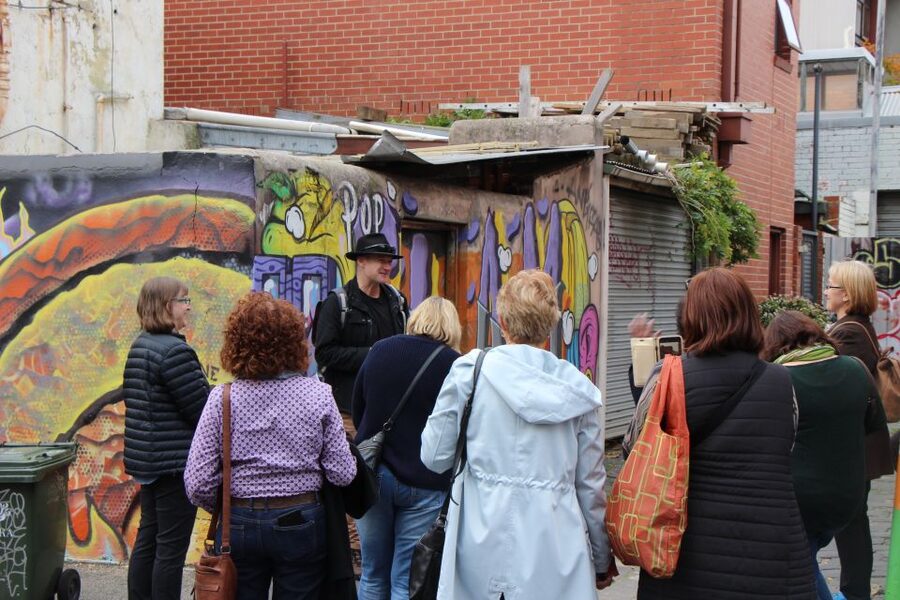
The walk also covers former brothels and places described as dens of thieves. These sites show the range of businesses and activities connected to old Fitzroy’s criminal world.
Do not expect grand ruins or preserved crime museums. Much of the appeal comes from ordinary-looking buildings with an extraordinary past. The guide’s job is to explain what happened there and to separate documented events from colourful local memory.
The best moments are likely to come when the story and the location meet. A house becomes more than a frontage when you learn who lived there. A lane becomes more than a shortcut when you hear how gangs used the area. A former business becomes a clue to the way money and influence moved through the district.
The format also gives you time to ask questions. Michael is repeatedly praised for answering questions during the walk, and Andrew is also named as a guide. Both are described as passionate about Melbourne crime history, with particular strength in storytelling and detailed research. Guide assignments can change, so book with an open mind about who will lead your departure.
A different sort of day out, same corner of Melbourne:
- Melbourne: 2-Hour City Highlights River Cruise
★ 4.1 · 1,804 reviews - Spirit of Melbourne Dinner Cruise on the Yarra River
★ 4.5 · 1,470 reviews - Melbourne: Puffing Billy & Healesville Sanctuary Scenic Tour
★ 4.7 · 1,220 reviews - Puffing Billy Railway: Heritage Steam Train Journey
★ 4.6 · 1,195 reviews
Gang wars and the Fitzroy vendetta
Gang rivalry is a major thread. The walk follows the violence and tensions behind what one guide described as the Fitzroy vendetta, bringing together rival figures, contested territory, and the consequences of criminal disputes.
This section should suit you if you enjoy following a chain of events rather than hearing isolated cases. One incident leads to another, people reappear in different parts of the story, and locations begin to make sense as pieces of a local conflict.
The guide’s delivery matters here. Crime history can become confusing when several names, relationships, and dates appear in quick succession. Michael is praised for making the characters easy to follow and for adding useful side details. Andrew is also described as a strong narrator who brings the people and places to life.
There is a small risk of digression. One less enthusiastic assessment found that the guide spent too much time on miscellaneous material rather than crime itself. That is useful to keep in mind if you want a tightly edited case-by-case presentation. The tours are clearly built around storytelling, and some listeners will enjoy the extra context more than others.
Squizzy Taylor and the people behind the headlines
Squizzy Taylor is one of the notable figures connected with the tour. You learn about places where he drank, fought, and faced trial, along with the wider group of criminals who shaped Fitzroy’s reputation.
The point is not only to admire a famous name. The stories show how a public reputation develops and how crime figures become part of a city’s folklore. The booklet helps put faces to those names, which is especially useful when several characters appear during the same story.
I like this human scale. The tour deals with notorious people, but it also shows them as residents of a real suburb. They had homes, favourite places, business contacts, enemies, and moments when the police caught up with them. That makes the history more immediate, while still keeping the violence and hardship in view.
For true crime fans, the appeal is obvious. For anyone interested in Melbourne’s past, the tour offers a less polished view of the city. You see the underside of development and respectability, where legal and illegal life often sat close together.
The booklet makes the walking easier to follow
The free tour booklet is more useful than a simple souvenir. It contains photographs of the criminals featured, crime scene maps, and other interesting documents connected to the cases.
I would keep it open during the walk. When the guide names a person, you can match the face to the story. When the group reaches a crime location, the map gives you a sense of how the event fitted into the surrounding streets.
This matters because oral storytelling can move quickly. The booklet gives you a visual anchor, particularly when several names or incidents appear close together. It also lets you revisit the material later, rather than relying on memory alone.
The booklet will not turn the tour into a self-guided walk. Its main use is support. The guide supplies the sequence, explanations, and local context, while the printed material helps you keep track of the people and places.
Pace, guide style, and what the reviews suggest
The tour lasts two hours, which is a good length for a subject that demands attention. It gives the guide enough time to develop several stories without requiring a full morning devoted to old crime.
Michael receives especially strong praise for his enthusiasm, preparation, humour, and storytelling. People with long connections to Melbourne have learned new details from his tours, which suggests that the material is not aimed only at first-time visitors. The guide’s passion is a major part of the experience.
The walk is also described as well paced and well planned. One person who had already taken another Melbourne crime tour returned for a second experience and appreciated the guide’s ability to adapt when rain arrived, including providing rain protection for the group. That points to a practical, hands-on approach, though weather can still affect any outdoor activity.
The guide may offer plenty of side stories. If you enjoy a narrator who adds asides and local colour, that should work well. If you want only the central facts, listen for the main sequence of events and use the booklet to keep your place.
Is $35 good value for two hours?
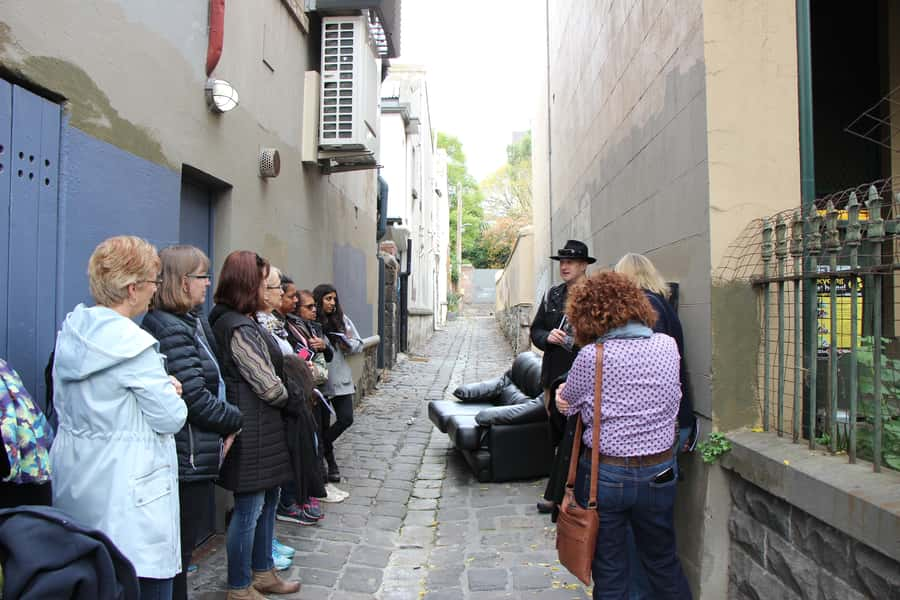
At $35 per person, this sits in a reasonable range for a guided Melbourne walking tour. The value comes from the research, the live narration, the locations, and the booklet rather than from admission to a museum or a grand attraction.
You are paying for access to a specialist subject and for the guide’s ability to connect scattered evidence. Walking past an old building costs nothing. Understanding why it matters, who used it, and how it fits into a crime story is the paid part.
The price looks strongest if you are already interested in true crime, social history, or unusual city walks. It is also useful for repeat visitors who have seen Melbourne’s central sights and want a different angle on the city. If you are only mildly curious about crime stories, the value depends on how much you enjoy a detailed spoken history lesson.
The free booklet improves the deal. You leave with photographs and maps that help you remember the route and the people. Since cancellation is free up to 24 hours before the tour and payment can be delayed when booking, the activity is relatively easy to fit into a changing Melbourne schedule.
Who should book the Fitzroy crime walk?
I would recommend this tour to true crime fans, local history enthusiasts, repeat Melbourne visitors, and anyone who enjoys seeing a familiar city from an unfamiliar angle.
It should also suit you if you like guided walks that stay fairly compact. The route focuses on southern Fitzroy rather than attempting to cover the whole city, and the two-hour length keeps the outing manageable.
Families need to use their judgment. The subject includes murders, gang violence, brothels, and organised crime, so it is not a light sightseeing stroll. The tour is factual and historically focused, but the material can still be unsettling.
You should also choose this if you value a strong narrator. The experience depends heavily on the guide’s delivery. Michael and Andrew are both praised for passion and clear storytelling, but the occasional side detail may not suit someone seeking a strictly trimmed lecture.
Should you book it?
Book it if you want real locations, police-file research, and vivid local stories rather than a general overview of Melbourne. The sly grog shops, gang conflicts, former brothels, and Squizzy Taylor connections give the walk a clear identity.
Skip it if murder and organised crime are not your interests, or if you want a long-distance walking tour with broad architectural coverage. For everyone else, $35 buys a focused two-hour look at Fitzroy’s rougher past, with a useful booklet and guides who clearly care about the subject.
FAQ
Where does the Fitzroy True Crime Walking Tour meet?
Meet outside the entrance doors to Melbourne Museum, at the orange bench seat.
How long does the tour last?
The tour lasts two hours.
What language is the tour conducted in?
The live tour is conducted in English.
How much does the tour cost?
The listed price is $35 per person.
Is the tour wheelchair accessible?
Yes. The activity is listed as wheelchair accessible.
What areas does the tour cover?
The walk explores the southern part of Fitzroy, including its streets and back alleys.
Does the tour visit former sly grog shops?
Yes. You see buildings that were once used as sly grog shops and learn about Melbourne’s illegal drinking trade.
Does the tour cover Squizzy Taylor?
Yes. The tour discusses places where Squizzy Taylor drank, fought, and faced trial.
What is included in the price?
You receive a free booklet with photographs of the criminals featured, crime scene maps, and other interesting crime-related documents.
Can I cancel the booking?
Yes. You can cancel up to 24 hours in advance for a full refund. You can also reserve now and pay later, allowing more flexibility when planning.
Just added around Melbourne
- Melbourne: Ghosts of Williamstown Guided Ghost Walking Tour★ 4.4 · 47 reviews
- Melbourne: 3-Hour Foodie Discovery Walking Tour★ 4.9 · 313 reviews
- Melbourne: Spirit Of Melbourne Yarra River Lunch Cruise★ 4.9 · 65 reviews
- Melbourne City Cruise with Tea, Coffee, and Commentary★ 4.3 · 189 reviews
- From Melbourne: Mt Buller Snow Day Small Group Boutique Tour★ 4.8 · 78 reviews
- Moonlit Sanctuary Conservation Park Entry Ticket★ 4.5 · 163 reviews
- Melbourne: MONOPOLY DREAMS Admission Ticket★ 4.3 · 39 reviews
- Melbourne: VR Escape Game Adventure 2+ Players★ 4.9 · 52 reviews
Walking Tours, compared.
Sydney Opera House Official Guided Walking Tour
Read our review →
Blue Mountains Tour with Waterfall Walk & Lunch
Read our review →

Ultimate Melbourne Walking Tour: History, Laneways & Culture
Read our review →
Great Ocean Road Tour Plus Koalas, Forest Walk and Morning Tea
Read our review →
Blue Mountains Small Group Tour with Waterfall Walk & Fresh Lunch
Read our review →
Maria Island Cruise and Guided Walk Day Tour with Lunch and Drinks
Read our review →Browse the lists this tour appears in