
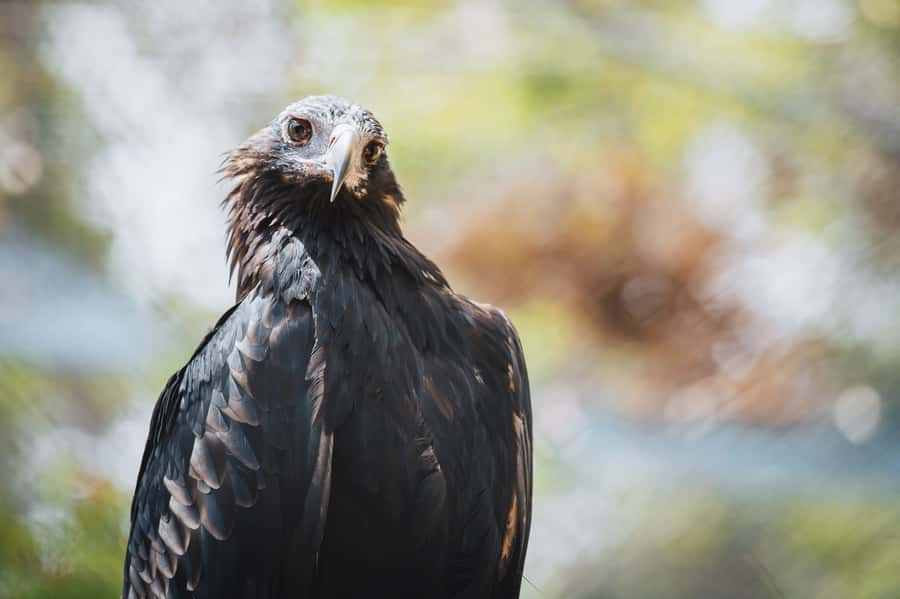
Reviewed · MARGARET RIVER
Margaret River: Birds of Prey Encounter and Forest Walk
The most memorable part of this Margaret River outing is the chance to see a raptor fly close overhead, then watch it take food from the air or a handler’s hand. At Capes Raptor Centre, the encounter brings you close to owls, kites, hawks, falcons, and eagles while explaining how these birds live and why some need rescue.
I like the hands-on flight presentation and the quiet 1km forest walk, which gives you more than a short show and exit. I also like the centre’s conservation purpose, from caring for injured and displaced birds to explaining how poisoned rodents can harm raptors. The main consideration is that some enclosures have an older, rustic feel, and the presentation may feature only a few flying bird types.
Key points to know before you go
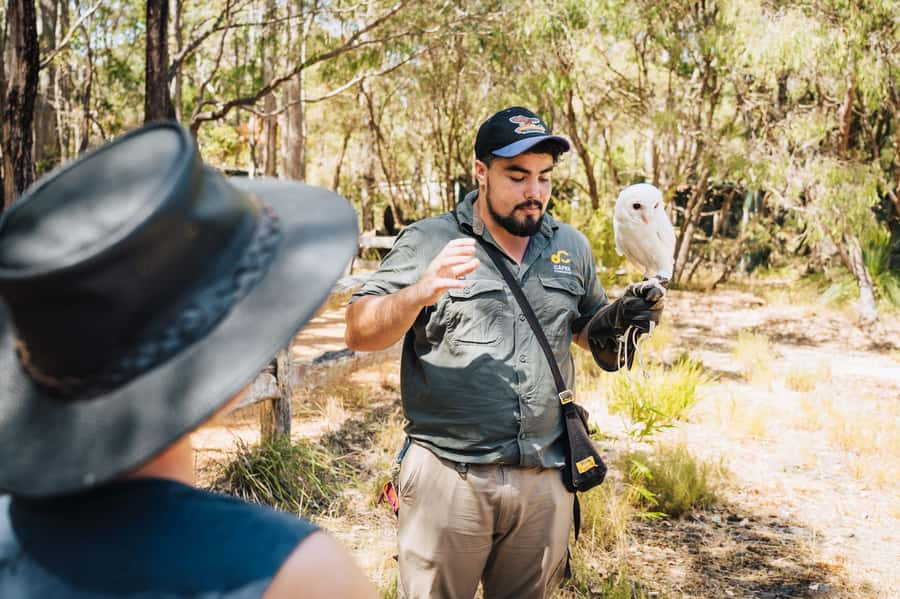
- Free-flying raptors: The encounter can include birds flying over the audience, catching food in the air, or feeding from a handler’s hand.
- A conservation-focused visit: The centre cares for injured, orphaned, and displaced eagles, hawks, falcons, kites, and owls.
- A 1km walk included: You can explore the native forest before or after the scheduled encounter.
- Strong guides: Presenters including Rob, Rachel, Robert, Anne-Marie, Tara, and Cherie have been praised for clear, lively explanations.
- Good value at $17: The price covers both the presentation and the self-guided walk, making this a modest-cost Margaret River activity.
- Allow 90 minutes: Capes Raptor Centre is 5 kilometres south of Margaret River Townsite, and you will need to arrange your own transport.
Why this is more than a short bird show
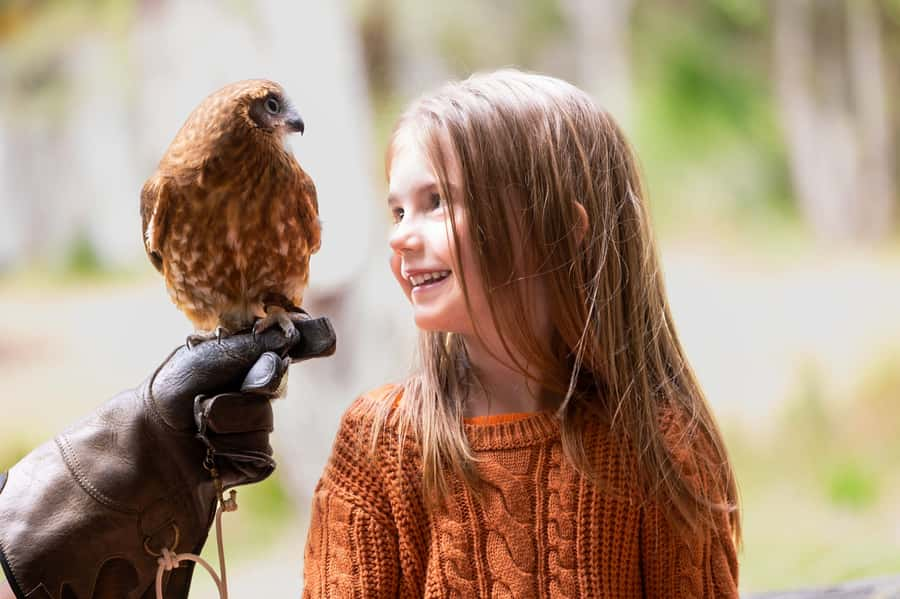
Capes Raptor Centre is one of Australia’s larger sanctuaries for birds of prey. Its purpose shapes the visit. You are not simply watching trained birds perform tricks. You are seeing animals that may have been injured, orphaned, or displaced, while learning about the adaptations that help raptors survive.
That distinction matters. The best part of the experience is not just the moment a bird passes overhead. It is understanding why a kite flies the way it does, how an owl hunts in low light, or what makes an eagle such an effective predator.
The centre’s twice-daily Bird of Prey Encounter is the main event. It is presented in English and usually includes close views of the birds, flight demonstrations, feeding, and explanations of behaviour. Guides such as Rob, Rachel, and Robert have been singled out for making the talk clear and entertaining, so this works for adults as well as children.
The approach is friendly rather than overly formal. You can expect the presenter to explain what you are seeing as the birds appear, with plenty of useful detail about their habits and abilities. The format also allows the audience to see the birds at close range, sometimes cheek-to-beak, without turning the visit into a petting experience.
More Walking Tours in Margaret River:
- Sydney Opera House Official Guided Walking Tour
★ 4.5 · 3,770 reviews - From Sydney: Blue Mountains Tour with Waterfall Walk & Lunch
★ 4.8 · 2,400 reviews - Sydney The Rocks Guided Walking Tour
★ 5.0 · 1,546 reviews
The flight encounter: expect close passes and practical facts
The free-flying section is the part most likely to make you stop talking and watch. A bird may sweep over the audience, take food from the air, or feed from a handler’s hand. Seeing a raptor use its speed and control in real time gives meaning to facts that can sound abstract in a classroom.
The encounter has included memorable birds such as Bonnie and Kevin the kite. Owls have also featured strongly, with presenters explaining their unusual features and hunting methods. The exact birds and flying sequence can vary, so I would not book this expecting a fixed cast or a long parade of species.
That is also the one limitation worth keeping in mind. One visitor felt that seeing more than two types of flying birds would have made the presentation even better. The show can still be informative and impressive, but the flying portion may be narrower than you imagine from the broad list of raptors cared for at the centre.
The guides help make up for that. Rob has been praised for mixing humour with clear facts, while Rachel and Robert have been noted for keeping children interested. Anne-Marie’s explanations of barn owls and kites have also made a strong impression. The names and presentation team may change, but the consistent strength is the human side of the encounter: staff who explain the birds with care and answer questions openly.
A particularly useful topic is the danger posed by rat poison. The centre explains how active poison can remain in dead rodents killed by RATSAK, then pass into birds of prey that eat them. That lesson gives the visit a practical conservation edge. You leave with a clearer idea of how everyday choices can affect wildlife.
The 1km forest walk and resident birds
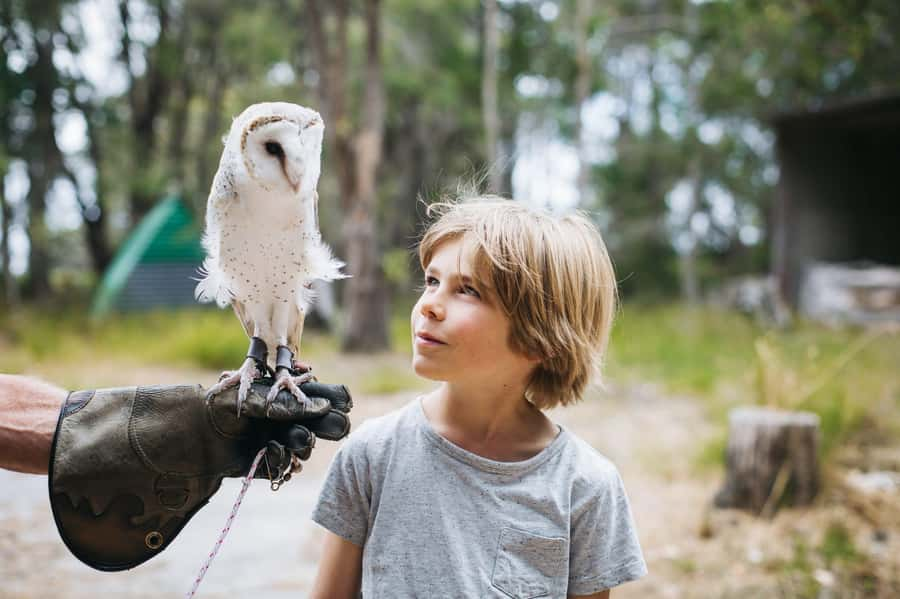
The forest walk can happen before or after the flight encounter. This flexibility is useful because you can adjust the order around the scheduled presentation instead of rushing through the aviaries.
The route covers about 1 kilometre through native forest, with enclosures where you can meet other resident birds. It is a self-guided walk, so you set the pace and can stop when a bird catches your attention. The forest setting also gives the visit a slower rhythm after the excitement of the flying display.
I like this part because it makes the centre feel like more than a single attraction. You have time to notice shy or less showy birds that would not feature in a dramatic flight sequence. Some raptors are powerful and loud, while others are elusive and easy to miss unless you pause.
The walk is especially useful for families. Children get a clear beginning and end with the presentation, then a chance to move around and discover the other birds. Adults who want more time with the conservation side of the centre will appreciate not being hurried from one enclosure to the next.
The facilities have a rustic character. The aviaries have been described as clean and the grounds as safe and easy to navigate, but some older enclosures may look ready for updating. New aviaries and structures have been part of the centre’s future plans, so expectations should be realistic: this is a working sanctuary with an educational mission, not a polished theme park.
That rustic quality is not automatically a weakness. It can make the work of caring for injured birds feel more visible. Still, anyone seeking sleek, modern presentation spaces may find parts of the centre basic.
What you can learn about owls, kites, and eagles
The centre gives you a close look at the variety within the raptor family. Owls have a mysterious reputation, but the talk turns that mystery into useful facts about their behaviour and adaptations. The barn owl discussion, in particular, can reveal details you may not have encountered elsewhere.
Kites bring a different energy. They are agile, opportunistic birds, and the presentation can show how they use movement and timing to feed. Kevin the kite has become a memorable character for some visitors because of his quirky behaviour, but the value is not just personality. You see how individual birds can behave differently even within the same broad group.
Eagles, hawks, and falcons add scale and power to the collection. Not every species will necessarily fly during your session, but you can meet an array of birds along the walk and learn why each has a different role in the natural world.
The conservation message is strongest when it stays specific. Poisoned prey is one example. Injury, orphaning, and displacement are the reasons many birds are at the centre. The visit helps connect those problems to the work of rehabilitation and education.
A few more Margaret River trips worth weighing up
- The Margaret River wine tour for people who don’t do tours!
★ 5.0 · 1,969 reviews - Hidden Gems: Boutique Full-Day Wine, Farm & Lunch Tour
★ 5.0 · 881 reviews - Margaret River Wine, Brewery & Distillery Tour with Lunch
★ 4.5 · 488 reviews - Margaret River Winery, Brewery Tour with Gourmet Lunch.
★ 5.0 · 401 reviews
How much time and money should you allow?
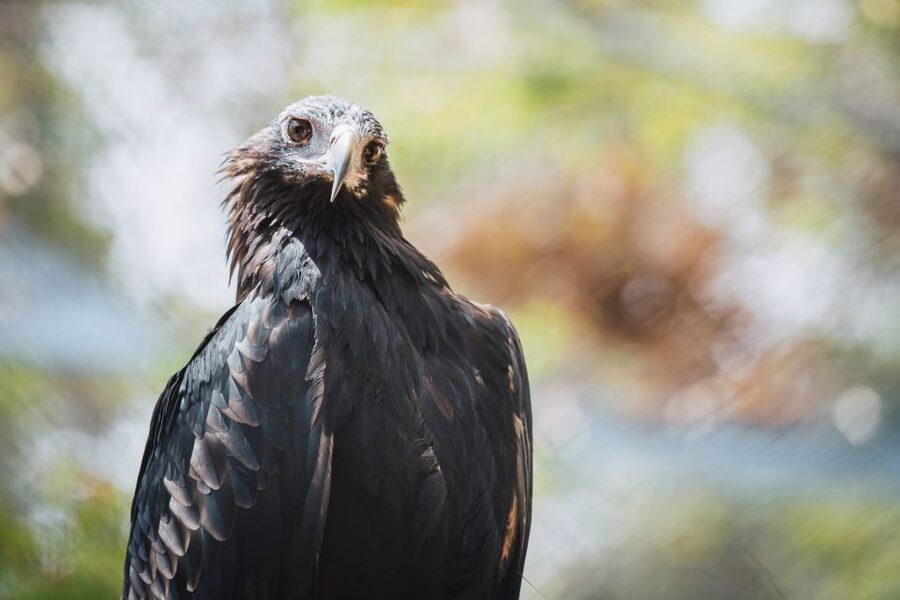
The experience costs $17 per person and lasts about 90 minutes. For Margaret River, that is a modest price, especially because it includes both the scheduled Bird of Prey Encounter and the 1km self-guided walk.
I see the value in the two-part format. A short animal presentation alone can feel expensive if it ends as soon as the applause stops. Here, the forest route gives you extra time to explore the grounds and see birds that are not part of the flight display.
Plan your timing around the twice-daily encounter. The available starting times can vary, so check the schedule when booking. Since the walk may take place before or after the presentation, you do not need to force the route into one particular order.
Capes Raptor Centre is 5 kilometres south of the Margaret River Townsite. Transport is not included, and no food or drink is provided, so arrange your own way there and plan refreshments separately. The attraction is wheelchair accessible, which is useful for visitors who need step-free access, though the supplied details do not describe every surface or section of the forest route.
You can cancel up to 24 hours before the activity for a full refund, and a reserve-now, pay-later option is available. Those policies are helpful if your Margaret River plans are still changing.
Who will enjoy this Margaret River activity?
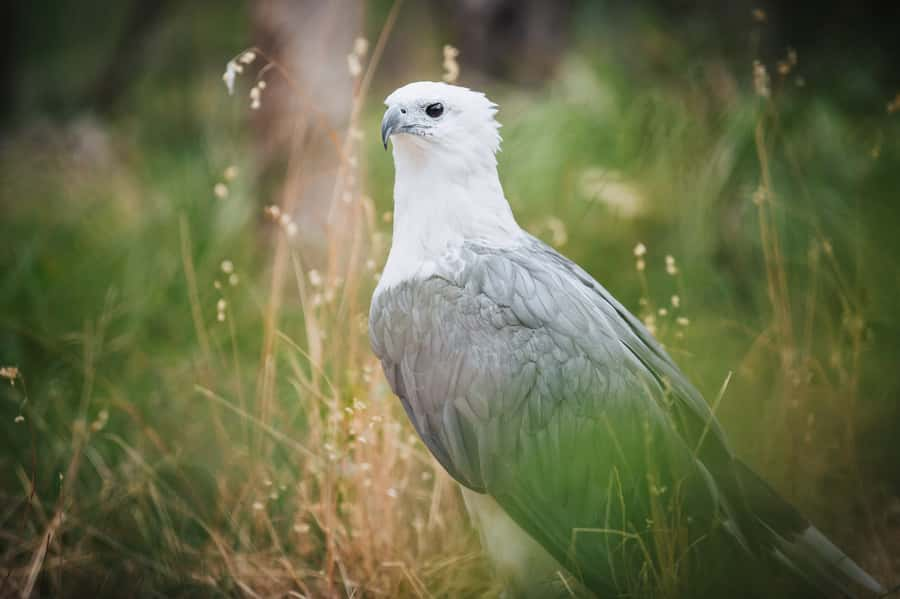
Families are an obvious match. Children can watch a bird fly overhead, learn why owls hunt differently from kites, and then walk among the other birds. The experience has enough movement to hold a young audience, while the conservation information gives adults something worthwhile too.
It also suits anyone who wants a wildlife visit with a clear educational purpose. You are not just taking a photograph beside a bird. You are hearing about injuries, rehabilitation, food chains, and the effects of poison on raptors.
Bird lovers will appreciate the chance to spend time with both dramatic and shy species. The forest walk is important here because the most impressive bird in the show may not be the one you find most interesting. A quiet owl or less familiar raptor can reward a slower visit.
This is less suited to someone wanting a long, open-country wildlife safari. The activity takes place at a sanctuary, and the birds are cared for in enclosures. It is also not ideal if you only want a fast photo stop, since the scheduled presentation and walking route together take about 90 minutes.
Photos, questions, and the best way to visit
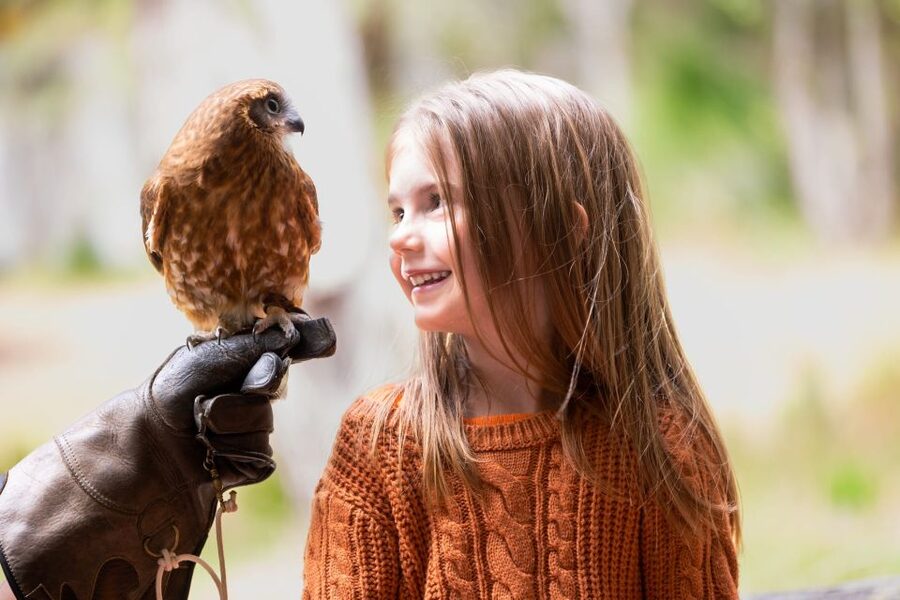
You can have your photo taken with a bird of prey, making this a good option if you want a lasting reminder of the encounter. Treat the photograph as an extra, not the whole reason to visit. The strongest moments come from watching the birds behave naturally during the presentation and learning why their bodies are built for hunting.
Ask questions during or after the talk. The staff are described as open to questions and willing to explain their work without judgement. That is particularly useful if you want to understand rehabilitation, enclosure care, or the risks posed by household poisons.
I would arrive ready to split my attention between the show and the walk. The presentation has the highest energy, but the forest route is where you can slow down and notice the wider collection. If you are visiting with children, schedule the walk around their energy levels rather than assuming the show should come first.
The best version of this outing is not rushed. Give yourself the full 90 minutes, listen closely during the flight display, and allow time to stop at the quieter enclosures.
Should you book the Capes Raptor Centre encounter?
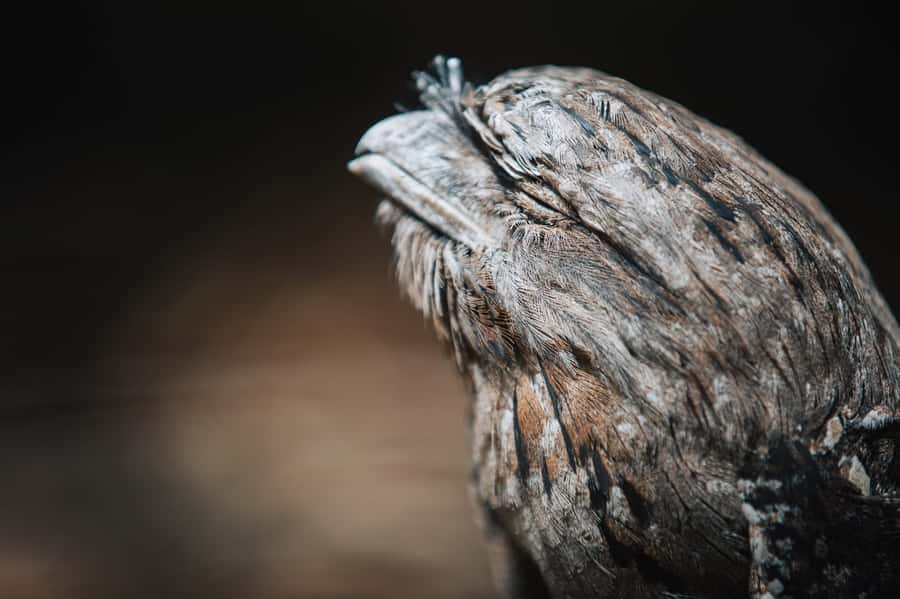
I would book it if you want an affordable Margaret River activity that combines close wildlife viewing with a useful conservation message. The $17 price covers a flight presentation and a forest walk, and the guides bring warmth and clear explanations to the experience.
Go with realistic expectations. The sanctuary has a rustic feel, the flying segment may include only a small number of bird types, and this is not a fully wild encounter. But if you value rescued wildlife, practical information, and the chance to see an owl or kite close up, it earns its place on a Margaret River itinerary.
FAQ
Where is Capes Raptor Centre located?
Capes Raptor Centre is 5 kilometres south of the Margaret River Townsite in Western Australia.
How long does the experience last?
The activity lasts approximately 90 minutes.
What is included in the ticket?
Your ticket includes a twice-daily Bird of Prey Encounter and a 1km self-guided forest walk where you can see resident birds of prey.
Can I choose when to take the forest walk?
The forest walk can take place before or after the Bird of Prey Encounter.
What birds can I see?
The centre cares for eagles, hawks, falcons, kites, and owls, including injured, orphaned, and displaced birds. The exact birds featured in the encounter can vary.
Is transportation included?
No. Transportation to Capes Raptor Centre is not included.
Is food or drink included?
No. Food and drink are not included in the activity.
Is the experience wheelchair accessible?
Yes, the activity is listed as wheelchair accessible.
Can I cancel the booking?
Yes. You can cancel up to 24 hours in advance for a full refund. A reserve-now, pay-later option is also available.
Just added around Margaret River
- Whale Watching from Augusta in Western Australia★ 5.0 · 124 reviews
- Whale Watching Dunsborough★ 5.0 · 26 reviews
- Margaret River Coastal and Wildlife Eco Trip from Busselton or Dunsborough★ 5.0 · 107 reviews
- Self-Guided Ngilgi Cave Ancient Lands Experience★ 4.5 · 154 reviews
- Margaret River Wine and Sights Discovery Tour from Busselton or Dunsborough★ 5.0 · 155 reviews
- Full-Day Wine, Beer, Gin, Cider Private Guided Margaret River Tour★ 4.0 · 34 reviews
- Nocturnal Wildlife Tour from Busselton★ 5.0 · 218 reviews
- Cape Leeuwin Lighthouse Fully-guided Tour★ 5.0 · 127 reviews
Walking Tours, compared.
Sydney Opera House Official Guided Walking Tour
Read our review →
Blue Mountains Tour with Waterfall Walk & Lunch
Read our review →

Ultimate Melbourne Walking Tour: History, Laneways & Culture
Read our review →

Great Ocean Road Tour Plus Koalas, Forest Walk and Morning Tea
Read our review →
Blue Mountains Small Group Tour with Waterfall Walk & Fresh Lunch
Read our review →
Maria Island Cruise and Guided Walk Day Tour with Lunch and Drinks
Read our review →Browse the lists this tour appears in