
Reviewed · DARWIN
Darwin: Spectacular Jumping Crocodile Adelaide River Cruise
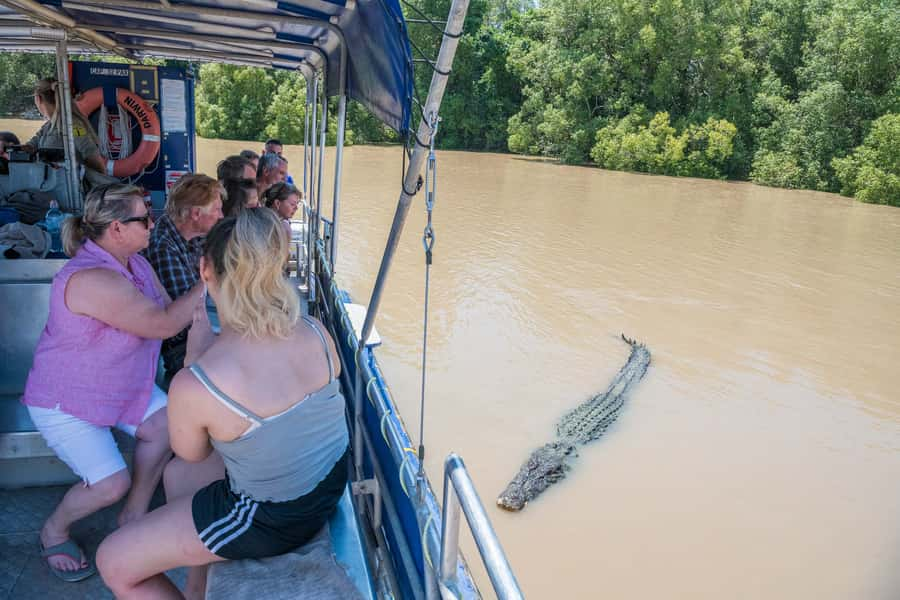
A saltwater crocodile can look almost still, then launch its heavy body out of the Adelaide River in one sharp burst. On this one-hour cruise, you watch that power from a covered boat, often only a few yards away, while the guides explain how each crocodile hunts and behaves.
I like two things here. First, the guides know the crocodiles by name and personality, which gives the trip more depth than a simple feeding show. Second, this is a 100% Indigenous-owned business, with profits returning to the Groote Eylandt Archipelago community. The main consideration is that the crocodiles are wild, so no guide can promise a particular animal, size, or jumping display on your departure.
Key points at a glance
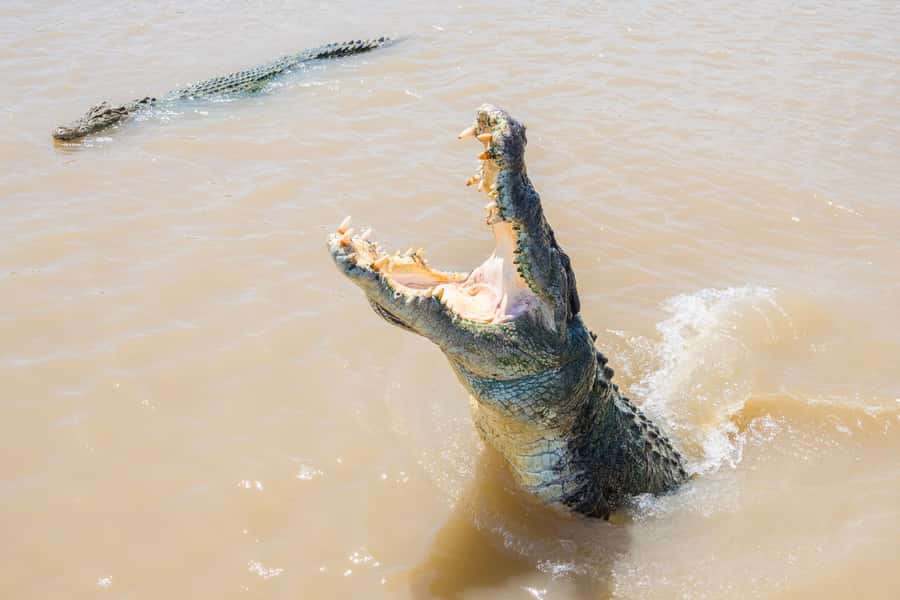
- Crocodiles rise close to the boat: Watch wild saltwater crocodiles lift from the water for buffalo meat.
- Guides add real context: Names such as Wooky, Shano, and Rick are associated with lively commentary, local knowledge, and plenty of humor.
- Wildlife comes first: The crocodiles are not forced to interact, and staff operate under wildlife permits and an animal welfare code.
- More than a crocodile show: Keep watch for white-bellied sea eagles, whistling kites, bull sharks, black flying-foxes, sawfish, and other river life.
- Easy to fit into a Darwin day: The meeting point is about an hour from Darwin City, on the way toward Kakadu.
- Good value for a focused outing: At $38 per person, the short cruise delivers excitement without taking over your whole day.
The one-hour Adelaide River experience
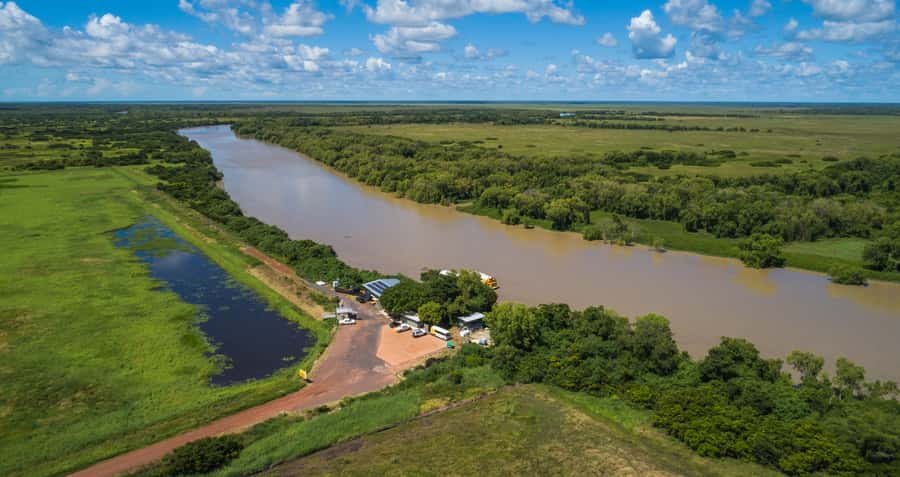
The trip begins at the river jetty, after you check in at the upstairs office. From the highway, look for the large yellow signs and the white gates at 2915 Arnhem Highway, Middle Point. The turnoff comes after Anzac Parade and before the Adelaide River Bridge. If you reach the bridge, you have gone too far.
The final approach runs along an unpaved driveway for about 2 kilometres. This is the least polished part of the arrival, and one recent comment wished for a sealed road all the way. Allow extra time if you are driving a small car or are unfamiliar with rural roads.
Once aboard, you sit in a covered vessel with custom-built seating. That cover matters in the Northern Territory, where strong sun and sudden rain can both affect your comfort. It also means you can keep your camera ready without spending the entire hour worrying about heat.
There are at least two skippers on every cruise. One handles the boat while the other helps manage the crocodile interaction and watches safety. Staff are issued wildlife permits by National Parks and Wildlife, and the stated aim is to protect both passengers and animals.
The boat moves along the Adelaide River, a waterway known for its large saltwater crocodiles and broad range of birdlife. The cruise is not a long expedition. It is a compact outing built around repeated chances to see crocodiles rise, listen to the commentary, and scan the riverbanks.
That short format works well. You get the main thrill without sitting on the water for half a day, and the cruise can fit neatly before or after another Darwin-area activity.
More Boat Tours in Darwin
- Litchfield National Park and Jumping Crocodile Cruise
★ 5.0 · 2,119 reviews - Sunset 3-Hour Cruise from Darwin with Dinner and Sparkling Wine
★ 5.0 · 980 reviews - From Darwin: Litchfield Park Tour & Jumping Crocodile Cruise
★ 4.9 · 829 reviews
Why the crocodiles jump
The signature moment comes when a guide offers a crocodile a piece of buffalo meat. The animal swims toward the boat, rises from the water, and may lift much of its body into the air to take the food.
This is not a random circus trick. The guides use the behavior to show how crocodiles position themselves, judge distance, and use their tails and muscular bodies to rise. You will see the action at close range, but from a controlled and protected position.
The guides do not claim that every crocodile will perform on command. The animals are wild and may choose not to approach. That distinction matters if you are uneasy about wildlife attractions that depend on repeated tricks.
The operator says the crocodiles are not forced to interact, and that encounters follow an internationally recognized animal welfare code. The feeding is part of a controlled educational program, with attention given to the crocodiles wellbeing. You can still see dramatic action, but the experience is presented as an opportunity to observe wild animals rather than a guarantee of a stage performance.
On some departures, you may see several crocodiles. One person described seeing five close to the boat, while another noted that the first large crocodile appeared on the opposite side and was missed by some passengers. That is a useful warning: your seat and timing can affect what you see, even on a small boat.
Guides who make the hour work
The commentary is one of the strongest parts of the cruise. The guides explain the crocodiles individual names, habits, and temperaments, then add information about the Adelaide River and its surrounding wildlife.
Wooky is known for a playful style and plenty of reptile talk. Shano has been praised for paying attention to the wider river environment, not just the crocodiles. Rick is another guide associated with the feeding presentation. Guides change, so you may not meet any one of these people, but the operation clearly places a lot of weight on personality and communication.
Expect a mix of natural history, local background, safety instructions, and jokes. Several guides have been described as funny, including one who used plenty of dad jokes. That light tone is useful here. The subject is serious, but a relaxed guide helps children and first-time wildlife watchers stay interested.
The commentary also gives you something to focus on during the quieter stretches. If a crocodile does not appear right away, you are not left staring at flat water. The guide can point out how the animals sit low in the river, how they respond to the boat, and what other species use the same waterway.
Looking beyond the crocodiles
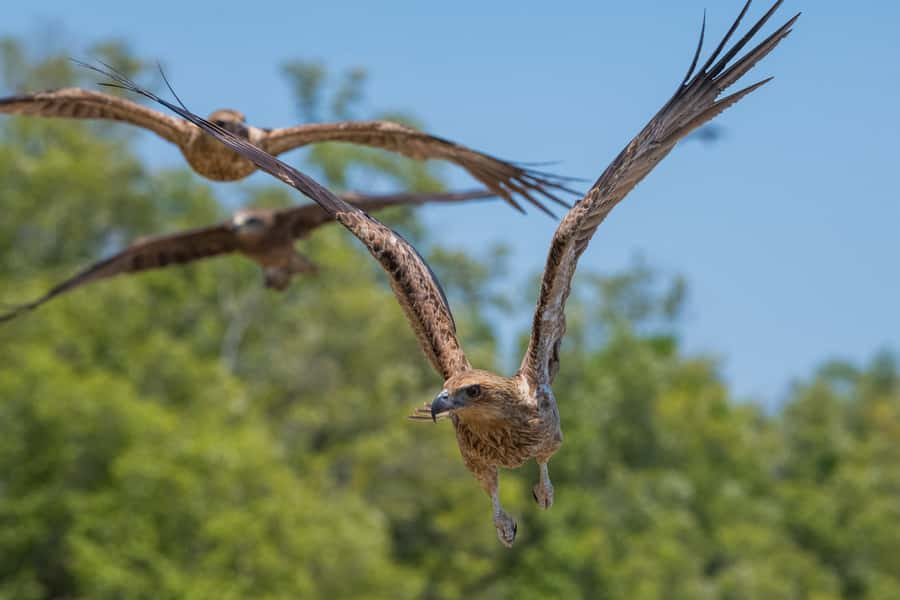
The crocodiles are the reason to book, but the river supports much more. Keep your camera and binoculars ready for white-bellied sea eagles and whistling kites overhead. Black flying-foxes may also be seen, and the water can hold bull sharks, the endangered speartooth shark, and the critically endangered large tooth sawfish.
Sightings vary from cruise to cruise. No specific animal is guaranteed, and the provider makes clear that activity depends on wildlife behaving naturally. That honesty is important. You should book this for a strong chance of seeing crocodiles, not for a fixed list of birds, sharks, or fish.
The extra wildlife adds value because it turns the cruise into a short river study rather than a single repeated stunt. I would keep scanning even after a crocodile has taken its food. The guide may be talking about a bird overhead while passengers are still watching the water.
One past departure ended with a feeding display involving a raptor. This is not presented as a guaranteed part of every cruise, so treat it as a possible extra rather than a promised finale.
More Crocodile Tours in Darwin
- Adelaide River Cruises – Jumping Crocodile Experience
★ 5.0 · 997 reviews - The Croc Bus to the Famous Jumping Crocodile Cruise
★ 5.0 · 481 reviews - Litchfield and Jumping Crocodiles Full Day Trip from Darwin
★ 5.0 · 433 reviews - 1 Hour Jumping Crocodile Cruise on the Adelaide River
★ 4.5 · 345 reviews
The Indigenous-owned business model
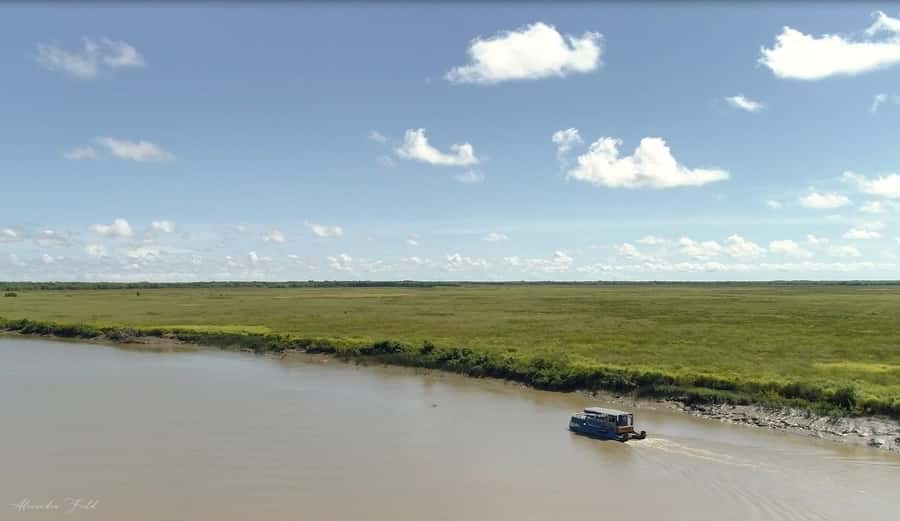
This cruise is fully Indigenous-owned, with profits going back to the Groote Eylandt Archipelago community. That gives your ticket a clear community benefit beyond the usual wildlife attraction.
It also adds meaning to the guides discussion of the river and its animals. The experience is not simply a commercial boat ride placed beside a popular road. It is connected to an Indigenous-owned operation whose stated priorities include community returns, wildlife welfare, and responsible animal interactions.
You still need to judge the feeding model for yourself. Some people prefer to watch animals without any food being offered. Here, the provider says the crocodiles are not dependent on human feeding and are not forced to take part. The staff also say they follow wildlife permits and an international ethical code.
For me, that makes this a better choice than a show built around making animals perform on demand. You see a controlled interaction, but the animal retains the choice to approach. That is a meaningful difference for anyone who cares about how wildlife tourism is run.
What the $38 price gives you
At $38 per person, the cruise is good value for a one-hour activity, especially if you are already planning to drive toward Kakadu. The price includes the river cruise and live English commentary, along with tea and coffee.
You do not get hotel pickup, so the bargain depends partly on having your own transport. From Darwin City, the meeting point takes about an hour by road. Add the return drive, and this becomes a substantial half-day outing even though you spend only one hour on the boat.
Cold drinks, ice cream, and other food are extra, though they are available for purchase before or after the cruise. Bring water anyway. A hat, sunscreen, and camera are sensible basics, and a fly net over your hat may be worth packing, particularly in warmer conditions when insects can be bothersome.
The short cruise is a plus for families and for anyone building a full day around several stops. It is also a drawback if you want a long, slow river safari. One comment wished for more time on the water, and I understand that feeling. Once the crocodiles start appearing, the hour passes quickly.
Comfort, access, and practical limits
The boat is covered and fitted with seating designed to give passengers good views. Still, one recent passenger found the boat too crowded and seating insufficient. That is the main comfort concern to keep in mind, especially if the cruise is busy.
The experience is described as wheelchair accessible, but wheelchair users need to transfer onto the vessel bench seating. Staff can assist if needed. Wheelchairs and walkers cannot be taken aboard for safety reasons, though they can be left at the jetty during the cruise.
Baby strollers are not allowed on the boat. The trip is suitable for families with young children, but parents should plan to carry what they need for the hour and leave the stroller behind.
Cruises run in rain or shine. Severe weather can lead to cancellation or postponement, with a refund or rescheduling offered in that case. Bring sun protection even if the forecast looks mild, and be prepared for a change in conditions.
Free cancellation is available up to 24 hours before departure, and you can reserve now and pay later. Check the available starting times when booking because the one-hour duration does not mean every departure runs at the same time.
Who will enjoy this cruise most
You should consider this trip if you want to see saltwater crocodiles in their own river setting without committing to a long wilderness tour. It suits first-time visitors to the Northern Territory, families, photographers, and anyone with a strong interest in reptiles.
The cruise also works for people who want a wildlife experience with a clear ethical and community angle. The guides explain what they are doing, the crocodiles are free to ignore the boat, and the business directs profits to an Indigenous community.
It may not suit you if you dislike feeding demonstrations altogether, need guaranteed animal behavior, or want a quiet trip with no crowding. You also need to be comfortable driving about an hour from Darwin and handling the rough final approach to the jetty.
For photographers, the action is close, but your side of the boat matters. Keep your camera ready, listen for the guide to indicate an approach, and do not assume the biggest crocodile will appear directly in front of you. The boat gives good viewing opportunities, but nature does not arrange itself for equal sightlines.
Should you book the Adelaide River cruise?
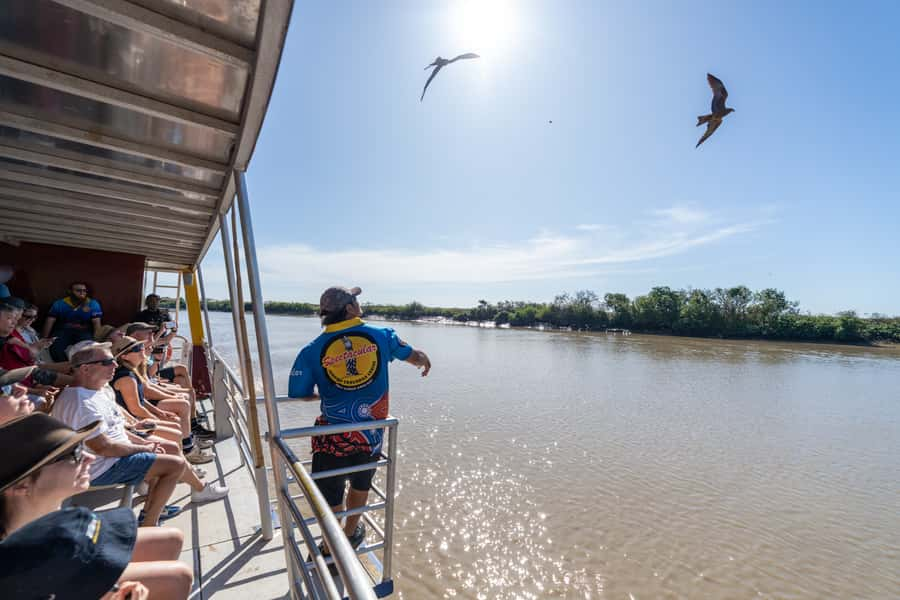
I would book this if crocodiles are high on your Darwin list and you want a focused, fairly priced activity with lively guides. The close-up jumps are genuinely dramatic, but the better reason to go is the combination of animal behavior, river ecology, and a community-owned business model.
Choose it over a standard crocodile show if you want the animals treated as wild creatures with individual behavior. Just keep your expectations realistic. You may see several crocodiles, birds, and other river life, but no guide can promise the largest animal or the most spectacular jump.
The cruise is at its best when you treat the jump as one part of the hour. Watch the water, listen to the commentary, and notice the other animals sharing the river. That approach gives you a more rewarding experience than simply waiting for the next piece of buffalo meat.
FAQ
How long does the crocodile cruise last?
The cruise lasts one hour. The full outing takes longer because the meeting point is about one hour from Darwin City each way.
How much does the experience cost?
The listed price is $38 per person. Tea and coffee are included, while cold drinks, ice cream, and other food cost extra.
Is hotel pickup included?
No. You need to make your own way to the meeting point on the Arnhem Highway, near Middle Point and the Adelaide River.
Where is the meeting point?
The entrance is at 2915 Arnhem Highway, Middle Point NT. Follow the highway east toward Kakadu, look for the large yellow signs and white gates, and turn left after Anzac Parade. If you reach the Adelaide River Bridge, you have gone too far.
Are the crocodiles guaranteed to jump?
No. The animals are wild and choose whether to approach or interact. The provider cannot guarantee a specific crocodile, animal sighting, or behavior.
Is the boat wheelchair accessible?
Yes, with conditions. Wheelchair users must be able to transfer onto the vessel bench seating, and staff can assist if needed. Wheelchairs and walkers cannot be brought aboard but can be left at the jetty.
What should I bring?
Bring a hat, sunscreen, water, and a camera. Baby strollers are not allowed on the boat. Cruises operate in most weather, though severe conditions may lead to cancellation or postponement.
Just added around Darwin
- 1-Hour Thunderball WWII Adventure Jet Skiing in Darwin★ 5.0 · 70 reviews
- Tiwi Islands Cultural Experience from Darwin Including Ferry★ 4.0 · 97 reviews
- Bombing of Darwin World War II Tour with Harbour Cruise★ 4.5 · 219 reviews
- Royal Flying Doctor Service Tourist Facility: Two Iconic Territory Stories★ 5.0 · 256 reviews
- Darwin Combo: The Bombing of Darwin Experience & Darwin Harbour Cruise★ 4.5 · 123 reviews
- Litchfield Park & Jumping Crocodile Cruise★ 5.0 · 37 reviews
- Litchfield & Berry Springs VIP Adventure Day Tours (group of 11)★ 5.0 · 142 reviews
- Adelaide River Jumping Croc Cruise★ 4.5 · 56 reviews
Crocodile Tours, compared.
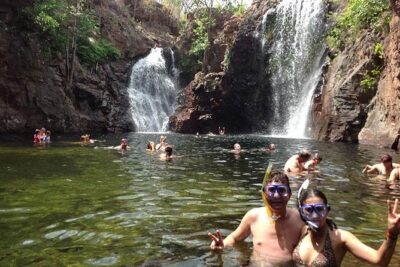
Litchfield National Park and Jumping Crocodile Cruise
Read our review →
Solar Whisper Daintree River Crocodile and Wildlife Cruise
Read our review →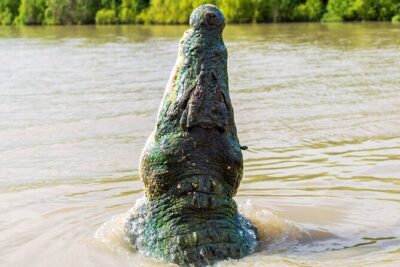
Adelaide River Cruises – Jumping Crocodile Experience
Read our review →
Litchfield Park Tour & Jumping Crocodile Cruise
Read our review →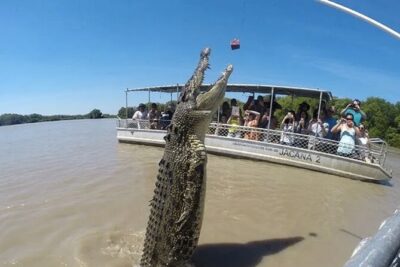
The Croc Bus to the Famous Jumping Crocodile Cruise
Read our review →
Litchfield and Jumping Crocodiles Full Day Trip from Darwin
Read our review →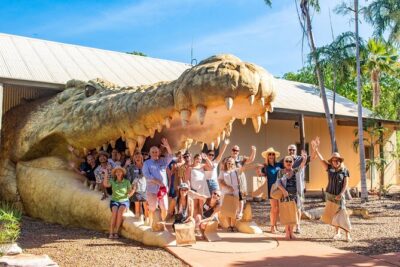
Malcolm Douglas Crocodile Park Tour Including Transportation
Read our review →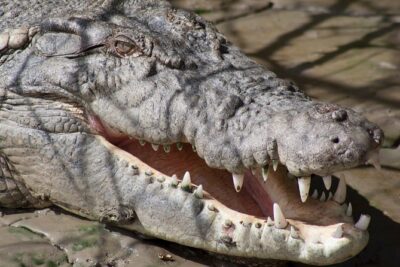
Browse the lists this tour appears in