
Reviewed · DARWIN
Darwin Heritage Walk
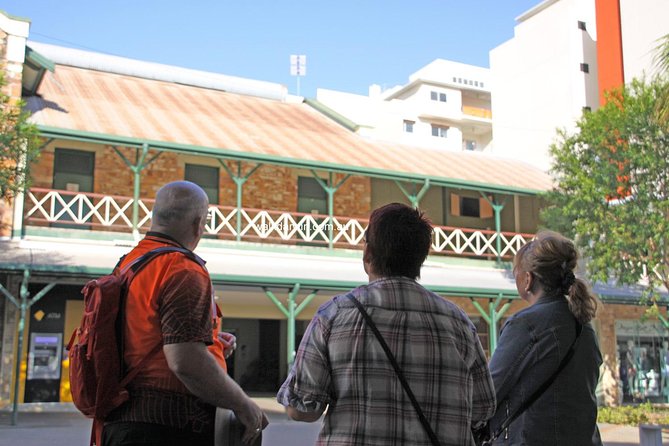
Darwin’s story is written in its gaps, ruins, rebuilt facades, and buildings that survived war and Cyclone Tracy. This two-hour city walk connects those clues, taking you from Star Village through the central business district to Bicentennial Park and Lyons Cottage.
I like the way the tour pairs old and new Darwin instead of treating the city as a museum. I also like the small group, capped at six people, which gives you a better chance to ask questions and hear personal stories from guides such as John, Robin, or Yvonne.
The main consideration is that this is a listening tour as much as a walking tour. Some people find the early Mall section slow, while the most compelling material, including the bombing of Darwin and Cyclone Tracy, comes later. Bring water, wear good shoes, and expect Darwin’s heat.
Key points to know before you book
- Small group of up to six: The size allows for questions and a more personal exchange with the guide.
- A city history told through places: Star Village, Brown’s Mart, the ruined Old Town Hall, Parliament House, and Bicentennial Park each reveal a different period of Darwin’s past.
- Strong focus on war and Cyclone Tracy: These two events receive plenty of attention because they reshaped the city.
- Easy pace, but not a short stroll: The tour lasts about two to two and a half hours, with regular stops and standing.
- Best in the morning: The 8:30 am start gives you a cooler part of the day and makes it easier to manage the tropical heat.
- A useful first activity in Darwin: The route helps you understand the central city before you explore farther afield.
Why Darwin’s center rewards a guided walk
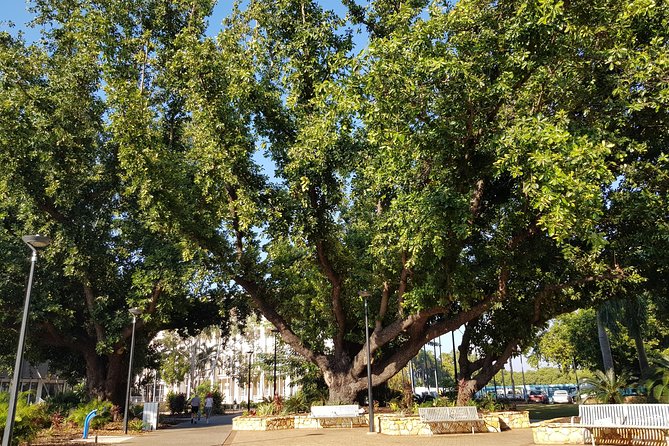
Darwin can look young at first glance. Wide streets, modern offices, tropical gardens, and rebuilt buildings give the city a relatively fresh appearance. Yet the central streets contain traces of a much older and more difficult story.
The challenge is knowing what you are looking at. A plain wall may relate to wartime Darwin. A smart retail complex may contain part of an old open-air cinema. Ruins beside modern civic buildings can tell you more about the town’s early years than a polished museum display.
That is where a local guide helps. John is praised for his detailed knowledge of Darwin, politics, and Northern Territory life. Robin brings local stories and personal experience, while Yvonne is known for an informative, easy-paced walk. The value is not only in naming buildings. It is in explaining who used them, what happened around them, and why they still matter.
The tour also gives you room to ask questions. Guides have stopped in shaded areas for comfort, allowed time for photographs, and suggested local things to do afterward. That makes the walk useful at the start of a stay, when you are still deciding how to spend the rest of your time.
More History Tours in Darwin:
- Bombing of Darwin WWII Heritage Tours
★ 5.0 · 261 reviews - Darwin History and Wartime Experience Tour
★ 5.0 · 144 reviews - Darwin: Small Group 2-Hour Heritage Walk
★ 4.9 · 28 reviews
Starting at John McDouall Stuart’s corner
The walk begins at John McDouall Stuart’s corner, near The Mall and Knuckey Street, in Darwin City. The location is central and close to public transport, so you can reach it without a hotel transfer. Hotel pickup and drop-off are not included.
The 8:30 am departure matters in Darwin. The heat can build quickly, and morning is the more comfortable time for standing outdoors. You should still arrive with sunscreen, a hat, water, and enclosed non-slip shoes.
The guide begins by setting the scene for Darwin’s development. The central streets connect the city’s early years with its present role as the capital of the Northern Territory. The focus is on people, buildings, politics, disasters, and the stubborn effort required to keep a remote tropical town going.
This opening section includes several stops around The Mall and Smith Street. One useful point to understand is that the tour is not designed as a fast march from one attraction to the next. The guide may pause for a while to explain details that are easy to miss if you are walking alone.
That slower start will suit you if you enjoy background and anecdotes. If you prefer a brisk sightseeing circuit, it may feel drawn out. The guide’s commentary is the main event, so this is not the right choice if you want to spend most of the morning taking photographs.
Star Village and the surviving pieces of old Darwin
Star Village occupies the site of a former open-air cinema and includes one of the few original buildings left from before Cyclone Tracy. Today, the space has been turned into a stylish retail hub, but the guide points out its older features and explains how the site once functioned.
This is an excellent example of the walk’s approach. You are not simply shown an old building and given a date. You see how Darwin reuses its past. A place connected with entertainment and community life now serves a different purpose, yet traces of the earlier structure remain.
The stop lasts about 10 minutes and is free to enter. You should have time for photographs, although the focus is on the guide’s explanation rather than browsing the shops.
For me, this is one of the more useful early stops because it shows why Darwin’s heritage can be easy to miss. The city does not always announce its oldest buildings with grand signs. Sometimes the clue is a surviving wall, a changed use, or a detail that only makes sense once someone explains it.
Brown’s Mart Theatre and a century of social life
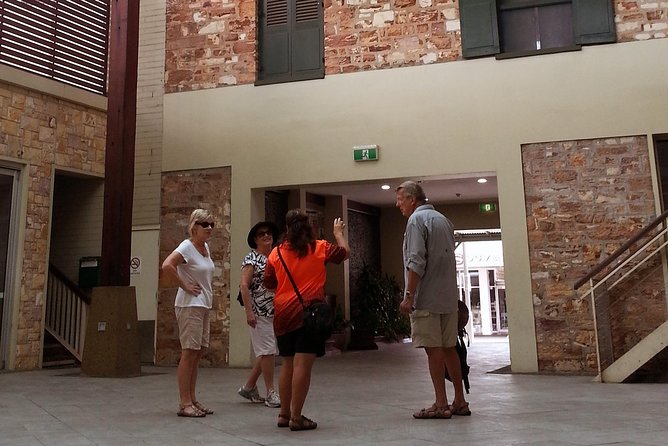
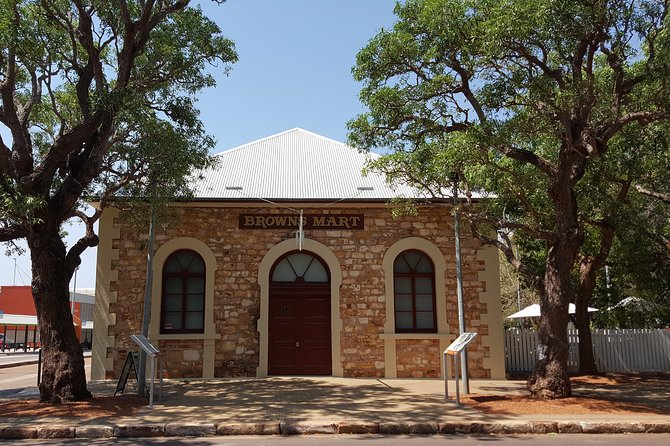
Brown’s Mart Theatre has been part of Darwin’s social life for more than 100 years. The tour views the exterior and uses the building to discuss the people and events linked to it.
The stop takes around 10 minutes. You will not go through a lengthy indoor visit, so keep your expectations clear. This is an outdoor history talk beside an important building, not a theatre performance or extended interior tour.
Brown’s Mart helps show that Darwin’s past was not only about government and disasters. Social life matters too. The places where people gathered, watched performances, and built local connections help explain how a small settlement developed a civic identity.
This is another section where anecdotes make the difference. The building itself may not tell you much if you pass by alone. With a guide, its role in the city becomes easier to place.
More Walking Tours in Darwin:
- Sydney Opera House Official Guided Walking Tour
★ 4.5 · 3,770 reviews - From Sydney: Blue Mountains Tour with Waterfall Walk & Lunch
★ 4.8 · 2,400 reviews - Sydney The Rocks Guided Walking Tour
★ 5.0 · 1,546 reviews - Ultimate Melbourne Walking Tour: History, Laneways & Culture
★ 5.0 · 1,451 reviews
The Old Town Hall and Darwin’s early pioneers
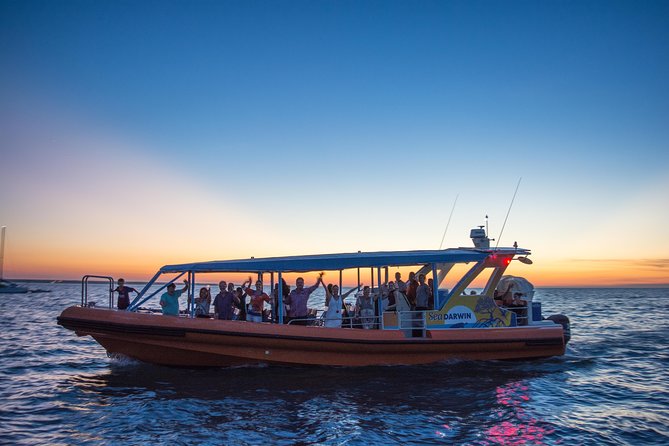
The Old Palmerston Town Hall is now in ruins, but that is exactly what makes the stop memorable. The site offers a visible reminder of Darwin’s early residents and the pioneers who passed through the town.
You spend about 10 minutes here, looking at the remains while the guide explains their connection to early Darwin. The ruins provide a sharp contrast with the working buildings and newer civic spaces elsewhere along the route.
I like this stop because it avoids the usual polished version of city history. A ruin can be more honest than a restored facade. It shows loss, change, and the fact that Darwin has repeatedly had to rebuild.
The guide may also help you connect the site with the wider story of the city’s resilience. That word can sound vague, but here it has a practical meaning. Darwin has faced isolation, wartime attack, severe weather, and major rebuilding. The Old Town Hall gives that story a physical form.
The Administrator’s buildings and early official Darwin
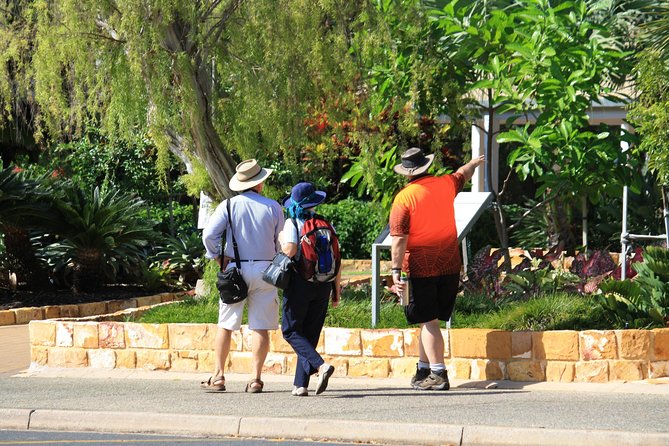
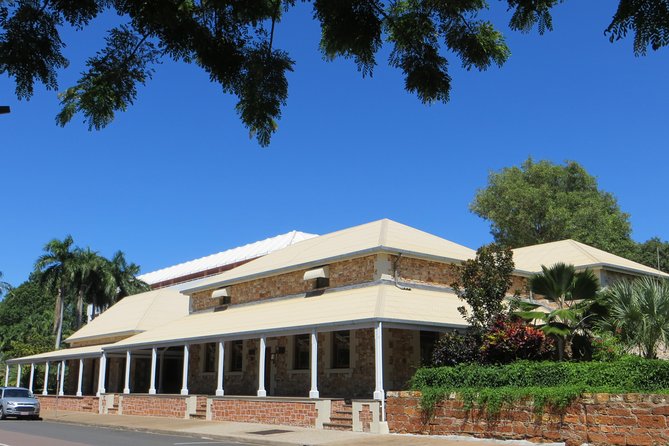
The beautifully restored buildings and gardens associated with the Administrator of the Northern Territory offer a different view of the city. Here, the emphasis shifts from ruins and commercial spaces to the official life of early Darwin.
The buildings are now used as offices for the Administrator. You view them from outside and hear how they fit into the territory’s past. The gardens add a calmer pause to the route and give you a chance to appreciate architectural details without rushing.
This stop lasts roughly 10 minutes. It is particularly useful if you want to understand how administration shaped Darwin. The city’s story is not only about hardship and recovery. It is also about the institutions that helped govern a remote part of Australia.
The contrast with the Old Town Hall is part of the appeal. One site is visibly damaged and incomplete. The other has been carefully restored and remains in official use. Together, they show how different parts of Darwin’s past have survived.
Parliament House and the modern Northern Territory

Parliament House looks over Darwin Harbour and represents the self-governing city of today. The guide uses the building to explain modern Darwin and the political development of the Northern Territory.
You spend about 10 minutes at this stop. It is a useful bridge between the earlier parts of the tour and the present day. After hearing about pioneers, old buildings, and major disasters, you get a clearer sense of how Darwin functions as a capital city.
The guide’s ability to discuss current affairs can add value here. John, in particular, is praised for connecting local politics with the city’s past. That makes the stop more than an architectural photo opportunity.
You should not expect an extended parliamentary tour or an interior visit. The point is to understand the building’s civic role and how modern Darwin emerged from its earlier struggles.
Bicentennial Park, the harbour, and the city’s tougher chapters
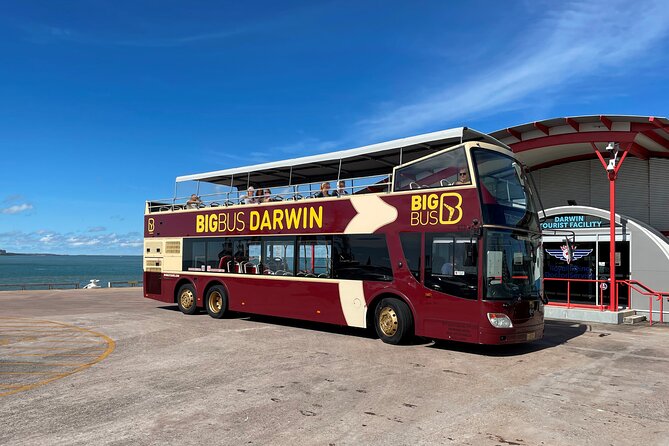
Bicentennial Park is one of the longer stops, at about 15 minutes. It overlooks Darwin Harbour and offers green space in the center of town, but the guide also points out less obvious features linked with early Darwin.
This is where the tour’s setting becomes especially helpful. Looking toward the harbour while hearing about the city’s past gives you a stronger sense of Darwin’s position and importance. The park is not just a place for a scenic pause. It also holds reminders of the city’s working, military, and civic history.
The later part of the walk gives substantial attention to the bombing of Darwin and Cyclone Tracy. These are defining events, and the guide explains how they changed the city and the people who lived through them.
You will hear stories and anecdotes rather than receive only a list of dates. That approach is one of the tour’s strongest features. Disaster history can become dry when presented as a timeline. Personal accounts and local detail give it more feeling and help you understand why these events remain central to Darwin’s identity.
The route ends at the intersection of The Esplanade and Knuckey Street, opposite Lyons Cottage. This gives you a clear finish near the harbour and leaves you well placed to continue exploring central Darwin on foot.
What the walk does well, and where it falls short
The tour’s strongest point is its local commentary. Guides such as John, Robin, and Yvonne are described as warm, well prepared, and happy to answer questions. Several guides are long-term Darwin residents, which adds personal context to the formal history.
The pacing is another strength for many people. The walk is generally described as easy and slow enough for photographs and questions. Guides have made a point of stopping in the shade, which matters in Darwin’s climate.
The small group is valuable too. With a maximum of six people, you are less likely to be lost at the back, and the guide can respond to your interests. The experience costs $42.32 per person, which is fair if you want two hours of live interpretation rather than a self-guided stroll. It is less appealing if you plan to move quickly and only want exterior photographs.
There are two important limitations. First, much of the experience involves standing and listening. It is suitable for someone with moderate fitness, but it is not a fully seated or indoor activity. Second, the content could feel uneven if your main interest is Indigenous history. One piece of feedback specifically called for more discussion of the Larrakia people, first contact, colonisation, and the fact that the land was not ceded. If those subjects matter deeply to you, ask the guide direct questions during the walk and consider adding a dedicated Indigenous cultural experience to your Darwin plans.
Who should book the Darwin Heritage Walk
I would choose this tour for a first morning in Darwin. It gives you a working map of the CBD and helps you see meaning in buildings you might otherwise pass without a thought.
It suits you best if you:
- Enjoy local stories, anecdotes, and social history
- Want context for the bombing of Darwin and Cyclone Tracy
- Prefer a small group to a large city tour
- Can walk and stand for two to two and a half hours
- Like asking questions and speaking with a local guide
- Want an easy introduction before exploring alone
It may not suit you if you need extensive indoor time, dislike guided commentary, or want a fast-paced attraction tour. The walk operates in all weather conditions, so dress for the day and be ready for sun or rain.
Children must be accompanied by an adult. Service animals are allowed. A minimum of two people is required for the tour to operate, and confirmation is provided when you book. Free cancellation is available up to 24 hours before the start time. If poor weather or the minimum group size causes cancellation, you are offered another date or a full refund.
Practical preparation for the tropical morning
Wear enclosed walking shoes with non-slip soles. The route is not described as strenuous, but uneven surfaces, heat, and long periods of standing can still make poor footwear a problem.
Bring water, sunscreen, and a hat. A camera is worthwhile because the tour includes old facades, ruins, gardens, harbour views, and small details around the CBD.
Try to keep your schedule flexible after the walk. The tour lasts around two hours to two and a half hours, and questions or extra discussion can affect the exact finish. The central endpoint makes it easy to continue your day in Darwin, but hotel transport is not provided.
Because the tour averages bookings about 45 days ahead, booking early makes sense if your Darwin dates are fixed. The small capacity is a real benefit once you are walking, but it also means fewer spaces are available.
Should you book it?
Book the Darwin Heritage Walk if you want the city’s buildings to make sense, not just appear in your photographs. The guide-led stories, small group, gentle pace, and strong coverage of wartime Darwin and Cyclone Tracy make it a useful introduction.
Go in knowing that the first section may feel slow and that the walk depends heavily on spoken commentary. Also, if you want a fuller account of Larrakia history and colonisation, ask questions and add another experience that focuses on those subjects.
For most visitors with a morning to spare, the $42.32 price is good value. You receive local interpretation, a compact route through central Darwin, and a clearer understanding of why this young-looking city carries so many layers of the past.
FAQ
How long does the Darwin Heritage Walk last?
The walk lasts approximately two to two and a half hours.
What time does the tour start?
The tour starts at 8:30 am.
Where does the walk begin?
It begins at John McDouall Stuart, near The Mall and Knuckey Street, Darwin City, Northern Territory.
Where does the tour finish?
The walk ends at the intersection of The Esplanade and Knuckey Street, opposite Lyons Cottage.
How much does the tour cost?
The listed price is $42.32 per person.
How many people can join the tour?
The tour has a maximum of six people.
Is the walk suitable for children?
Children may join, but they must be accompanied by an adult.
What should I bring?
Bring a camera, sunscreen, a hat, drinking water, and good enclosed non-slip walking shoes.
Does the tour operate in bad weather?
The experience operates in all weather conditions, but it may be canceled if conditions are unsuitable. In that case, you are offered another date or a full refund.
Can I cancel for a full refund?
Yes. You can cancel at least 24 hours before the start time for a full refund. Cancellations or changes made less than 24 hours before the start time are not accepted for a refund.
Just added around Darwin
- 1-Hour Thunderball WWII Adventure Jet Skiing in Darwin★ 5.0 · 70 reviews
- Tiwi Islands Cultural Experience from Darwin Including Ferry★ 4.0 · 97 reviews
- Bombing of Darwin World War II Tour with Harbour Cruise★ 4.5 · 219 reviews
- Royal Flying Doctor Service Tourist Facility: Two Iconic Territory Stories★ 5.0 · 256 reviews
- Darwin Combo: The Bombing of Darwin Experience & Darwin Harbour Cruise★ 4.5 · 123 reviews
- Litchfield Park & Jumping Crocodile Cruise★ 5.0 · 37 reviews
- Litchfield & Berry Springs VIP Adventure Day Tours (group of 11)★ 5.0 · 142 reviews
- Adelaide River Jumping Croc Cruise★ 4.5 · 56 reviews
Walking Tours, compared.
Sydney Opera House Official Guided Walking Tour
Read our review →
Blue Mountains Tour with Waterfall Walk & Lunch
Read our review →

Ultimate Melbourne Walking Tour: History, Laneways & Culture
Read our review →

Great Ocean Road Tour Plus Koalas, Forest Walk and Morning Tea
Read our review →
Blue Mountains Small Group Tour with Waterfall Walk & Fresh Lunch
Read our review →
Maria Island Cruise and Guided Walk Day Tour with Lunch and Drinks
Read our review →Browse the lists this tour appears in