
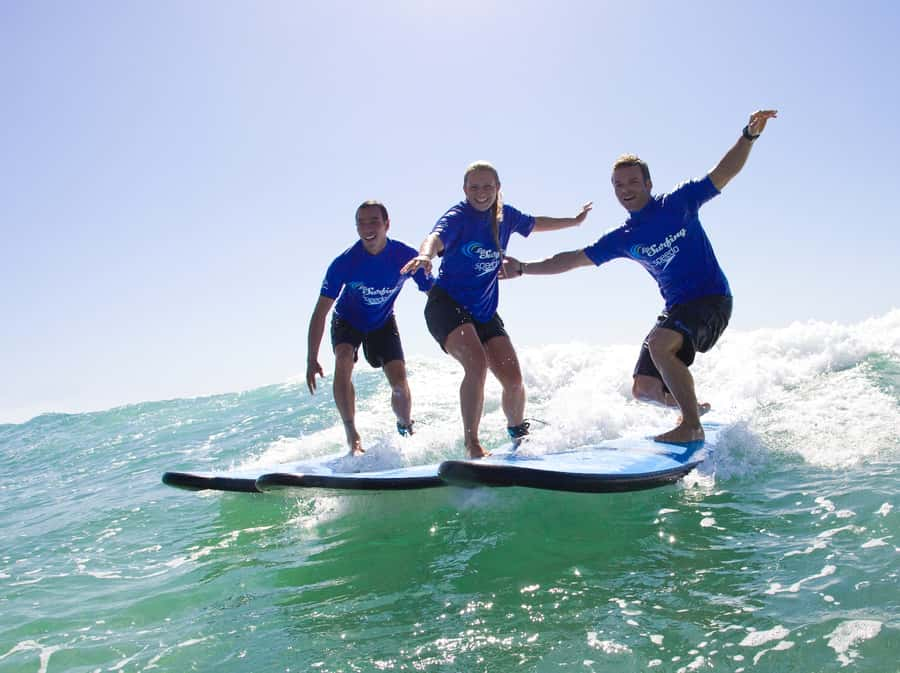
Reviewed · SYDNEY
Bondi Beach: 2-Hour Surf Lesson Experience for Any Level
The best part of this Bondi experience is that you get into the water quickly, but not before learning how to read the beach and handle a surfboard. I like the maximum group size of five, which gives instructors time to correct your stance and help you choose a manageable wave. I also like the clear safety focus, including rip-current advice and practical ocean knowledge.
The main catch is that surfing depends on the conditions. Small waves can be ideal for learning, but a rising tide, crowded beach, or flat session may limit your rides. You should also arrive ready for a workout: two hours on a board is more tiring than it looks.
Key points at a glance
- Small groups of five or fewer: You get more direct coaching than in a large beach class.
- A proper safety briefing: Learn about waves, rip currents, beach conditions, and safe ways to enter the water.
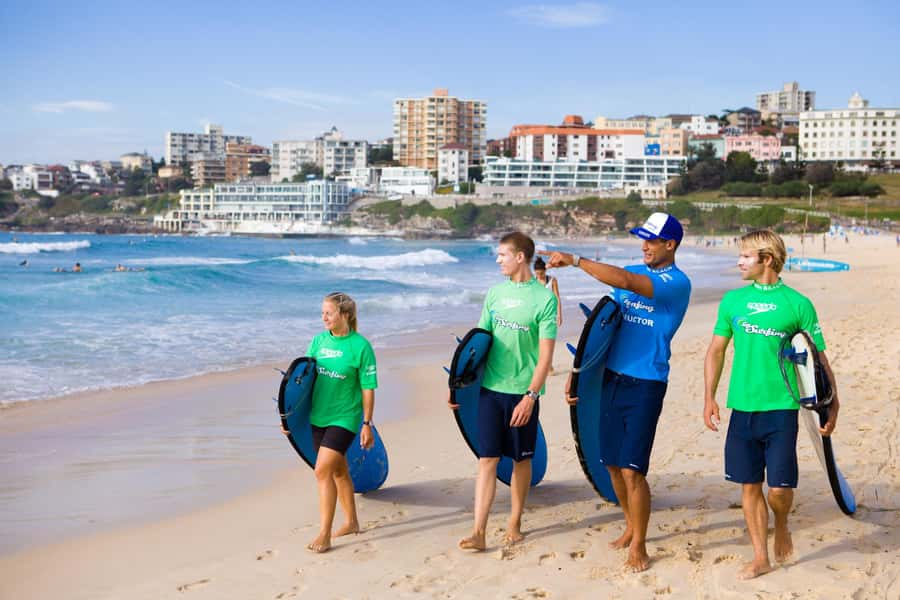
- Beginner-friendly equipment included: Soft board, wetsuit, UV rash vest, sunscreen, zinc, changing rooms, security, and an outdoor shower are provided.
- Qualified local and international instructors: Teachers including Matt, Luke, Marcus, Jessie, Brontë, and Tom are praised for patience and clear explanations.
- Two hours at Bondi Beach: The lesson includes land practice, guided wave attempts, feedback, and time to try on your own.
- Suitable from age 12: Children under 12 and pregnant women cannot join, and intoxicated participants are not allowed.
Why Bondi is a memorable place to learn
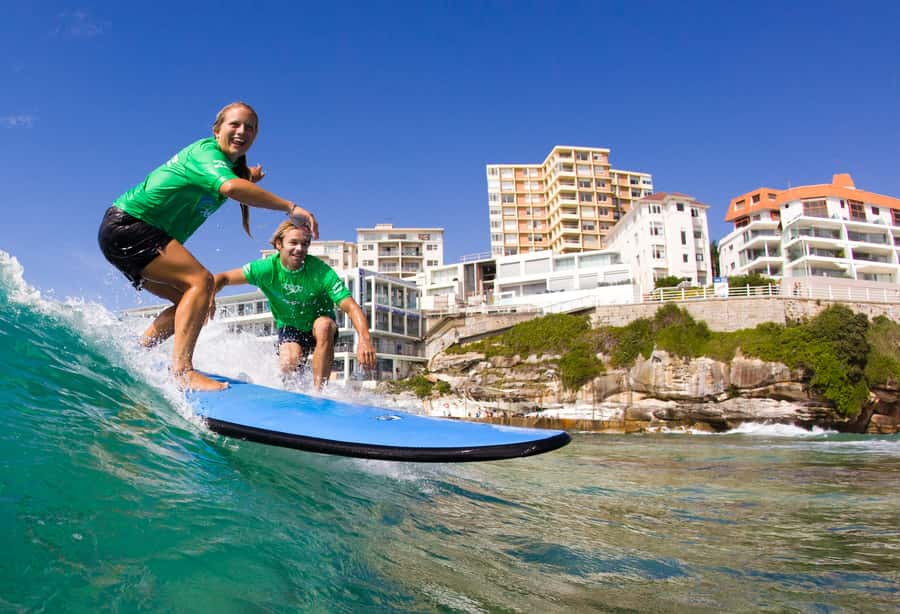
Surfing at Bondi is not just a lesson beside any beach. You are learning at one of Australia’s best-known stretches of sand, with the sea, surf culture, and famous beach setting all around you. That gives the class a sense of occasion without making it feel formal.
The meeting point is Let’s Go Surfing at 128 Ramsgate Avenue, on the left-hand side of the beach if you are facing the water. The location is easy to find, but Bondi can get busy, so give yourself enough time to walk there and arrive 20 minutes before the lesson starts.
I like this setting for a first attempt because you do not need to arrange separate equipment, find a suitable patch of sand, or guess which waves are safe. The instructor handles those decisions while you focus on the basic job: lie down, paddle, pop up, and keep your balance.
The famous name of Bondi can also create pressure. You may feel that you need to perform in front of a crowd. The instructors work to reduce that feeling by keeping the session friendly and low-pressure. One particularly useful approach described by the teaching team is to remind beginners that they do not need to rush. That is good advice. Your first lesson is about learning the movement and feeling comfortable in the water, not becoming a finished surfer.
More Surf Lessons in Sydney:
- Sydney: Maroubra Surf Lesson
★ 4.7 · 188 reviews - Sydney: Dee Why Beach Group Surfing Lesson
★ 5.0 · 21 reviews - Surfers Paradise: 2 Hour Surf Experience on the Gold Coast
★ 4.9 · 1,132 reviews
The first 20 minutes: check-in, equipment, and preparation
Plan on arriving early. The required arrival time is 20 minutes before the lesson, and that matters because you need to get sorted before the teaching begins. Bring swimwear and a towel. Swimwear is not provided.
The school supplies the main gear:
- Soft surfboard
- Warm wetsuit
- UV rash vest
- Sunscreen and zinc
- Change rooms
- Security for personal belongings
- Outdoor shower
A soft board is a sensible choice for beginners. It is more forgiving than a hard board when you are learning to balance, and it makes accidental knocks less severe. You will still need to handle a fairly large board, so expect a little awkwardness on land before things feel natural in the water.
The wetsuit is useful even when the day feels warm. You will spend a lot of time in the water, and getting cold makes learning harder. Sunscreen and zinc are supplied, but you should still bring your own if you have a preferred product or sensitive skin.
There is no mention of towel hire, so pack one. A bag for wet swimwear is also a sensible personal extra, though it is not listed as a requirement.
The safety talk is more than a formality
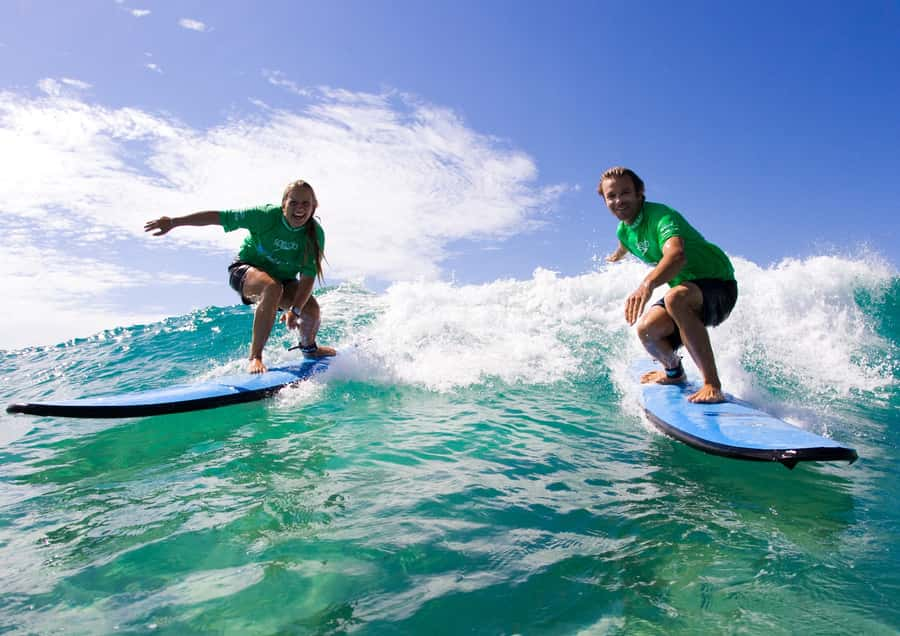
Before you paddle out, the instructor explains how to behave in the surf. This includes basic wave terms, the parts of the board, beach conditions, and what to do if you encounter a rip current.
That briefing is one of the strongest parts of the experience. Beginners often focus so closely on standing up that they forget the sea is moving around them. Knowing how to spot a rip and what to do if caught in one gives you useful information beyond this particular class.
You will also learn how to carry and position the board, where to wait, and how to approach a wave safely. The exact order may vary with the instructor and conditions, but the lesson is structured rather than simply handing you a board and sending you into the surf.
Instructors such as Dan and Tom have been praised for explaining safety clearly before moving into technique. That order makes sense. You can enjoy the fun more when you understand the basic rules.
The school teaches in English, so you should be comfortable following spoken instructions in English. You do not need previous surf experience. The class can also suit someone who has tried once before and wants to rebuild basic technique.
On the sand: learning the pop-up
The lesson normally begins with practice on the beach. You learn where to place your hands, how to push your chest up, how to bring your feet under your body, and how to rise without rushing.
This dry practice may look simple, but it is where many beginners discover the awkward part of surfing. Getting from lying flat to standing requires timing and coordination. The instructor can watch your movement closely on the sand, then give you a clear task to repeat in the water.
You will also learn how to position yourself on the board. Too far forward and the nose may catch. Too far back and the board may slow down. The soft board gives you a stable platform, but balance still takes work.
The small group helps here. With five students or fewer, the instructor can watch each person rather than giving only broad advice. Several instructors, including Jessie, Marcus, Brontë, and Luke, are praised for giving individual corrections and encouragement during the lesson.
Do not worry if you are slower than the person beside you. The instructors are used to mixed ability within one group. Some people may have briefly surfed before, while others may never have touched a board. The lesson can adapt to both.
A few more Sydney trips worth weighing up
- Sydney: 2-hour Express Whale Watching Cruise
★ 4.2 · 756 reviews - Sydney Harbour: 2-Hour Morning Yacht Cruise with Morning Tea
★ 4.8 · 42 reviews - Melbourne: 2-Hour City Highlights River Cruise
★ 4.1 · 1,804 reviews - Byron Bay: 2-Hour Small Group Surf Lesson
★ 4.8 · 657 reviews
Moving into the water and catching your first wave
Once the land practice is complete, you carry the board into the shallows and begin working with real waves. This is the point where the class becomes physical. You will paddle, reset your position, wait for a suitable wave, and try the pop-up several times.
Your first attempts may involve more falling than surfing. That is normal. The useful part is the quick feedback. An instructor can tell you to paddle sooner, shift your weight, look forward, or rise more smoothly. Small changes can make the board travel farther.
The teaching style appears to balance hands-on help with independence. If you want close guidance, you can ask for it. If you prefer to try on your own after the first few attempts, you get room to do that while the instructor keeps watch.
That balance is important. A teacher who does everything for you may produce one lucky ride but not much understanding. A teacher who leaves you alone too soon can make the lesson frustrating. The best use of this two-hour format is a gradual shift from direct coaching to your own attempts.
Some sessions produce easy beginner waves, while others are less generous. One session had few waves, yet the instructor made good use of the available conditions. Another had low surf that turned out to be suitable for learning. Flat or small waves may not look exciting, but they can give you more control and fewer intimidating takeoffs.
Conditions, tide, and crowd levels
You cannot book a guaranteed perfect wave. Surf conditions change with the weather, tide, wind, and the day’s beach activity. One lesson had better waves early, with poorer conditions during the final 30 minutes as the tide rose. That is a useful reason to take the first available morning slot if your schedule allows.
An earlier class may also help before Bondi fills with more people. One participant found the beach became crowded toward the end of a lesson. The school still controls the teaching area and safety process, but a busier beach can make the water feel less calm and can reduce the sense of open space.
The instructors choose conditions suitable for beginners, and the safety briefing is part of that process. Still, you should keep expectations realistic. A two-hour lesson can teach you the basics, but it cannot control the ocean.
Weather is not automatically a reason to cancel. One class took place in rain with small waves, yet those waves were judged good for beginners. You may not get the postcard version of Bondi, but mild conditions can make the first lesson less stressful.
What you can realistically learn in two hours
Many beginners hope to stand up. That is a reasonable goal, and several people manage it during the lesson. Some get upright within the first half hour, while others only begin catching waves independently near the end.
Your result will depend on balance, fitness, timing, the waves, and how quickly the pop-up feels natural. Do not judge the lesson only by how long you stand. Learning to read a wave, position a board, paddle safely, and understand your next correction is real progress.
The class aims to give you a working base rather than turn you into an independent expert. Afterward, you may feel ready to practise the basics alone, but you should remember the safety information and avoid conditions beyond your ability.
The two-hour duration is well judged for a first attempt. You get enough time to repeat the movement and receive feedback, but most people will be tired by the end. Surfing uses your arms, core, legs, and balance. Add the effort of carrying a board and pushing through waves, and the final part of the session can feel demanding.
The instructors and the value of personal coaching
The experience uses fully qualified local and international instructors. Individual teachers named in the feedback include Matt, Andrea, Jessie, Dan, Brontë, Luke, Marcus, Tom, Max, Chris, Tyler, Jed, and Nat.
You cannot choose a particular instructor from the information provided, but the teaching qualities are consistent: patience, clear safety explanations, encouragement, and tips aimed at each person’s technique. Brontë is noted for creating a low-pressure mood, while Marcus is praised for staying alongside students and explaining each step. Matt is described as especially helpful when waves were small, and Tom for watching individual rides and offering precise corrections.
That personal attention is the main reason the class can be worth the price. At $70 per person, you are not paying only for time on a board. You are paying for equipment, supervision, safety instruction, changing facilities, and a teacher who can correct mistakes while they are happening.
Compared with simply hiring a board, the lesson gives you a much safer starting point and saves you from working out the basics alone. Compared with a large class, the five-person limit gives you a better chance of receiving repeated feedback. The value is strongest if this is your first surf lesson or if you want to decide whether surfing deserves more time and money.
Who should book this Bondi lesson
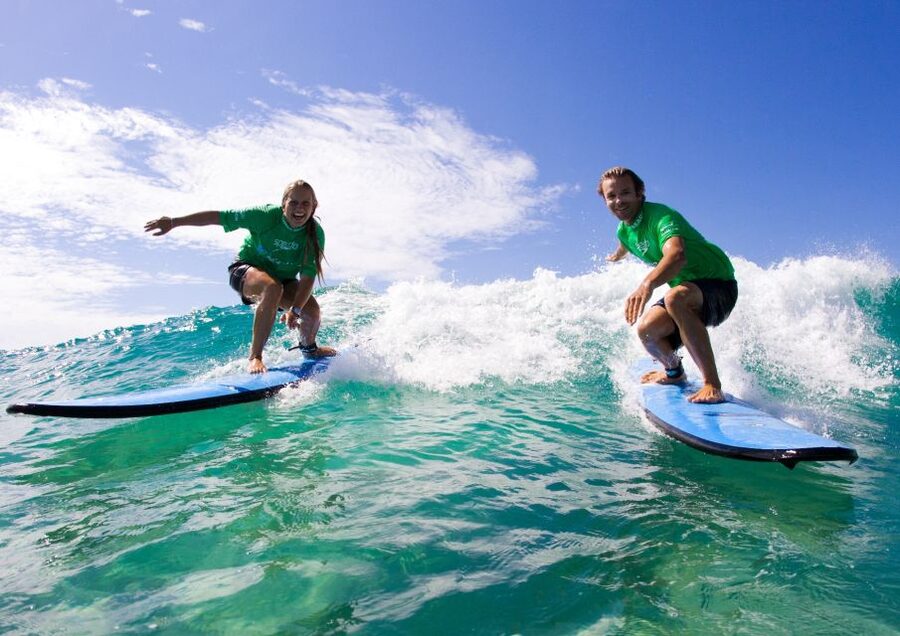
I would recommend it for:
- First-time surfers who want a structured introduction
- Visitors looking for an active Bondi experience
- Families with children aged 12 and over
- Couples and friends who want to learn together
- People who tried surfing once and need help with basic technique
- Anyone nervous about the ocean who wants a proper safety briefing
It is less suitable if you need guaranteed large waves, want an advanced coaching session, or dislike physical activity. The class is taught in English, so you need to understand the instructor’s directions.
Children under 12 cannot join. Pregnant women cannot participate, and anyone intoxicated will not be allowed to take part. Those rules are sensible for a water activity.
You should also consider the timing of your wider Sydney day. After two hours in the water, you may want a quiet meal or a break rather than another strenuous activity. Bondi has plenty to do nearby, but this lesson is not a quick photo stop.
Practical details before you book
The price is $70 per person, and the lesson lasts two hours. The group is limited to five participants, which is an important detail to check when comparing classes.
Bring swimwear and a towel. Arrive 20 minutes early at Let’s Go Surfing, 128 Ramsgate Avenue, Bondi Beach 2026, New South Wales. If you are looking at the water, the school is on the left side of the beach.
You can cancel up to 24 hours before the start time for a full refund. The reserve-now, pay-later option lets you hold a place without paying immediately, useful when your Sydney plans are still moving around.
Book an earlier time if possible. It may mean a less crowded beach, and the conditions can change during the day. You should also allow for the possibility that a session with small waves will focus more on technique than dramatic rides.
FAQ
What is included in the Bondi surf lesson?
The lesson includes a soft surfboard, warm wetsuit, UV rash vest, sunscreen, zinc, changing rooms, security for personal belongings, and an outdoor shower.
What should I bring?
Bring swimwear and a towel. Neither is included with the lesson.
Where does the lesson meet?
Meet at Let’s Go Surfing, 128 Ramsgate Avenue, Bondi Beach 2026, New South Wales. If you are facing the water, the meeting point is on the left-hand side of the beach.
How early should I arrive?
Arrive 20 minutes before the lesson begins so you have time to get ready.
What is the minimum age?
The minimum age is 12. Children under 12 cannot join, and the activity is not suitable for pregnant women.
Can I cancel the booking?
Yes. You can cancel up to 24 hours before the lesson for a full refund. You can also reserve a place and pay later.
Should you book it?
I would book this if you want your first surf lesson to feel personal, safe, and tied to a memorable Sydney setting. The five-person limit, included gear, qualified instructors, and clear rip-current briefing give it more substance than a quick try in the shallows.
Choose an earlier time if you can, and accept that the ocean sets the terms. You may stand up several times, or spend much of the lesson learning how to paddle and position the board. Either way, $70 buys a sensible introduction to surfing at Bondi, with enough coaching to help you decide if you want to keep going.
Just added around Sydney
- sydney underwater scooter tours★ 4.5 · 74 reviews
- Taronga Zoo Sydney Wild Australia Experience★ 4.8 · 64 reviews
- Taronga Zoo Aussie Backyard Adventure★ 4.8 · 85 reviews
- Sydney: Whale Watching Cruise and Taronga Zoo Package★ 4.2 · 37 reviews
- Sydney: Spirits of the Rock and Dark Past Walking Tour★ 4.0 · 144 reviews
- Sydney: Whale Watching Adventure Cruise – Whales Guaranteed!★ 4.4 · 76 reviews
- Sydney Whale Watching Cruise with Breakfast or Lunch★ 4.4 · 340 reviews
- Sydney Harbour: Tall Ship Lunch Cruise★ 4.8 · 69 reviews
Surf Lessons, compared.
Learn to Surf at Surfers Paradise on the Gold Coast
Read our review →
Broadbeach: 2 Hour Surf Experience on the Gold Coast
Read our review →
Browse the lists this tour appears in