
Reviewed · CAIRNS
Atherton Tablelands Rain Forest by Night from Cairns
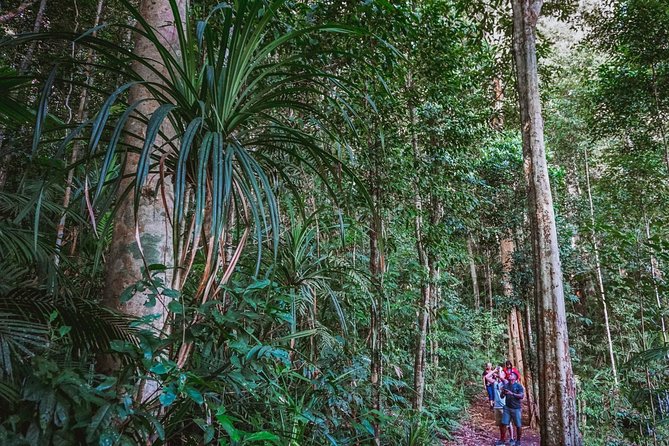
The rarest sight here may be a wild platypus, but the real draw is seeing the rainforest change as daylight fades. You follow forest trails, watch wallabies and flying foxes in the afternoon, then use a spotlight after dark to look for tree kangaroos, possums, frogs, owls, and glowing details around the famous Curtain Fig Tree.
I like the small group, capped at 11 people, and the fact that binoculars, spotlights, rain ponchos, dinner, and afternoon tea are included. Guides such as Paul and Clayton bring strong local wildlife knowledge and sharp eyes. The main catch is the long, twisting drive up the Gillies Range, plus a fair amount of walking in the dark.
Key points at a glance
- Platypus at dusk: Pause by the water when these shy animals are most active, though sightings can never be guaranteed.
- Rainforest after dark: Use spotlights to find frogs, owls, possums, geckos, bats, and perhaps a Lumholtz tree kangaroo.
- Lake Barrine tea stop: Enjoy tea or coffee and fresh-baked goods beside a volcanic crater lake.
- Historic Yungaburra dinner: Eat in an old country building in one of the Tablelands villages.
- Small-group format: A maximum of 11 people makes it easier to hear the guide and share sightings.
- Practical equipment included: Binoculars, spotlighting gear, reference materials, rain ponchos, transport, park fees, and meals are covered.
Why the Atherton Tablelands work so well after dark
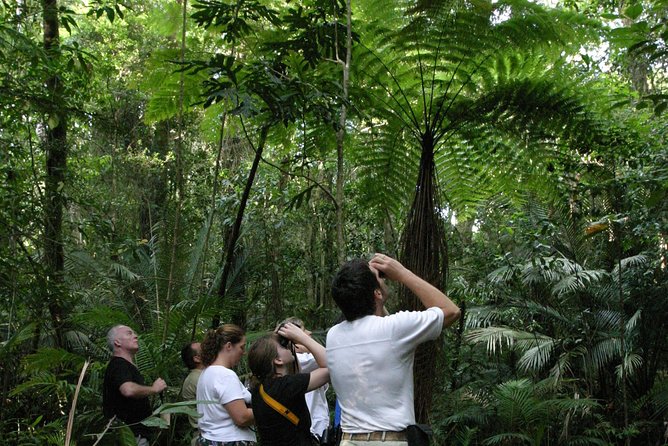
Cairns gives you easy access to the Wet Tropics, but the Atherton Tablelands offer a different feel. The air is cooler, the forest is older, and the change from afternoon light to full darkness lets you see animals that remain hidden during a standard day trip.
This is not a zoo visit with guaranteed viewing platforms. You walk, pause, listen, and scan the trees and water. Some sightings may be quick. Others may take patience. That uncertainty is part of the appeal, especially if you want animals in their natural setting rather than a staged wildlife encounter.
The tour runs for about eight hours, starting around 1:30 pm and returning to Cairns at night. That timing is well judged. You get daylight for the forest trails and scenic stops, dusk for platypus spotting, and darkness for the nocturnal walk.
More Night Tours in Cairns
- Cairns: Sunset River Cruise with Snack and Drinks
★ 4.7 · 185 reviews - Night Walk in Cairns Botanic Gardens – Let’s Go Buggin
★ 5.0 · 153 reviews - Cairns Sunset Cruise
★ 4.5 · 134 reviews
Lake Barrine begins the afternoon beside a crater lake
The first major stop is Lake Barrine, reached by the scenic Gillies Range Road. The road is famously twisty, so anyone prone to motion sickness should consider taking suitable medication before departure. The drive is part of the journey into the Tablelands, but it can be uncomfortable for some people.
Lake Barrine is a natural volcanic crater lake surrounded by rainforest. You have about an hour here, including afternoon tea at the historic teahouse. Tea or coffee and fresh-baked goods provide a welcome break before the walking begins.
This stop also gives you a gentle introduction to the setting. You are not rushing straight into a long trail. Instead, you get time beside the water, a look at the forest around the lake, and a chance to prepare for the cooler evening ahead.
Bring a jacket even if Cairns feels hot. The Tablelands can feel much cooler, especially once the sun drops.
Daylight walks reveal giant trees and smaller life
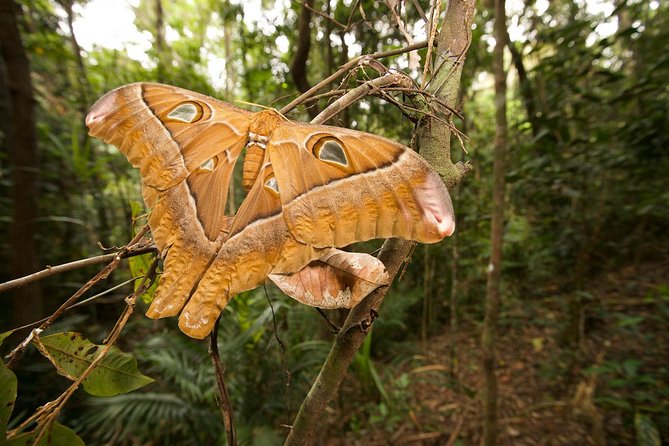
Much of the afternoon is spent exploring the Atherton Tablelands on foot. The guide uses interpretive trails and roadside forest areas to look for wildlife and explain the plants, animals, and ecology of the Wet Tropics.
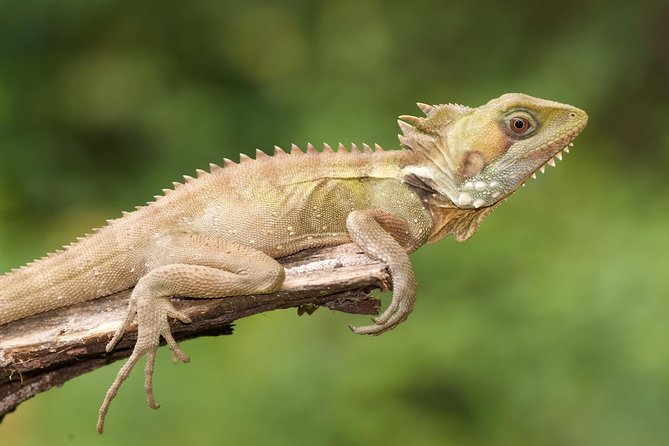
The sights can include butterflies, native birds, lizards, wallabies, flying foxes, and possums. The trees are a major part of the experience, including thousand-year-old kauri pines and the enormous Curtain Fig Tree.
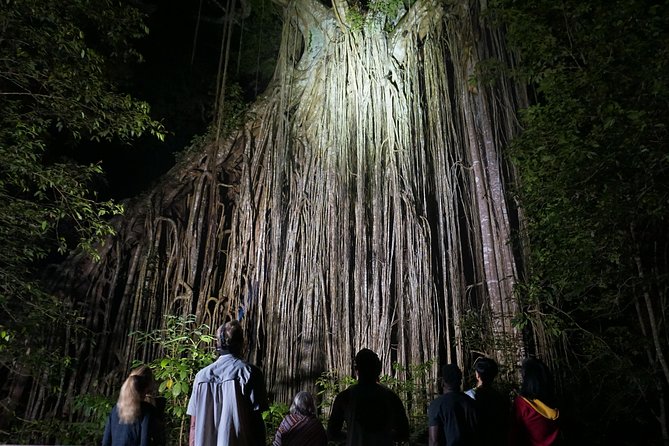
The Curtain Fig is more than a quick photo stop. Its curtain-like roots create an impressive natural structure, and the guide can point out details you would probably miss alone. At night, the tree takes on a different mood. One particularly unusual detail is algae that can glow near its base under the right conditions.
You should expect several short walks rather than one single hike. Still, this is an active outing. The total amount of walking is moderate, and some sections take place in low light or darkness. Wear closed-toe shoes with a good grip, and do not treat the trip as a sightseeing drive with occasional steps off the bus.
Platypus spotting demands patience at dusk
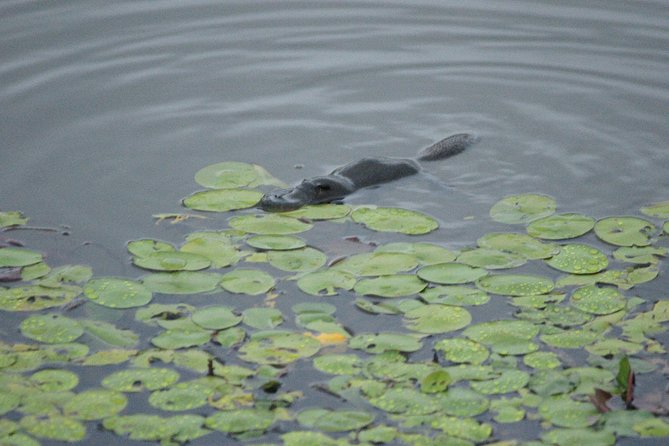
The platypus search is often the emotional high point of the afternoon. You reach the water before or around sunset, when these secretive animals may swim and feed. The guide watches the surface and banks, then helps you use binoculars to pick out movement.
A platypus is small, quiet, and easy to miss. Even when one appears, it may surface for only a moment. Several sightings have included two, three, or four animals, but you should not book this tour expecting a guaranteed count.
That is an important part of the value. You are not simply driven to a spot where an animal is placed for viewing. You wait in its habitat and accept that nature sets the schedule. A patient guide can improve your odds, and Paul is repeatedly praised for persisting with the search, but persistence cannot control the animal.
Binoculars are supplied, and the guide explains how to use them. That matters more than it may sound. Proper adjustment makes distant animals much easier to see, and it helps you share a sighting without crowding the water’s edge.
A different sort of day out, same corner of Cairns:
- From Cairns: Self-Guided Kuranda Trip with Train and Skyrail
★ 4.6 · 3,392 reviews - Cairns: Fitzroy Island Full-Day Trip with Optional Extras
★ 4.6 · 1,668 reviews - Barron Gorge White Water Rafting from Cairns or Port Douglas
★ 5.0 · 1,596 reviews - From Cairns: Full-Day Green Island Cruise
★ 4.5 · 1,584 reviews
Dinner in Yungaburra breaks up the wildlife search
When it is time to eat, the tour heads to Yungaburra, a heritage village founded in the 1890s. Many original buildings are still in use, giving the dinner stop a strong sense of place rather than the feel of a standard roadside meal.
Dinner is included at a country restaurant in a historic building. The meal has received strong praise, with vegetarian choices and generous portions noted in the tour feedback. Drinks are not included, so budget separately if you want something beyond the provided meal.
This hour is useful for more than food. It gives you a warm, comfortable pause before the night walk and lets you recharge after the afternoon’s walking. The old village setting also adds a local touch that a simple meal in Cairns would not provide.
Do not expect a fine-dining occasion. The appeal is a hearty dinner in a characterful country setting, included in the price and placed sensibly in the middle of a long day.
The Curtain Fig after dark changes the whole mood
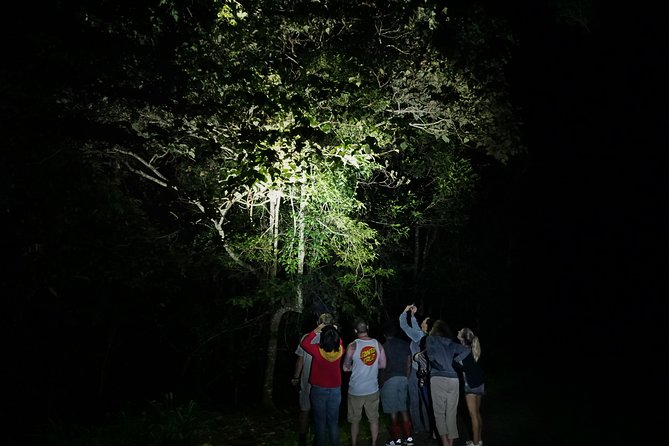
After dinner, the tour returns to the forest for a night walk of about 90 minutes. This is when the experience becomes most distinctive. The rainforest sounds closer in darkness, and the spotlight turns ordinary branches into a series of small discoveries.
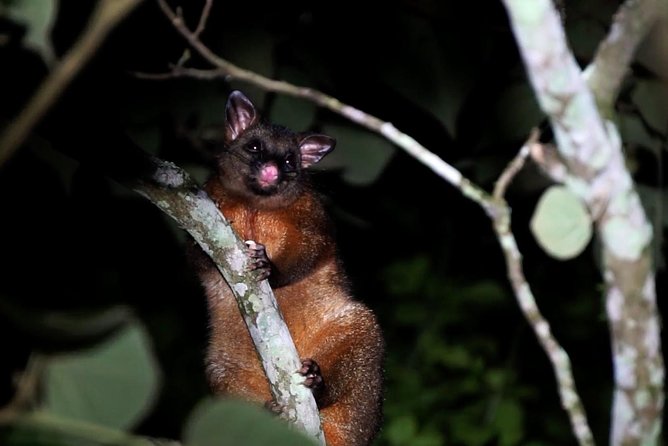
The guide may point out bright green geckos, frogs, owls, glider possums, ringtail possums, spiders, and other small creatures perched in the trees. Flying foxes and wallabies may also appear, and a Lumholtz tree kangaroo is one of the most exciting possible sightings.
Tree kangaroos are rare and difficult to spot. Some outings see one, while others do not. The same applies to rat kangaroos and other less common animals. You should judge the tour by the quality of the search, not by a promised checklist.
The night sky can be a bonus when conditions are clear. Away from city lights, the Tablelands may offer striking views of the stars and Milky Way. Rain, cloud, or damp weather can change that completely, but the forest can still be rewarding in wet conditions.
Rain ponchos are provided when needed. You should still bring insect spray, since it is not supplied, and wear a jacket for the evening.
Paul and Clayton bring different guide strengths
The experience depends heavily on the guide. Paul is the name most often associated with this outing, and his strengths are clear: he knows the local animals, spots movement in poor light, explains how to use the equipment, and keeps searching when a platypus refuses to show itself.
Clayton is also identified as a guide who shares detailed information and answers questions. Whoever leads your departure, expect the guide to do much more than drive between stops. The natural history explanations are a central part of the tour.
A good guide can show you why a particular branch matters, explain what you are hearing, and help you tell a possum from a leaf or a frog from a patch of bark. That skill is especially valuable after dark, when an untrained eye can scan the forest and see almost nothing.
The guide’s style may not suit every family perfectly. One account describes a guide becoming impatient with noisy children, while another notes that children added noise that could scare off animals. If you bring young children, prepare them for quiet observation and a long day. The experience is not built around entertainment at every moment.
How much walking and road time should you expect?
The tour includes a moderate amount of walking on rainforest trails and near waterways. Some walking takes place during daylight, and some occurs after sunset with spotlight equipment. You need a moderate level of fitness, but the information also describes the activity as suitable for people with a lower fitness level.
That sounds contradictory until you consider the format. You are not completing a demanding mountain hike, but you are walking several times throughout an eight-hour outing. Closed-toe shoes are essential, and a jacket is practical even in tropical Queensland.
The vehicle is air-conditioned, and hotel pickup and drop-off in Cairns are included. The winding mountain road is the main transport issue. People who get carsick should sit where they normally feel best and plan ahead. The road is scenic, but it has many turns on both the ascent and descent.
Is the $157.79 price good value?
At $157.79 per person, this is not a cheap Cairns evening activity. The price makes more sense when you add up what is included: hotel transport, an expert local guide, national park fees, afternoon tea, dinner, binoculars, spotlighting gear, rain ponchos, and reference materials.
You are also paying for access and timing. Finding a platypus, tree kangaroo, or night-active rainforest animal on your own would be difficult, especially if you do not know the Tablelands roads or the best places to watch. The guide’s trained eye is a major part of the experience.
The value is strongest if you want a full wildlife outing and do not have a rental car. It is weaker if you prefer a short, guaranteed attraction or dislike long drives and waiting quietly. Nature can provide an exceptional night, but it can also produce fewer sightings than you hoped.
The small group helps justify the cost. With no more than 11 people, the guide can share binocular views, answer questions, and position the group without the crowd of a large coach tour.
Who should book this rainforest night tour?
I would choose this for anyone who wants native animals in the wild and is willing to accept uncertainty. It suits photographers, bird and wildlife fans, first-time visitors to the Wet Tropics, and people who want something more unusual than a daytime Cairns excursion.
It also works well for visitors without a car. The pickup and return remove the need to drive the mountain road at night, and the included meal keeps the schedule simple.
You may want to skip it if you have severe motion sickness, dislike walking on uneven trails, or need guaranteed animal sightings. Families can join, but children should be comfortable staying quiet and patient around wildlife.
The experience requires good weather and a minimum number of participants. If poor weather or low enrollment cancels the outing, you are offered another date, another experience, or a full refund. You can also cancel for a full refund up to 24 hours before the start time.
What to bring for a comfortable evening
Pack closed-toe walking shoes, a warm layer, insect spray, and any motion sickness medication you normally use. A small bag for your jacket and personal items will help, since the temperature and conditions can change between Cairns, the lake, and the forest.
You do not need to bring binoculars, a spotlight, or a rain poncho. Those are supplied, along with reference materials. You should still bring a phone or camera if you want your own record, but do not let photography replace watching the animals directly.
Should you book it?
Book this tour if you want an active, well-paced night in the Atherton Tablelands, with a real chance to see platypuses and nocturnal rainforest animals. The strongest reasons to go are the small group, excellent timing, included dinner and equipment, and guides such as Paul who know where to look and how to keep searching.
Go with realistic expectations. You may see a platypus, tree kangaroo, possum, owl, or wallaby, but no wild animal is guaranteed. If you can handle the twisty road, moderate walking, and patient waiting, this offers one of the more distinctive wildlife experiences available from Cairns.
FAQ
How long does the Atherton Tablelands Rainforest by Night tour last?
The tour lasts about eight hours. Pickup begins around 1:30 pm, and you return to your Cairns hotel at night.
Is hotel pickup and drop-off included?
Yes. Hotel pickup and drop-off in Cairns are included in the tour.
What animals might I see?
Possible sightings include platypuses, Lumholtz tree kangaroos, wallabies, lizards, possums, flying foxes, frogs, owls, geckos, birds, butterflies, and spiders. Sightings depend on wildlife activity and conditions.
Are platypus sightings guaranteed?
No. The tour searches for platypuses at dusk, when they may be active, but they are wild and shy animals. Sightings cannot be guaranteed.
Is dinner included?
Yes. Dinner at a country restaurant in Yungaburra is included. Drinks are not included unless specifically stated.
Is afternoon tea included?
Yes. Afternoon tea at Lake Barrine includes tea or coffee and fresh-baked goods.
What equipment is provided?
The tour provides binoculars, spotlighting gear, rain ponchos, reference materials, an air-conditioned vehicle, and national park fees.
What should I wear and bring?
Wear closed-toe shoes and bring a jacket for the night. Insect spray is also recommended because it is not provided.
Can I cancel the tour?
You can cancel at least 24 hours before the start time for a full refund. Poor weather or failure to reach the minimum number of participants may also result in a different date, another experience, or a full refund.
Just added around Cairns
- Paronella Park and Millaa Millaa Falls Full-day Tour from Cairns★ 5.0 · 47 reviews
- Full-day Tour at the Atherton Tablelands with Food Tasting★ 5.0 · 30 reviews
- Full Day Tour to Sunlover Cruises Moore Reef and Fitzroy Island★ 4.0 · 31 reviews
- Small-Group Afternoon Cairns City Tour with Harbour Dinner Cruise★ 4.5 · 32 reviews
- Cairns City Sights and Surrounds Tour★ 5.0 · 227 reviews
- Cairns: Tandem Skydive Experience over Reef & Rainforest★ 4.5 · 52 reviews
- Skyrail Rainforest Cableway Day Trip from Cairns★ 4.5 · 228 reviews
- Skyrail Rainforest Cableway Day Trip from Port Douglas★ 4.5 · 27 reviews
Night Tours in Cairns, compared.
Night Walk in Cairns Botanic Gardens – Let’s Go Buggin
Read our review →
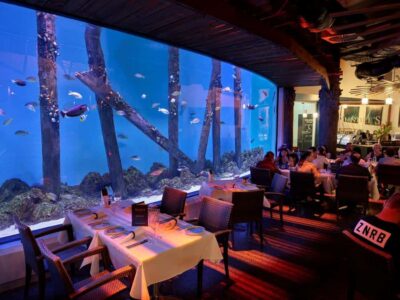
Night at the Aquarium Guided Tour & 2 Course Dinner
Read our review →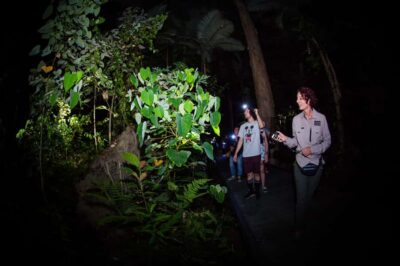
Browse the lists this tour appears in