
Reviewed · DARWIN
WWII Bombing of Darwin & Royal Flying Doctor Service
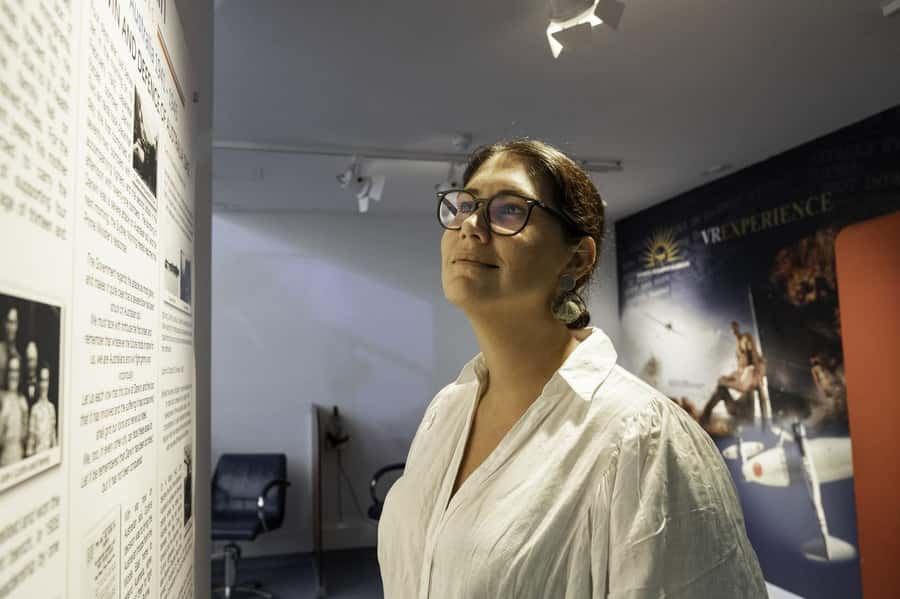
Darwin’s wartime story comes alive here through VR, holograms, and interactive screens, not just wall panels. You move between the birth of the Royal Flying Doctor Service and the 1942 bombing of Darwin Harbor, with technology putting you close to the people and events.
I like the clear two-part focus, and I like that you can inspect a fully equipped RFDS Pilatus PC-12 rather than only read about remote medical flights. The main drawback is that the visit is self-guided, so anyone hoping for a traditional, continuously led tour may find the experience less personal.
Key points
- Two major Australian stories in one visit: Learn how the RFDS began Northern Territory aeromedical operations in 1939, then follow the drama of the 1942 bombing.
- Technology does much of the storytelling: Use two VR experiences, holographic cinema sessions, and interactive displays.
- The Window of the 1942 bombing platform adds a fixed viewing point: Staff explain the timing of sessions when you arrive.
- A real Pilatus PC-12 gives the RFDS story a physical focus: You can see the type of aircraft used for aeromedical work.
- Plan for 1.5 hours: The facility is self-guided, with staff available when you need help.
- Good practical flexibility: Tickets cost $21 per person, are valid for six months, and allow free cancellation up to 24 hours before the visit.
Two Darwin stories under one roof
This experience deals with two subjects that can feel separate at first. One is the Royal Flying Doctor Service, a medical lifeline built for people living far from hospitals. The other is the bombing of Darwin Harbor in 1942, when Australia itself came under direct attack during World War II.
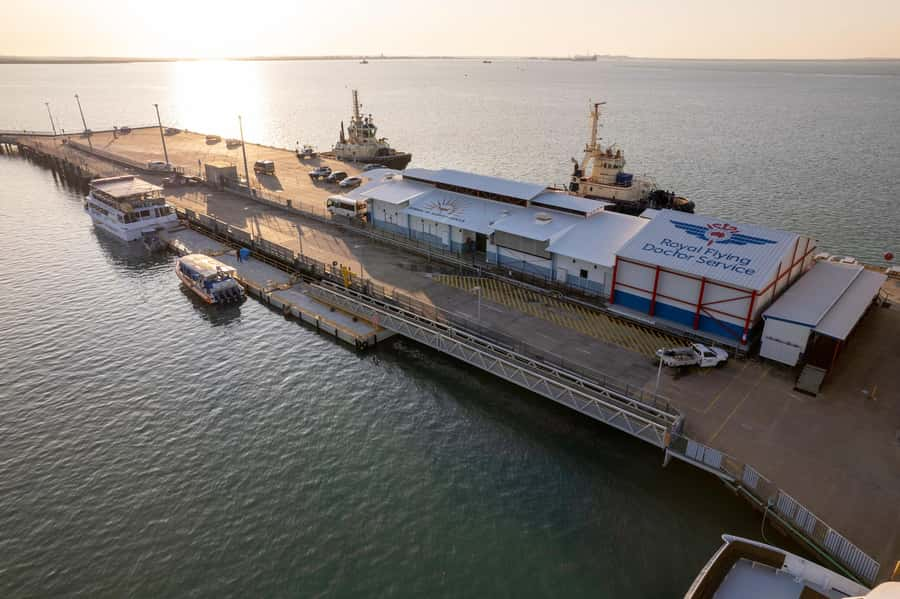
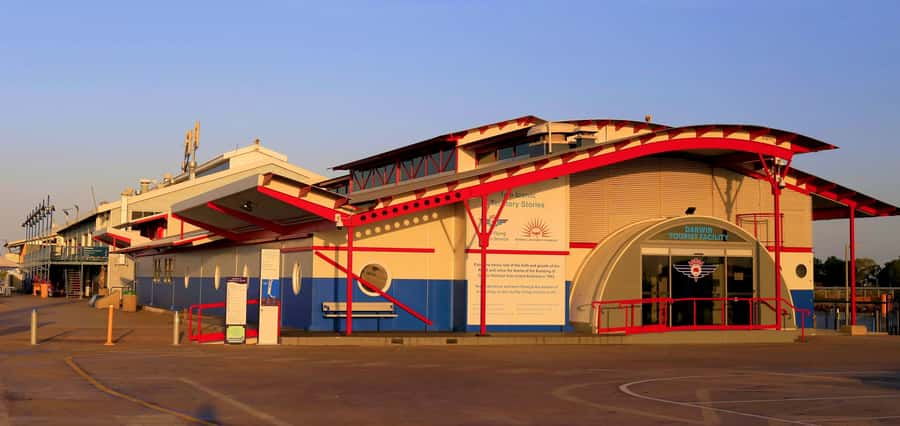
The connection is place. You visit the RFDS Darwin Tourist Facility at 45 Stokes Hill Road, beside Stokes Hill Wharf, where both stories are presented through one attraction. That makes this a useful stop if you want more than a single museum display but do not have time for several separate history sites.
I like the pairing because it gives you two very different kinds of courage to consider. The bombing displays deal with sudden danger, confusion, and survival. The RFDS exhibits show the slower, practical work of getting medical care to people across the Northern Territory.
The technology helps keep the subjects from feeling flat. Instead of only reading dates and names, you hear stories, watch scenes, and use interactive features that ask you to pay attention in different ways.
A few more Darwin trips worth weighing up
- Litchfield National Park and Jumping Crocodile Cruise
★ 5.0 · 2,119 reviews - Adelaide River Cruises – Jumping Crocodile Experience
★ 5.0 · 997 reviews - Sunset 3-Hour Cruise from Darwin with Dinner and Sparkling Wine
★ 5.0 · 980 reviews
Starting with the Royal Flying Doctor Service
Your visit begins with an outline from a staff member. This is not a full guided tour, but it helps you understand the facility and learn when the holographic cinema sessions and Window of the 1942 bombing platform are scheduled.
The RFDS section follows the service from its beginning through its growth. The organisation began aeromedical operations in the Northern Territory in 1939, a detail that gives the displays a clear time frame. You can see how aviation became part of medical care in a region where distance matters.
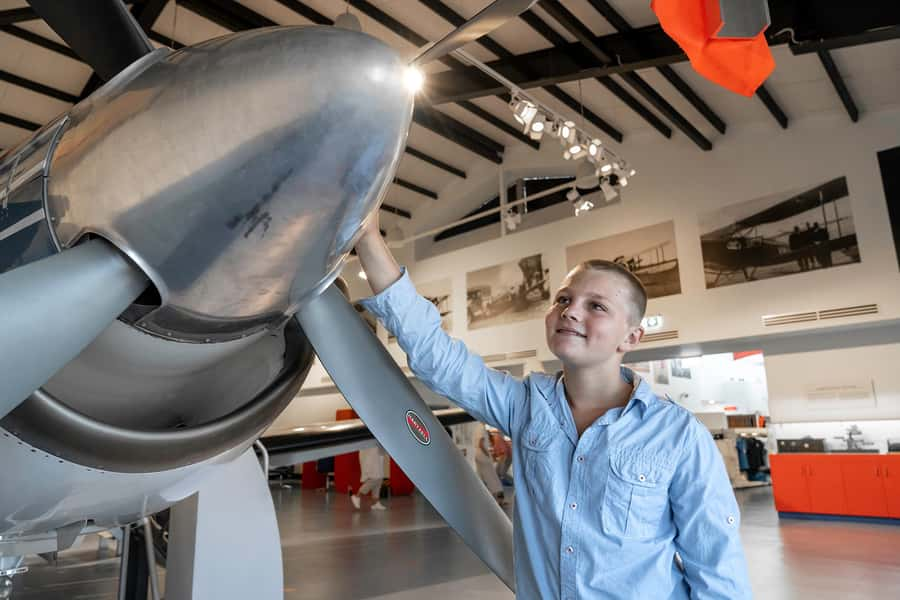
The best physical object in this section is the decommissioned RFDS Pilatus PC-12. You can inspect a fully equipped aeromedical plane, which gives scale to the service in a way that a photograph cannot. A plane like this is not simply transport. It is the setting for treatment, evacuation, and urgent work far from a conventional hospital.
I would give this section your full attention if you are interested in engineering, aviation, medicine, or remote Australia. Families may also find the aircraft easier to understand than long written panels, since the plane gives the story a solid centre.
The visit remains self-guided. That is helpful if you want to pause at a display, move quickly through familiar material, or spend extra time with the aircraft. It also means the amount of context you get depends partly on how closely you follow the audio, screens, and staff instructions.
The 1942 bombing through modern technology
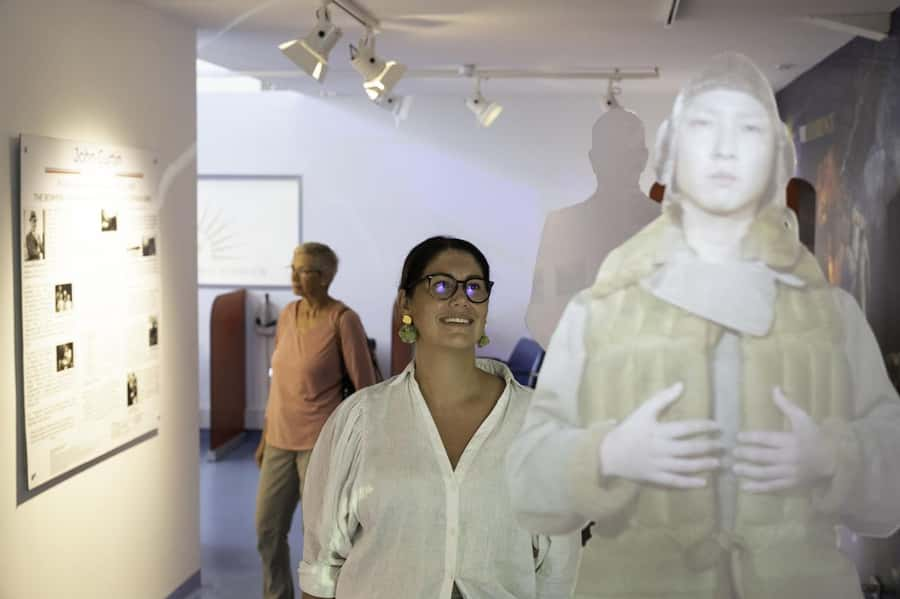
The second story covers the bombing of Darwin Harbor in 1942. The attraction presents the raids through state-of-the-art technology, including holographic storytelling and a cinema session.
The subject is serious, but the format is accessible. You can follow the events through the people who experienced them, including stories of survival and heroism. That human focus matters because military history can otherwise become a list of aircraft, dates, and damage reports.
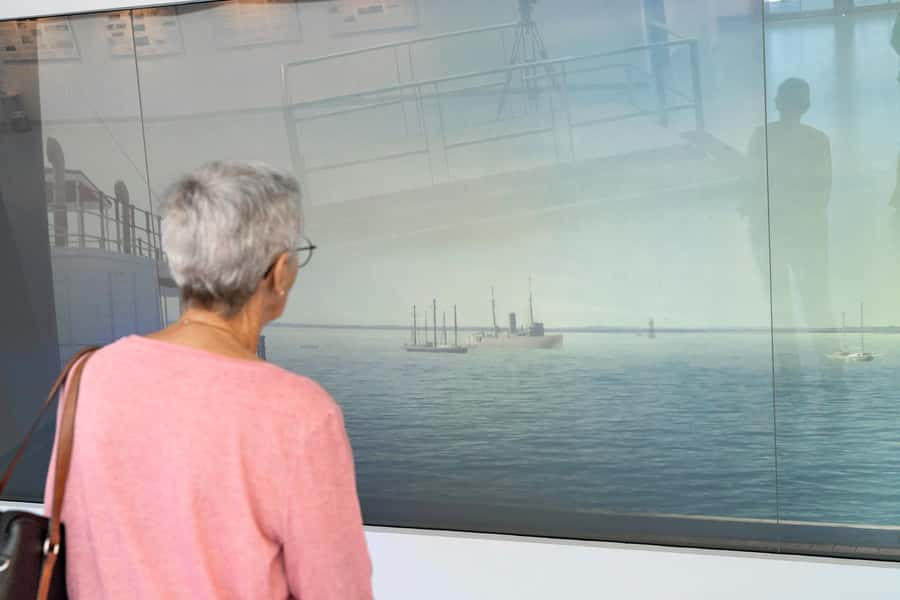
The Window of the 1942 bombing platform gives this section a set time and place within your visit. Staff explain when it is available, so pay attention to the schedule when you arrive. If you walk in without checking, you may have to wait or risk missing a session.
The holographic cinema is one of the stronger reasons to choose this attraction instead of relying on a book or a standard museum panel. Visual storytelling can show the pressure and confusion of the raids in a short period. The format also gives younger visitors a way into the subject, although the content concerns wartime violence and survival.
You should not expect a long, traditional lecture. The presentation is built around short experiences that you enter, watch, and explore. That keeps the visit moving, but it may leave you wanting more background if you already know the basics and want a detailed military account.
What the VR and interactive displays add
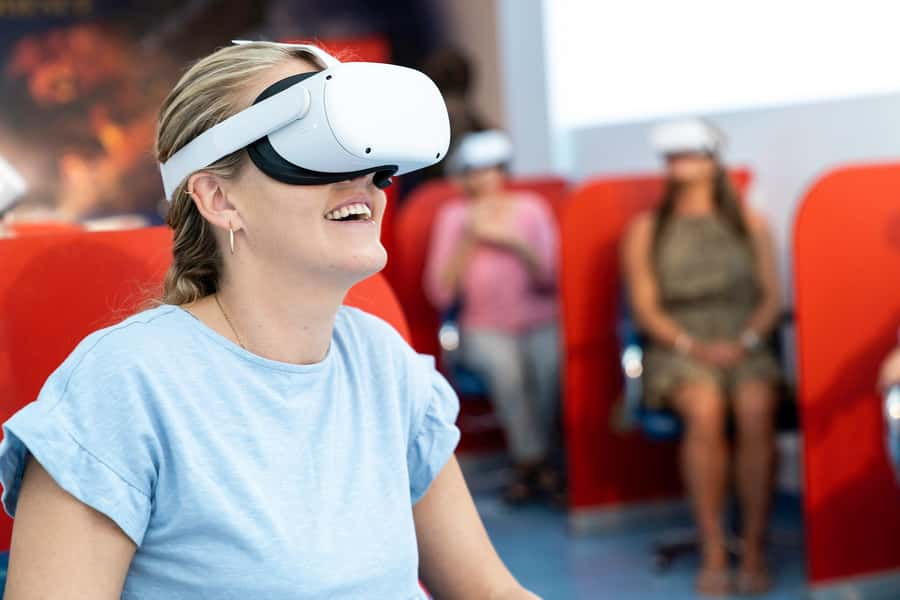
Two virtual reality experiences are included. These are not a paid extra, which makes the $21 entry price easier to assess. The attraction also includes interactive storytelling holograms and other displays that use audio and visuals to present the past.
The strongest value of the technology is variety. You are not asked to spend 90 minutes reading the same kind of panel. One moment you may be following a story through a screen, then viewing a holographic cinema session, then examining the inside of an aircraft.
The audio element also helps. Headset audio translators are included, so you have support if you need another language option for the display audio. The listed host language is English, and the facility’s stated language is English, so check the available headset options if language access is especially important to you.
A word of practical advice: arrive ready to listen for timing instructions. The facility has scheduled holographic cinema sessions and a scheduled Window of the 1942 bombing platform. Since much of the visit is self-guided, the opening briefing is your best chance to organize the order.
The newer technology is also the attraction’s main point of difference. If you enjoy audio-visual displays, the visit should feel active and varied. If you prefer quiet galleries, original documents, or long historical explanations, you may find the screens and VR less satisfying.
A different sort of day out, same corner of Darwin:
- From Darwin: Litchfield Park Tour & Jumping Crocodile Cruise
★ 4.9 · 829 reviews - Charles Darwin Dinner Cruise
★ 4.5 · 820 reviews - Cape Adieu Darwin Sunset Dinner Cruise
★ 5.0 · 750 reviews - 1 Day Corroboree Billabong Wetland Experience including 2.5 hour cruise + lunch
★ 5.0 · 501 reviews
Allowing 1.5 hours at Stokes Hill Wharf
The full visit takes about 1.5 hours. That is long enough to use the main interactive displays, attend the scheduled sessions, and spend time with the aircraft without turning the stop into a full-day commitment.
You may stay longer than planned if you want to repeat or closely inspect parts of the technology. The experience is not structured like a tightly timed group tour, so you have some freedom to set your pace.
The ticket is valid for six months, rather than being limited to one exact travel date. You still need to check availability for starting times, but this longer validity can help if your Darwin plans change.
Last entry is at 3:00 PM on normal trading days and 2:00 PM on public holidays. I would avoid arriving close to those cutoffs. A late arrival could leave too little time for the VR experiences, aircraft, and scheduled cinema session.
The meeting point is the RFDS Darwin Tourist Facility at 45 Stokes Hill Road, Darwin City. The facility is wheelchair accessible, which makes it a practical choice for visitors who need step-free access. Specific details about every exhibit are not provided, so contact the facility if you need information about a particular display.
Is $21 good value?
At $21 per person, this is a reasonably priced indoor attraction with several different formats in the admission. You receive the self-guided exhibition, two VR experiences, holographic cinema sessions, headset audio translators, and access to the aircraft display.
The value is strongest if you use the whole facility. A quick walk through the main displays would make the ticket less compelling, but 1.5 hours gives you enough time to take part in the included features.
I also like that the ticket combines two subjects rather than asking you to pay separately for a short RFDS display and a separate bombing presentation. The facility gives you aviation, medical service, local wartime history, and interactive technology in one stop.
You can also reserve now and pay later, which is useful when you are still arranging a Darwin schedule. Free cancellation is available up to 24 hours before the visit for a full refund. Those terms reduce the risk of booking too early, though you should still check the exact availability before relying on a particular start time.
Who will get the most from this visit?
I would recommend this experience to anyone who wants a clear introduction to two important Northern Territory stories without committing to a long guided excursion. It suits families, aviation fans, people interested in medical history, and visitors looking for an indoor activity in Darwin.
The VR and holographic elements make it a good choice if you prefer seeing and hearing a story rather than reading every detail. The aircraft also gives children and first-time museum visitors something concrete to explore.
It may be less suitable if your main goal is a highly detailed military history of the Pacific War. The available information points to an engaging introduction, not a specialist archive or a long lecture series.
It is also worth knowing that there is no named guide or continuous tour leader listed. You meet a staff member for an outline, then explore independently. That arrangement gives you freedom, but you need to manage your own time and watch for the scheduled sessions.
Small details that make the visit easier
Book with the 1.5-hour visit in mind, not as a quick half-hour stop. The technology works best when you give yourself enough time for the scheduled elements and the aircraft.
Arrive before the last entry time, especially on a public holiday. The cutoff is 2:00 PM on public holidays, one hour earlier than the normal 3:00 PM cutoff.
Ask staff about the timing of the holographic cinema and Window of the 1942 bombing platform as soon as you arrive. That simple step will help you arrange the self-guided sections around the fixed presentations.
The facility is wheelchair accessible, and staff are available to assist as required. English is the host language, while headset audio translators are included.
The experience has also been praised for its audio-visual presentation and its use of newer technology. That is the clearest clue about what kind of attraction this is: not a quiet collection of old objects, but an active presentation built around sound, moving images, VR, holograms, and one substantial aircraft.
Should you book the RFDS and Bombing of Darwin experience?
I would book it if you want an affordable, well-paced Darwin attraction that links the RFDS story with the bombing of Darwin Harbor. The $21 price is fair when you use the VR, holographic cinema, interactive displays, audio support, and Pilatus PC-12 aircraft.
You should choose something else if you want a fully guided tour, a large collection of original wartime artefacts, or a specialist-level account of the raids. For most visitors, though, the mix of clear history and modern presentation makes this a worthwhile 1.5-hour stop.
FAQ
How much does the experience cost?
Entry costs $21 per person.
How long should I allow for the visit?
Allow about 1.5 hours to see the facility in its entirety.
Where does the experience begin?
The meeting point is the RFDS Darwin Tourist Facility at 45 Stokes Hill Road, Darwin City, Northern Territory 0800, Australia.
Is the tour guided?
The visit is self-guided. A staff member provides an outline when you arrive, and staff remain available to assist as needed.
What is included with admission?
Admission includes the self-guided tour, headset audio translators, two virtual reality experiences, and holographic cinema sessions.
Are the presentations available in English?
English is the listed host and facility language. Headset audio translators are included.
Is the facility wheelchair accessible?
Yes, the facility is wheelchair accessible.
What time is the last entry?
Last entry is at 3:00 PM on normal trading days and 2:00 PM on public holidays.
How long is the ticket valid?
The ticket is valid for six months. You should check availability for starting times.
Can I cancel my booking?
Yes. You can cancel up to 24 hours in advance for a full refund. You can also reserve now and pay later.
Just added around Darwin
- 1-Hour Thunderball WWII Adventure Jet Skiing in Darwin★ 5.0 · 70 reviews
- Tiwi Islands Cultural Experience from Darwin Including Ferry★ 4.0 · 97 reviews
- Bombing of Darwin World War II Tour with Harbour Cruise★ 4.5 · 219 reviews
- Royal Flying Doctor Service Tourist Facility: Two Iconic Territory Stories★ 5.0 · 256 reviews
- Darwin Combo: The Bombing of Darwin Experience & Darwin Harbour Cruise★ 4.5 · 123 reviews
- Litchfield Park & Jumping Crocodile Cruise★ 5.0 · 37 reviews
- Litchfield & Berry Springs VIP Adventure Day Tours (group of 11)★ 5.0 · 142 reviews
- Adelaide River Jumping Croc Cruise★ 4.5 · 56 reviews
Darwin Tours, compared.
Litchfield National Park and Jumping Crocodile Cruise
Read our review →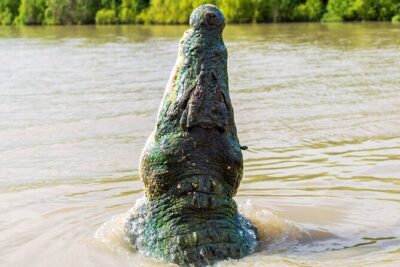
Adelaide River Cruises – Jumping Crocodile Experience
Read our review →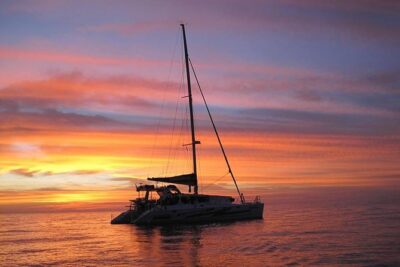
Sunset 3-Hour Cruise from Darwin with Dinner and Sparkling Wine
Read our review →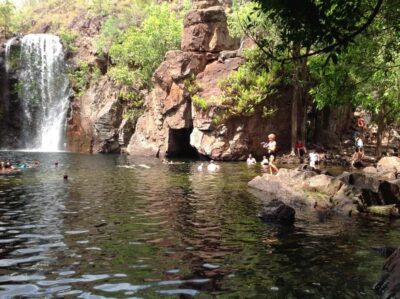
Litchfield Park Tour & Jumping Crocodile Cruise
Read our review →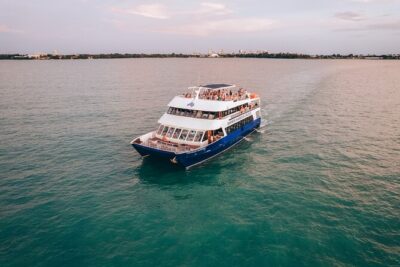

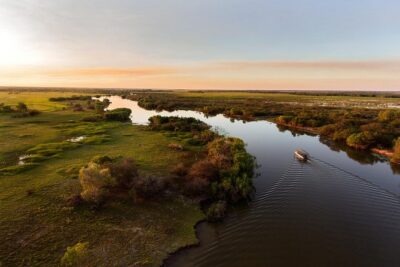
1 Day Corroboree Billabong Wetland Experience including 2.5 hour cruise + lunch
Read our review →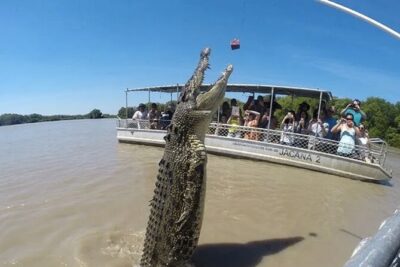
The Croc Bus to the Famous Jumping Crocodile Cruise
Read our review →Browse the lists this tour appears in