
Reviewed · ALICE SPRINGS
Uluru (Ayers Rock) to Alice Springs One-Way Shuttle
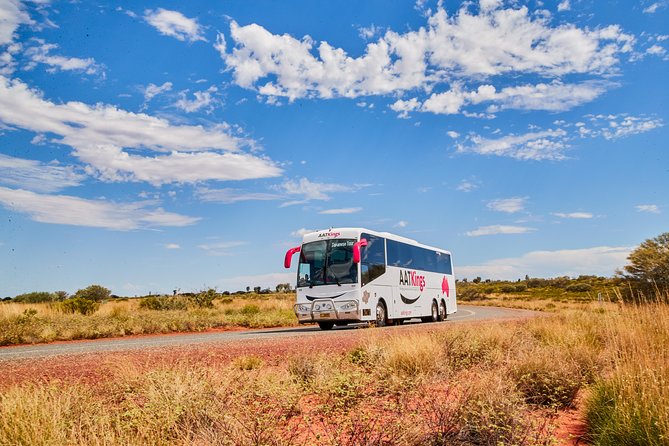
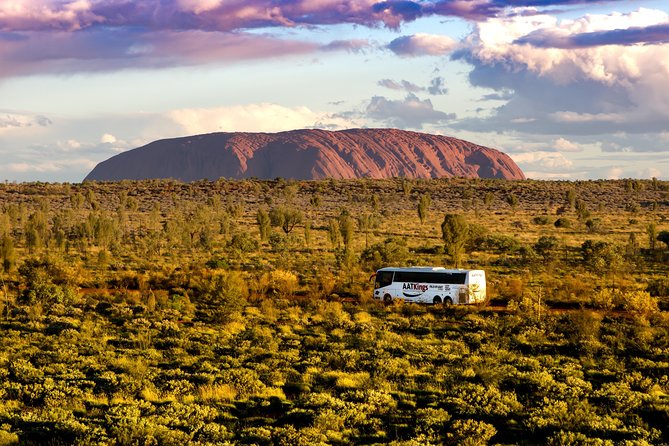
The most memorable part of this Uluru to Alice Springs shuttle is not simply getting from one town to the other. It is the long, open-road passage through Central Australia, where Mt Conner rises from the plain, cattle stations stretch toward the horizon, and the Stuart Highway carries you through country that is difficult to appreciate from an airport window.
I like two things especially. First, you can hand the keys to a professional driver and watch the Outback instead of concentrating on fuel, road trains, wildlife, and hundreds of empty kilometres. Second, the driver commentary adds meaning to the scenery, with stories about Aboriginal history, sacred places, cattle stations, local plants, and passing landmarks. The main consideration is the six-hour ride. It can feel slow if you want frequent sightseeing stops, and the coach comfort and amount of commentary may vary by departure.
Key points before you book

- See Central Australia by road: The journey covers about 463 kilometres and includes views of Mt Conner, Curtin Springs, cattle stations, the Stuart Highway, and the West MacDonnell Ranges.
- Hotel pickup and drop-off are included: Pickup is offered from Uluru-area accommodation, followed by drop-off at your Alice Springs hotel.
- The driver shapes the experience: Drivers such as Terry, Jacob, Pierre, Michael, Dave, and Matt have been praised for safe driving, humour, local stories, and helpful answers.
- Mount Ebenezer is the main refreshment stop: You can buy tea, snacks, or afternoon tea and see artwork made by members of the local Imanpa Aboriginal community.
- Pack carefully: Each person may bring one suitcase up to 20 kilograms and one carry-on bag. Oversized luggage needs advance approval.
- This is transport with sightseeing value, not a full touring day: You see a lot from the coach, but you do not get long walks or extended visits at each landmark.
Why the road from Uluru to Alice Springs is worth taking
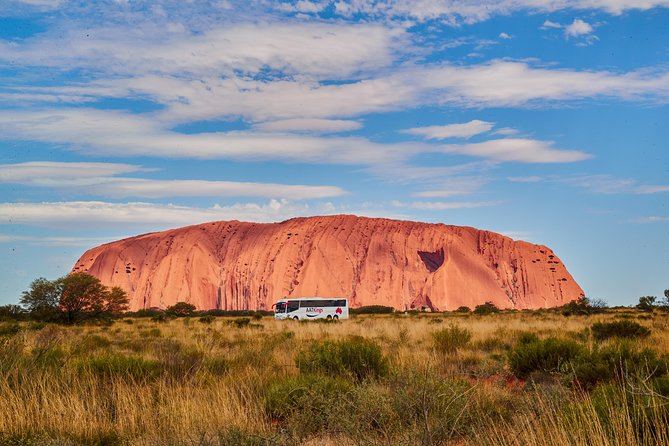
Flying is quicker, but it strips away the scale of the Red Centre. On this road journey, you watch the country change slowly. The resort area around Yulara gives way to open scrub, reddish soil, dry creek systems, cattle country, and distant rock formations.
That gradual change is the point. Central Australia can look empty at first glance, yet the driver helps you notice what is there. A desert oak, an old road sign, a cattle station boundary, or the shape of a distant mesa becomes part of the story.
The road also gives you a better sense of distance. Uluru and Alice Springs are not close neighbours. The trip covers about 288 miles, or 463 kilometres, and takes roughly six hours. That is a substantial ride, but it is also an efficient way to connect two major Red Centre bases without arranging a rental car or dealing with a rural airport.
I would choose this option if I wanted to see the country between Uluru and Alice Springs, but did not want to drive it myself. You can sit back, take photographs through the windows, and listen to local commentary while someone else handles the road.
More Airport Transfers in Alice Springs:
- Alice Springs to Ayers Rock (Uluru) One Way Shuttle
★ 4.5 · 156 reviews - Alice Springs to Uluru (Ayers Rock) Coach Transfer
★ 4.5 · 39 reviews - Gold Coast Hot Air Balloon + Winery Breakfast + Return Transfers
★ 5.0 · 437 reviews
Early pickup from Yulara and the first hours on the road
The day begins with an early pickup at your Ayers Rock area hotel. The service is door-to-door for many accommodation locations, but there is an important campground detail: campground pickup is from the bus stop on the ring road, not from campground reception.
This is not an airport transfer. The service does not pick up from Uluru Airport, so you need to arrange your own connection if you are arriving there. Check your exact pickup point carefully, especially if you are staying at a campground or accommodation with several entrance points.
Once aboard, you settle into an air-conditioned coach. The maximum group size is listed as 48 people, so this is shared transport rather than a small private van. That size keeps the cost reasonable, though it also means you should not expect the flexibility of a personal vehicle.
The coach is described as deluxe and air-conditioned. Several departures have included comfortable seating, clean interiors, charging ports, and a clear sound system. One important caution: the buses may not all feel identical. One account described a basic coach with flat, lightly padded seats, while other departures were described as very comfortable. If seat comfort matters greatly to you, keep that variation in mind.
The air-conditioning can also feel strong. Bring a light layer even if the day outside is hot.
Curtin Springs and the distant profile of Mt Conner
One of the first major sights is Curtin Springs, a large family-owned cattle station. You generally pass by rather than stop for a full visit, but the station helps explain how people work and live across such a large part of the Northern Territory.
The next visual prize is Attila, better known as Mt Conner. Its broad, flat-topped form can be mistaken for Uluru by people seeing it from the road for the first time. From the coach, it rises as a huge mesa in the distance, surrounded by open country.
This is a good example of why the commentary matters. Without context, Mt Conner is simply a striking rock formation. With an explanation of its local name, setting, and place in the region, the view becomes easier to remember.
You should have your camera ready, but do not expect a long photo stop at every sight. This service is designed to move you efficiently toward Alice Springs. The scenery is viewed mainly from the road, with limited time outside the coach.
Mount Ebenezer Road House and Imanpa artwork
The main planned break is at Mount Ebenezer Road House. It gives you a chance to stretch your legs, use facilities, and buy tea, snacks, or afternoon refreshments. Food and drinks are not included, so carry some Australian dollars or a payment method accepted at the stop.
The road house also displays artwork made by members of the local Imanpa Aboriginal community. This adds a worthwhile cultural element to what could otherwise be a simple fuel and toilet break. Take time to look at the work rather than treating the stop as only a chance to buy food.
Some departures have also included emus at the stop, with the chance to feed them. Other accounts describe parrots and farm animals along the way. These details may depend on the day and the operating conditions, so do not book this as a guaranteed wildlife visit.
The break is useful, but it is not a major attraction in the same way as Uluru or the West MacDonnell Ranges. One negative experience described the ride as having only one worthwhile stop and not enough to do there. If you need frequent activity, six hours on a coach may test your patience.
A few more Alice Springs trips worth weighing up
- Early Morning Ballooning in Alice Springs
★ 5.0 · 426 reviews - West MacDonnell Ranges Day Trip from Alice Springs
★ 4.5 · 364 reviews - From Alice Springs: West MacDonnell Ranges Day Trip
★ 4.7 · 296 reviews - Alice Springs: Early Morning Hot Air Balloon Flight
★ 4.9 · 243 reviews
The Stuart Highway and the wide-open middle of Australia
After the road house, the coach connects with the Stuart Highway, the major north to south route through central Australia. This famous highway is more than a line on a map. It is the working road of the region, carrying local traffic, long-distance vehicles, supplies, and people between remote settlements.
From your window, expect broad views and long stretches with few buildings. The pleasure is in the scale. You may see cattle country, dry river systems, desert oaks, and distant ridges. The driver may point out signs of local wildlife, including camels, thorny devils, and bearded dragons, though sightings are never guaranteed.
The road can look repetitive, especially if the sky is grey or the weather turns wet. On a clear day, the changing light and sunset can be beautiful. Several departures have had striking evening views, while one journey took place in rain and lost some of its expected visual appeal.
This is why I suggest a window seat and a charged phone or camera. Some coaches have had USB charging ports at the seats, but this should not be treated as guaranteed equipment on every vehicle.
West MacDonnell Ranges and the approach to Alice Springs

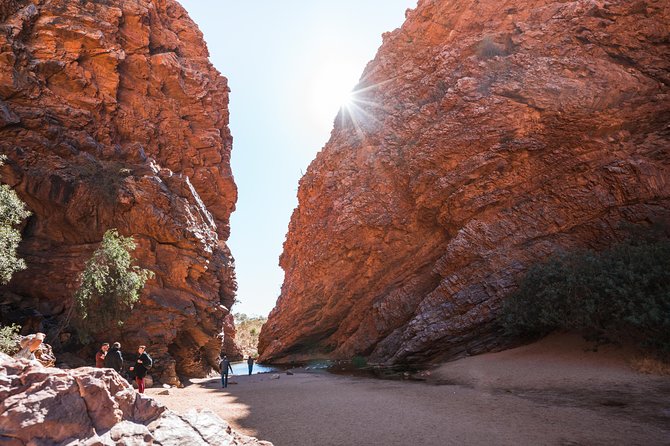
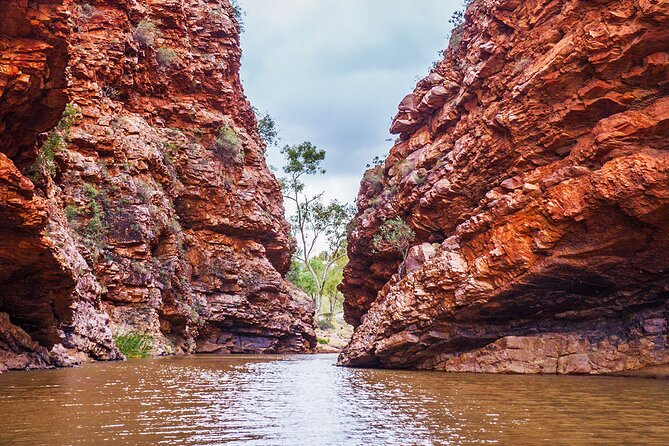
As you near Alice Springs, the West MacDonnell Ranges provide a stronger sense of arrival. Their gorges and peaks bring shape to the open country after hours of flatter scenery.
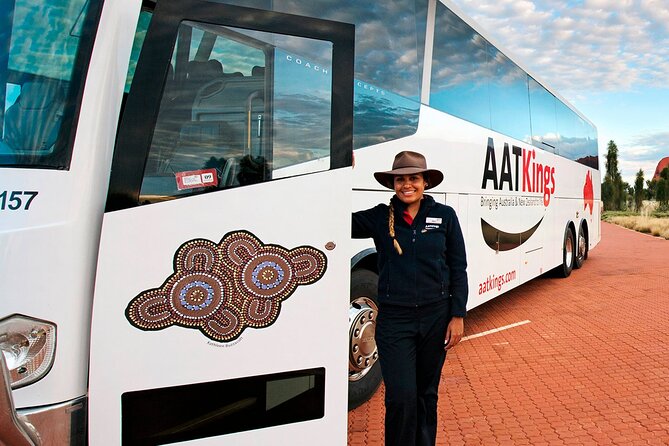
The driver commentary may cover native plants, river systems, local events, cattle stations, and the history of the route. The best departures are shaped by the driver. Terry and Jacob, for example, have been praised for detailed storytelling, humour, and the ability to point out small features that would otherwise slip past. Pierre, Michael, Dave, and Matt have also been singled out for safe driving, helpful service, or good stories.
That does not mean every trip will have a nonstop talker. One account found the commentary limited, while another described the driver as grumpy at the beginning before the trip settled down. Treat the commentary as a valuable bonus, but not as a private guided tour with constant interpretation.
The coach may stop again for a short break, and you may transfer coaches at the Kings Canyon junction before continuing to Alice Springs. A change of coach is not part of every departure, but you should be prepared for it.
At the end of the trip, you are dropped at your Alice Springs hotel, including some properties in the outer suburbs. This is a useful finish after a long day on the road, particularly if you have luggage or arrive after local buses become inconvenient.
Is the $185.77 fare good value?
At $185.77 per person, this is not the cheapest way to cover the distance. You are paying for more than a seat. The fare includes the one-way transfer, air-conditioning, a professional driver-guide, commentary, and hotel pickup and drop-off.
The value improves if you would otherwise rent a car. A rental also brings fuel, insurance, navigation, driving fatigue, and the responsibility of handling a long remote road. On the shuttle, you can rest, listen, and watch the scenery. You also avoid the stress of planning a one-way car rental, which can be costly or difficult in remote areas.
The value is weaker if your only goal is to reach Alice Springs as quickly as possible. A flight would be faster, though this service gives you far more contact with the country between the two towns.
It is also less useful for anyone wanting many independent stops. You cannot decide to spend an hour at Mt Conner, pull off for every photograph, or change the route. This is a scheduled transfer with scenic and cultural additions, not a flexible road trip.
What to pack for a six-hour coach journey
Pack light enough to follow the luggage rule: one suitcase weighing no more than 20 kilograms and one carry-on bag per person. Ask the operator before departure if you have sports equipment, oversized bags, or extra luggage.
I would bring:
- Water and snacks, since food and drinks are not included
- A light layer for strong air-conditioning
- A phone charger and power bank
- Sunglasses and a hat for bright window glare
- Headphones, especially if you prefer quiet during long stretches
- A camera, with space for wide views and distant rock formations
Choose your seat with the sun in mind. One account noted that the left side received more sun but offered a better sunset view, while the right side provided more shade. Conditions and direction can affect this, but it is a useful choice if you are sensitive to heat.
Who should book this transfer?
I would recommend it to you if you want a safe, practical connection between Uluru and Alice Springs and would rather not drive. It suits solo visitors, couples, families, and larger groups who want transport with some local explanation along the way.
It is also a good fit if you care about Aboriginal artwork, cattle country, road history, and the feel of the Outback between the major sights. The journey lets you see more of Central Australia than a flight does.
I would hesitate if you dislike long coach rides, need frequent sightseeing stops, or expect a luxury vehicle with guaranteed premium seating and Wi-Fi. The coach is air-conditioned and often comfortable, but the equipment and commentary can vary.
Cancellation is free up to 24 hours before the scheduled start time. Changes or cancellations inside that window are not accepted for a refund. The service can also be altered or canceled for poor weather or if minimum numbers are not met, with another date or a refund offered.
Should you book the Uluru to Alice Springs shuttle?
Book it if you see the transfer as part of your Red Centre experience rather than dead time between destinations. The best part is the chance to watch Central Australia unfold while drivers such as Terry or Jacob add stories and details that make the road more than a long straight line.
Skip it if speed, privacy, or complete control matters more than scenery. For most people who want to avoid a one-way rental car, the $185.77 fare is a fair trade for a safe ride, local commentary, a stop at Mount Ebenezer, and hotel drop-off in Alice Springs. Just bring snacks, expect a long day, and keep your expectations focused on the road rather than a string of formal attractions.
FAQ
How long does the transfer from Uluru to Alice Springs take?
The journey takes approximately six hours.
How far is the trip?
The route covers about 463 kilometres, or 288 miles.
Is hotel pickup included?
Pickup is offered from Uluru-area hotels and accommodation. Campground pickup is from the bus stop on the ring road, not campground reception.
Does the shuttle pick up at Uluru Airport?
No. This one-way transfer does not pick up from the airport.
Where does the service finish?
The service provides drop-off at your Alice Springs hotel, including some accommodation in the outer suburbs.
Is food included?
No. Food and drinks are not included. You can buy tea, snacks, or afternoon refreshments at Mount Ebenezer Road House.
What can I see along the route?
You can view Curtin Springs, Mt Conner, cattle stations, the Stuart Highway, the West MacDonnell Ranges, native plants, and wide Outback scenery.
Does the shuttle stop during the journey?
Yes. The route includes a stop at Mount Ebenezer Road House for a break, refreshments, and Aboriginal artwork. Some departures may include additional short stops.
Can I bring a large suitcase?
Each person may bring one suitcase weighing up to 20 kilograms and one carry-on bag. Oversized or extra luggage may be restricted, so check with AAT Kings before departure.
Can children take this transfer?
Yes, but children must be accompanied by an adult.
Just added around Alice Springs
- West MacDonnell Ranges & Standley Chasm Day Trip from Alice Springs★ 5.0 · 67 reviews
- Alice Town And Country Half Day Sunset Tour – Small Group★ 4.5 · 24 reviews
- Alice Springs to Uluru (Ayers Rock) Coach Transfer★ 4.5 · 39 reviews
- 4 Day Uluru Kings Canyon West MacDonnell NP from Alice Springs★ 4.5 · 59 reviews
- Alice Springs Desert Park Nocturnal Tour★ 5.0 · 45 reviews
- From Alice Springs: Palm Valley 4WD Outback Safari + Picnic★ 4.5 · 64 reviews
- Alice Springs: West MacDonnell Ranges & Standley Chasm Tour★ 4.8 · 59 reviews
- Alice Town and Country Half Day Sunset Tour -Small Group★ 4.8 · 23 reviews
Airport Transfers & Shuttles, compared.

Gold Coast Hot Air Balloon + Winery Breakfast + Return Transfers
Read our review →
Sydney Arrival Transfer: Airport to City or Overseas Passenger Terminal
Read our review →
Brisbane Airport: Shared Transfer to Sunshine Coast
Read our review →

Shuttle Transfer from Sydney City Hotel or Cruise Port to Sydney Airport
Read our review →
Airport Transfers between Cairns Airport and Cairns City
Read our review →
Alice Springs to Ayers Rock (Uluru) One Way Shuttle
Read our review →Browse the lists this tour appears in