
Reviewed · SYDNEY
Ultimate Sydney Walking Tour (Small-Group, Drink Included)
Sydney’s best introduction may be a walk that ends with a cold drink and one of the city’s finest harbor views. This 3.5-hour route starts at Customs House, cuts through the old civic center, and finishes near The Rocks with the Opera House and Harbour Bridge in view. Along the way, you get more than postcard stops: you hear how Aboriginal Sydney was reshaped by British settlement, convict labor, migration, war, and commerce.
I like the small maximum group of 12, which gives the guide room to answer questions and slip into narrow corners of The Rocks. I also like the finish: a craft beer, soft drink, or juice plus an Aussie biscuit at The Squire’s Landing. The main drawback is simple: four kilometers on foot can feel long in heat, rain, or uncomfortable shoes, and a few people have found it hard to hear when city noise rises.
Key points at a glance
- A useful first-day route: See Customs House, the Mint, Hyde Park, Martin Place, the QVB, The Rocks, and harbor viewpoints in one outing.
- History with context: The walk covers First Nations place names, British settlement, convicts, the Rum Hospital, ANZAC memory, and Sydney’s growth.
- A genuine small group: The cap is 12 people, with several outings running at around seven to 11.
- A scenic finish: The tour ends at The Squire’s Landing, facing the Opera House and Harbour Bridge.
- One drink and snack included: Adults receive a small craft beer, while younger participants can choose a soft drink or juice.
- Best for walkers: You need to handle about 4 km over three hours and 30 minutes. The tour is not recommended for children under 12.
Why this route works as a first look at Sydney
I like this tour because it gives you a city map in your head before you start exploring on your own. You move from the older government quarter toward the harbor, so Sydney’s past and present appear in a logical order rather than as disconnected sights.
The route also keeps changing its mood. Customs House and the Mint introduce colonial power. Hyde Park brings in public memory and grand civic buildings. Martin Place shows modern finance and national remembrance. The Rocks then narrows the scale to old lanes, workers’ stories, and harbor views.
The guides bring different personalities to the route. Jake is described as witty and good at spotting less obvious corners. Matt mixes humor with practical food suggestions. Steve is known for an upbeat style and plenty of stories, while Michael focuses on clear historical context and makes an effort to speak with each person in the group. Daniel and Justin also lead tours, so the exact tone depends on the day.
You should book this near the start of your Sydney stay if possible. The included map gives eating, drinking, and sightseeing suggestions, and the route helps you judge distances between Circular Quay, the central business district, Hyde Park, and The Rocks.
More Walking Tours in Sydney
- Sydney Opera House Official Guided Walking Tour
★ 4.5 · 3,770 reviews - Sydney The Rocks Guided Walking Tour
★ 5.0 · 1,546 reviews - Sydney: The Rocks 90-Minute History Walking Tour
★ 4.7 · 1,092 reviews
Customs House and the first view of Sydney
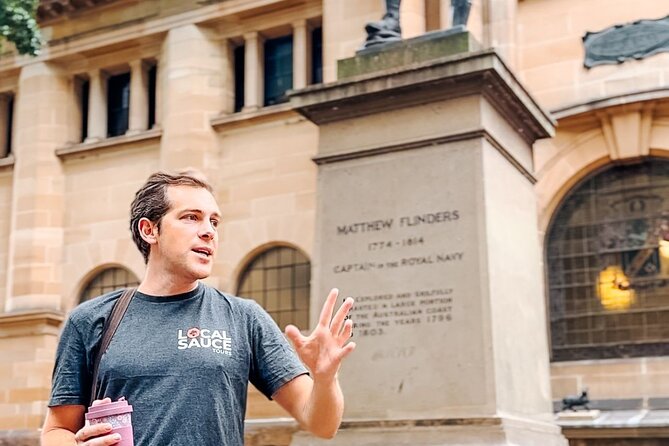
The walk begins at 31 Alfred Street, outside Customs House near Circular Quay. Inside, you see a scale model of central Sydney that shows the route ahead. It is a useful opening because you can place the harbor, the central streets, and the old settlement area before setting off.
The guide also introduces Aboriginal place names and the First Nations presence that predates British arrival. This is an important part of the tour’s approach. Sydney’s colonial story is not presented as if the city began in 1788, and the discussion connects settlement with its effects on Indigenous people.
You spend about 15 minutes here. Admission is free, and the starting point is close to public transport. Arrive ready to walk rather than treating this as a seated history talk.
The Mint and the old Rum Hospital
From Customs House, the route moves toward the former Rum Hospital, a name that gives away one of colonial Sydney’s stranger arrangements. The complex now includes the Mint, NSW Parliament, and Sydney Hospital. You mainly see the buildings from outside and hear how they fit into the early town.
This stop is short, around 15 minutes, but it helps explain how medicine, government, and trade developed side by side. The word rum is not just colorful decoration here. It points to the importance of alcohol and informal exchange in the colony’s early economy.
The Mint is one of those places you could pass without much thought if you were walking alone. A guide gives it a reason to pause. You do not receive a long indoor visit, so set your expectations accordingly.
Hyde Park Barracks from the outside
At Hyde Park Barracks, you stop for roughly five minutes. The guide tells the story of the building, its construction, and its infamous architect, but the tour does not enter the barracks.
That limitation matters if you want museum interiors. The stop is about setting the building in its wider story, not examining its exhibits. You can always return later if the subject catches your interest, but admission is not part of the tour.
The brief pause also keeps the route moving. This is a walking overview, not a series of lengthy site visits, and the schedule gives more time to the streets and public spaces than to indoor collections.
A different sort of day out, same corner of Sydney:
- Sydney: Opera House Guided Tour with Entrance Ticket
★ 4.8 · 8,312 reviews - Sydney: Big Bus Hop-On Hop-Off Tour with Optional Cruise
★ 4.4 · 2,697 reviews - Big Bus Sydney and Bondi Hop-on Hop-off Tour
★ 4.0 · 2,690 reviews - BridgeClimb Sydney
★ 5.0 · 2,633 reviews
The Royal Botanic Garden and Garden Palace
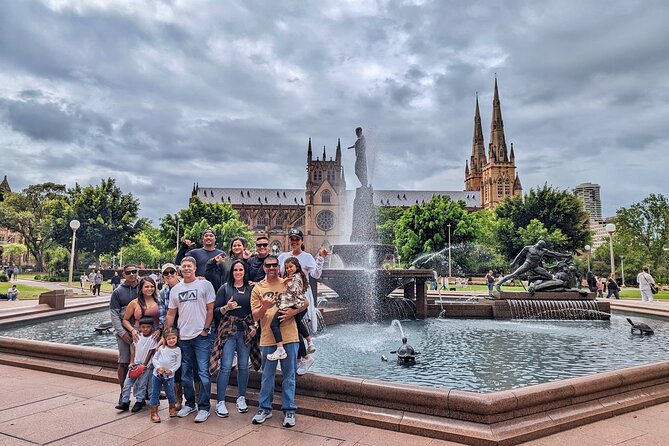
The group briefly enters the Royal Botanic Garden, a welcome change from city streets. The stop lasts about 10 minutes and includes the former location of the Garden Palace and Governor Phillip Fountain.
The Garden Palace story gives the walk a glimpse of Sydney’s grand ambitions and lost buildings. The fountain provides a clear physical point in the gardens, while the surrounding greenery offers a short break from traffic and office blocks.
Do not expect a long botanical visit. You are passing through a small section on the way to the next part of the city. Still, this is one of the route’s useful contrasts: Sydney’s center is not only stone, offices, and roads.
The QVB, St. Mary’s, and the city’s public face
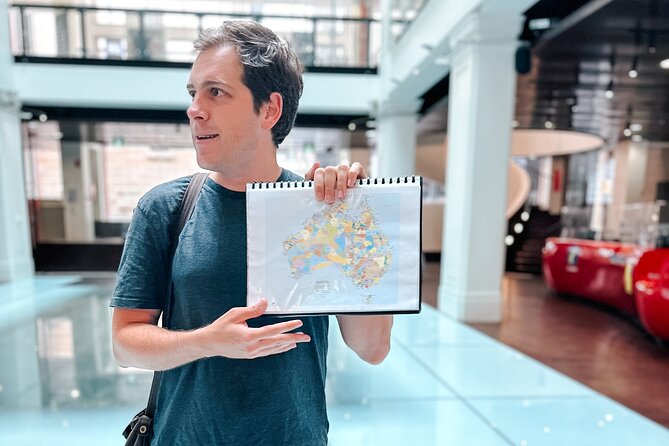
The Queen Victoria Building gets a short interior visit, mainly to see the grand arcade and give people a chance to use the bathrooms. You spend about five minutes here. That is enough to appreciate the building’s scale, but not enough for a proper shopping or architecture visit.
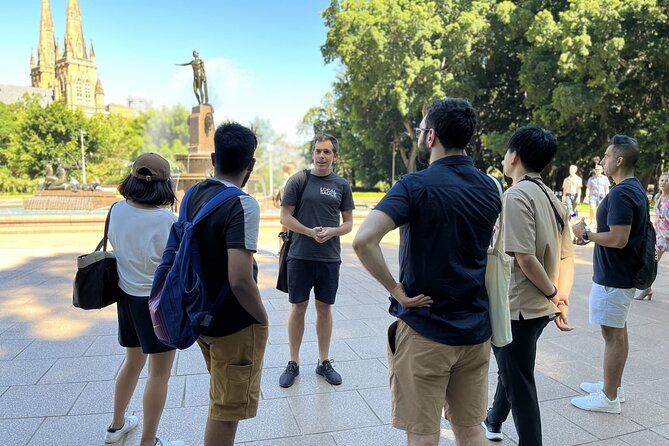
The route then reaches Hyde Park, where you get a view of St. Mary’s Cathedral from about 50 meters away. You do not enter the cathedral or walk right up to it. The sightline is useful, but visitors hoping for an interior look should plan a separate stop.
These short pauses show the practical design of the tour. You see major landmarks without losing the whole afternoon inside one building. I find that helpful on a first visit, though anyone who prefers museum-level detail may want a dedicated architecture tour later.
Martin Place, the GPO, and ANZAC memory
In Martin Place and on Pitt Street, the guide points out the General Post Office and explains the controversy around its construction and design. The stop lasts about five minutes, but the subject gives the street more depth than its office towers suggest.
At Martin Place, you hear about the ANZAC Cenotaph and Australia’s role in the First World War. The conversation can also touch on the relationship with New Zealand, a point one guide has used to explain the ANZAC story.
This section works well because it links buildings with national identity. The GPO is not just an old facade, and the cenotaph is not just a photo stop. You are shown how public spaces carry arguments about design, power, memory, and national feeling.
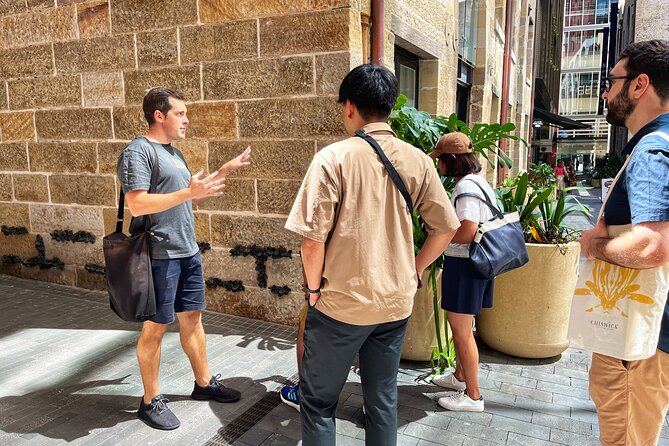
The route may also include street art and lesser-seen corners of the business district. Small groups help here. Seven or 11 people can gather in a narrow lane more easily than a large crowd, and the guide can adjust the pace when something catches the group’s attention.
The Rocks, Nurses Walk, and lower George Street
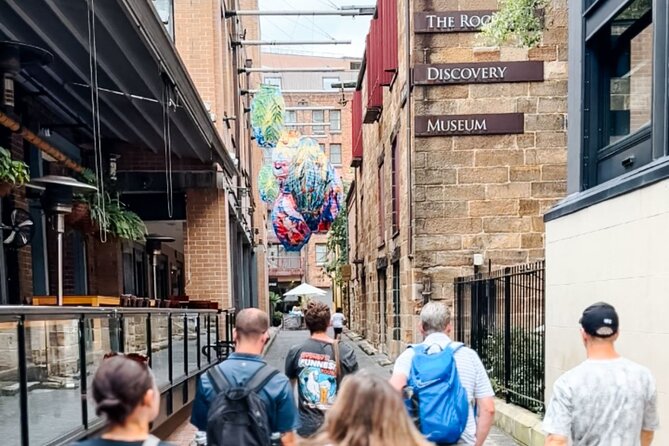
The final walking section takes you through part of The Rocks. You visit Nurses Walk, Jack Mundey Place, and lower George Street, with around 30 minutes in the area.
This is where the route feels most atmospheric. The streets narrow, the harbor comes closer, and the tour moves away from the formal grid of the business center. The guide connects the area to Sydney’s early working life and later changes, while also pointing out corners you might miss on a straight walk between the main attractions.
The Rocks can be crowded, so the group may need to pause and regroup. The small size helps, but it does not remove city noise or foot traffic. Wear shoes with a good sole, especially if you plan to continue exploring the area after the tour.
The Opera House and Harbour Bridge finale
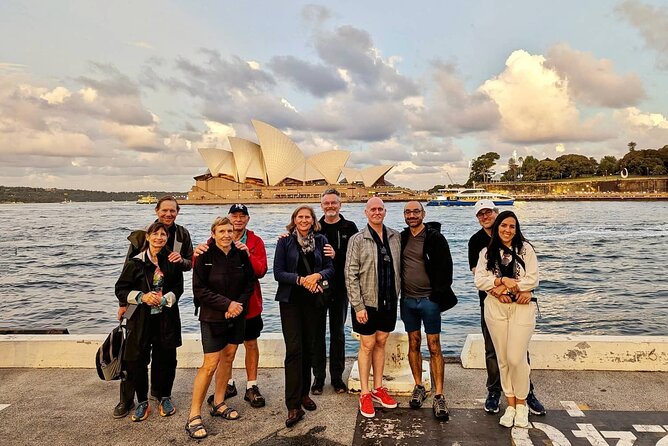
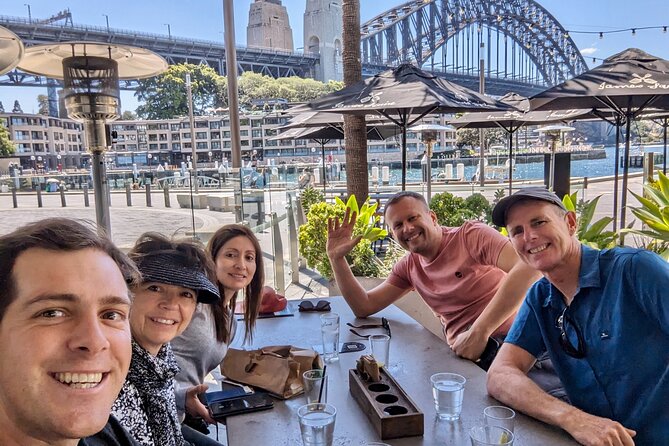
The tour finishes at The Squire’s Landing at the northern end of the Overseas Passenger Terminal. From here, you get views of both the Opera House and Sydney Harbour Bridge.
You do not enter the Opera House, and you do not walk onto the bridge as part of the tour. The bridge is a short walk from the ending point, so you can continue on your own after the guide says goodbye.
I like this ending because the drink is paired with a strong sense of place rather than handed over at an unrelated pub. Adults receive one small glass of craft beer. If you are under 18 or do not drink alcohol, you can choose a soft drink or juice. A classic Australian snack or biscuit is also included.
The stop is not a full meal. Think of it as a pleasant finish and a chance to ask final questions, not lunch. The map with recommendations is useful here, especially if you want to stay around Circular Quay or The Rocks afterward.
What the small group changes
The tour limits numbers to 12, and that is more meaningful than the label small group on its own. Some groups are reported at seven people, while others reach 11. That size lets you hear the guide more easily than in a large city walk and makes it possible to fit into alleys and tight viewpoints.
There is no headphone system. In quiet places, this may not matter. During New Year preparations or other noisy periods, it can be harder to catch every sentence. One useful habit is to stay within three or four meters of the guide and face the speaker when the group stops.
The guide’s delivery also affects the experience. A guide may turn toward a building while speaking, which can make certain comments hard to hear. If that happens, ask the guide to repeat the point. The small group makes that request easy and worthwhile.
Price, pace, and practical value
At $57.38 per person, the tour costs more than a free walking tour, but the comparison is not quite fair. You are paying for a 3.5-hour route, a capped group, a guide-led history lesson, a map of recommendations, group photos, a drink, and a snack.
I see the strongest value in the time saved. You cover the main central sights without planning a route, checking every street crossing, or piecing together the city’s colonial and First Nations stories yourself. The drink is a modest extra, but the harbor setting improves the finish.
The pace is steady rather than athletic. You must be able to walk about 4 km over three hours, with stops for explanations and views. Comfortable shoes, sun protection, and weather-appropriate layers are sensible. The experience requires good weather, and poor conditions can lead to a new date or a full refund.
The tour is not recommended for children under 12 because it combines three hours of stories with significant walking. Older children who enjoy city history may manage it, but the format is aimed more at adults and teens who can stay engaged during several short stops.
Free cancellation is available up to 24 hours before the start time. Changes or cancellations inside that window are not accepted for a refund.
Who should book this Sydney walk
I would choose this tour if you have only a short time in Sydney, want historical context before sightseeing alone, or prefer to learn by moving through a city. It also suits solo visitors, since a group of up to 12 makes it easier to ask questions and meet people without being swallowed by a crowd.
It is a good fit for anyone who wants the main central landmarks without entering every major building. You see the Opera House, Harbour Bridge, QVB, St. Mary’s Cathedral, Hyde Park Barracks, the Mint, and the GPO, but most stops are exterior views.
I would choose another activity if you want long museum visits, an in-depth Opera House tour, a bridge climb, or a relaxed harbor cruise. I would also think twice if four kilometers of walking sounds tiring or if you need guaranteed audio equipment in noisy places.
Should you book the Ultimate Sydney Walking Tour?
Book it if you want a well-paced orientation to Sydney with clear historical stories, a small group, and a pleasant harbor finish. The strongest guides, including Jake, Matt, Steve, and Michael, are praised for humor, warmth, practical tips, and strong command of the city’s past.
The tour’s real strength is its balance. You get First Nations context, convict-era stories, public buildings, ANZAC memory, street art, The Rocks, and famous harbor views in one half day. Just remember that the route is an outdoor overview, not a museum tour, and stay close enough to hear the guide.
FAQ
How long is the Ultimate Sydney Walking Tour?
The tour lasts about three hours and 30 minutes. You walk approximately 4 km, with stops at city landmarks and historic areas.
Where does the tour start?
It starts at 31 Alfred Street, Sydney NSW 2000, near Customs House.
Where does the tour finish?
It finishes at The Squire’s Landing at the northern end of the Overseas Passenger Terminal in Circular Quay. You get views of the Opera House and Harbour Bridge from the ending point.
Is a drink included?
Yes. Adults aged 18 and above receive one small glass of craft beer. A soft drink or juice is available instead.
Is food included?
One classic Australian snack or biscuit is included. It is not intended to replace a full meal.
Is the tour suitable for children?
The tour is not recommended for children under 12 because it involves about three hours of stories and 4 km of walking. Participants should have a moderate level of physical fitness.
Just added around Sydney
- sydney underwater scooter tours★ 4.5 · 74 reviews
- Taronga Zoo Sydney Wild Australia Experience★ 4.8 · 64 reviews
- Taronga Zoo Aussie Backyard Adventure★ 4.8 · 85 reviews
- Sydney: Whale Watching Cruise and Taronga Zoo Package★ 4.2 · 37 reviews
- Sydney: Spirits of the Rock and Dark Past Walking Tour★ 4.0 · 144 reviews
- Sydney: Whale Watching Adventure Cruise – Whales Guaranteed!★ 4.4 · 76 reviews
- Sydney Whale Watching Cruise with Breakfast or Lunch★ 4.4 · 340 reviews
- Sydney Harbour: Tall Ship Lunch Cruise★ 4.8 · 69 reviews
Walking Tours, compared.
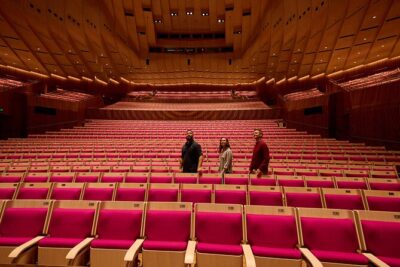
Sydney Opera House Official Guided Walking Tour
Read our review →
Blue Mountains Tour with Waterfall Walk & Lunch
Read our review →

Ultimate Melbourne Walking Tour: History, Laneways & Culture
Read our review →

Great Ocean Road Tour Plus Koalas, Forest Walk and Morning Tea
Read our review →
Blue Mountains Small Group Tour with Waterfall Walk & Fresh Lunch
Read our review →
Maria Island Cruise and Guided Walk Day Tour with Lunch and Drinks
Read our review →Browse the lists this tour appears in