
Reviewed · DARWIN
“Cage Of Death” Crocodile Swim and Entry to Crocosaurus Cove
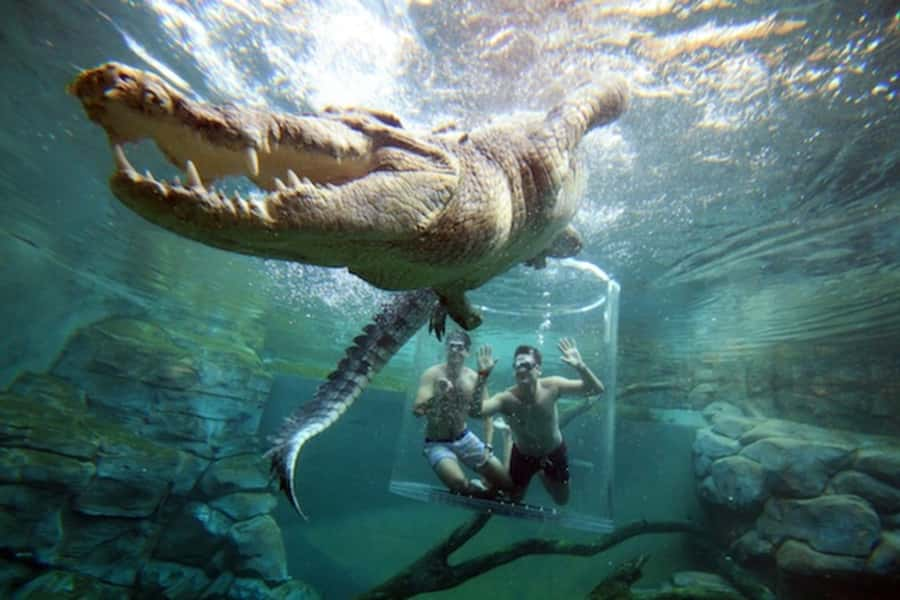
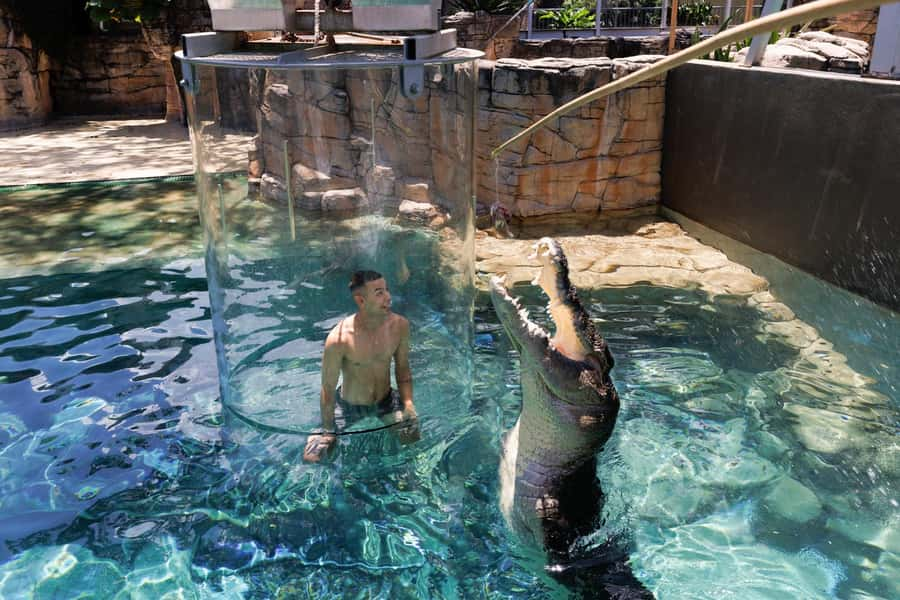
A five-meter saltwater crocodile can make a clear cage feel very small. The Cage of Death lowers you into the crocodile enclosure, where you can watch a huge reptile glide past, turn its eye toward you, or surge forward when the handlers bring out food. It is a sharp shot of adrenaline, not a quiet aquarium visit.
I like the careful 30-minute safety briefing and the fact that your ticket includes Crocosaurus Cove for the rest of the day. I also like the 360-degree photo coverage, since your own phone cannot capture the full scene from inside the cage. The main drawback is value: $208 for one or two people buys only 15 minutes in the cage, and the photo package costs extra.
Key points to know before booking
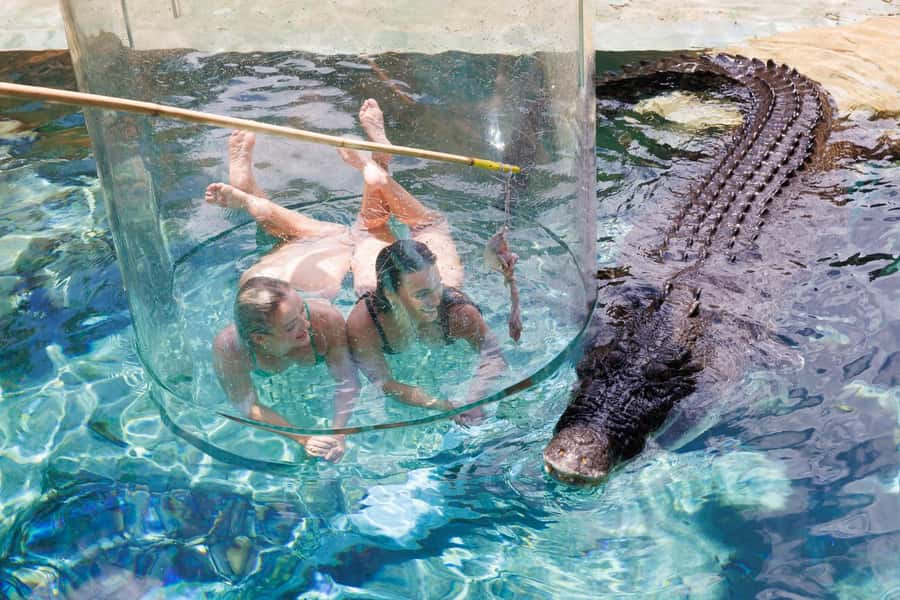
- Five-meter crocodiles at eye level: You are lowered beside enormous saltwater crocodiles rather than viewing them from a distant platform.
- A full safety briefing comes first: Arrive 30 minutes early for instructions, questions, and the required indemnity form.
- Handlers encourage movement with feeding: Your crocodile may seem calm at first, then become much more active when food appears.
- Your ticket covers the whole park: Use the Crocosaurus Cove admission before or after your 15-minute session.
- Photos are an optional extra: Photographers work inside and outside the enclosures, but prints and digital images are not included.
- Age and swimming rules matter: Children under 15 cannot take part, non-swimmers are not suitable, and ages 15 to 17 need an adult in the cage.
Why the Cage of Death feels so intense
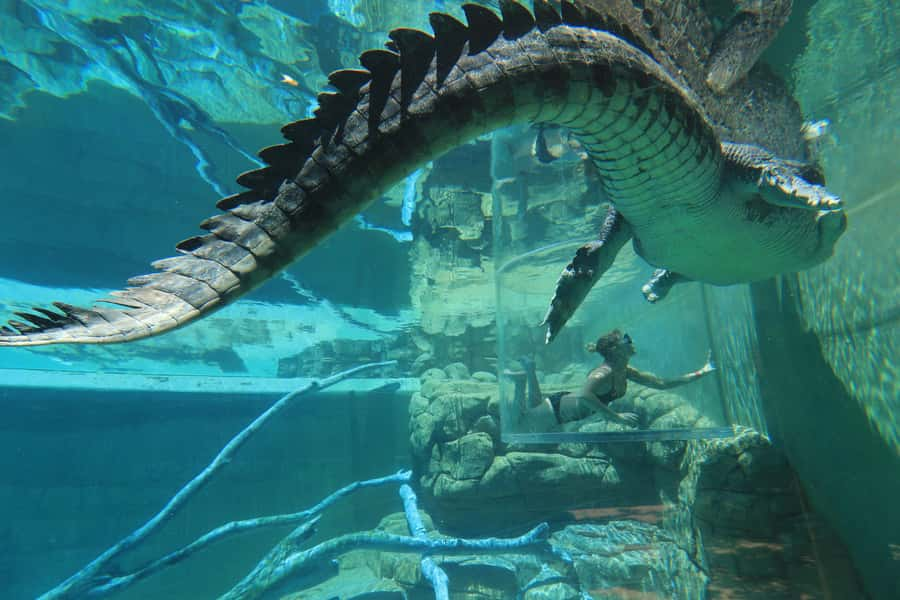
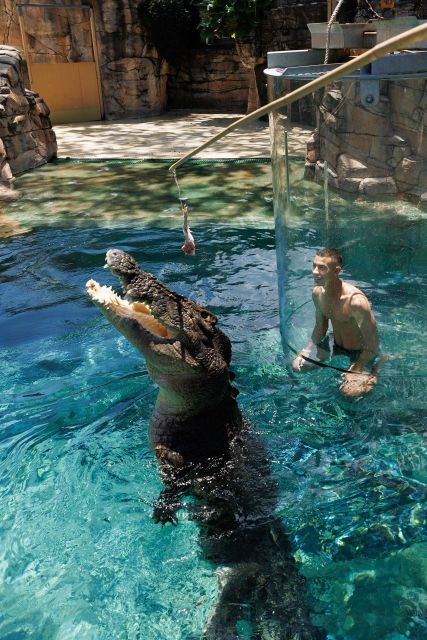
The appeal is simple: you are placed in a clear protective cage inside the same water-filled enclosure as a giant saltwater crocodile. You are not merely looking at a crocodile through glass. You are close enough to see its rough hide, teeth, eyes, claws, and prehistoric shape in detail.
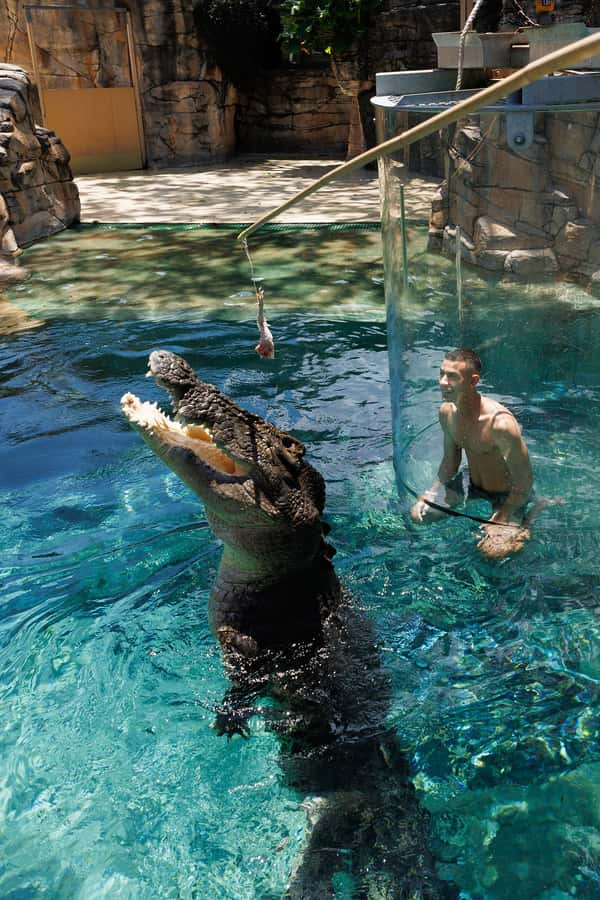
The cage is operated by an overhead monorail. It first hangs above the enclosure, then lowers you into position beside the crocodile. That movement gives the experience a theatrical start, but the real impact comes once the cage is in the water and the animal moves nearby.
A crocodile can look almost still one moment and suddenly become very lively the next. That change is part of the thrill. One session may begin with a placid animal resting near the cage. Once the handler brings out food, the crocodile may turn, swim, and push close to the bars. The contrast between calm and sudden action makes the 15 minutes feel more eventful than the clock suggests.
You may be paired with another person if you book for two. The activity is designed for one or two people per cage, so it works well for couples, friends, or a parent and older teenager who meet the age rules.
More Crocodile Tours in Darwin
- Litchfield National Park and Jumping Crocodile Cruise
★ 5.0 · 2,119 reviews - Adelaide River Cruises – Jumping Crocodile Experience
★ 5.0 · 997 reviews - From Darwin: Litchfield Park Tour & Jumping Crocodile Cruise
★ 4.9 · 829 reviews
The 30-minute briefing is more useful than filler
You need to arrive at Crocosaurus Cove 30 minutes before your confirmed time. That is not optional padding. The staff use this period to explain how the cage works, how to enter and leave it, what to expect from the crocodile, and how to behave during the session.
The briefing also helps settle the nerves. Several parts of the experience can sound alarming on paper, especially the idea of being lowered into an enclosure with a saltwater crocodile. Clear instructions and the chance to ask questions make the situation feel controlled rather than reckless.
You will also need to sign an indemnity release form before the session. If you are 15 to 17, a parent must provide consent and sign the form, and you must be accompanied by an adult aged 18 or over in the cage. Unaccompanied minors are not allowed.
The briefing includes information about crocodile behavior, feeding, and the difference between adult and young animals. That background adds value because you begin to see the crocodile as a powerful animal with specific habits, not just a prop for a frightening photograph.
Lowering into the enclosure
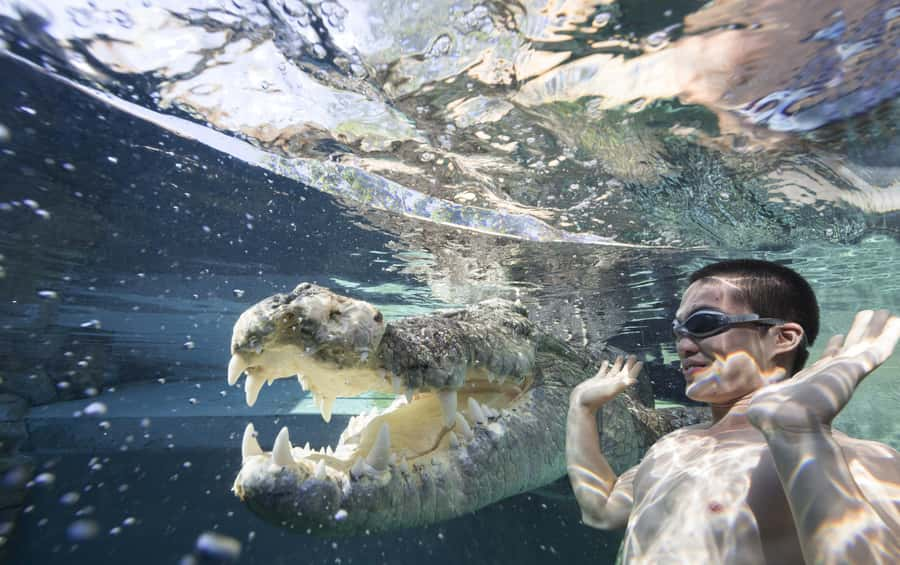
After the briefing, you change and prepare to enter the cage. The clear enclosure is suspended above the crocodile pen before the monorail lowers it into place. That first descent is likely to be the most nerve-racking moment, since you can see the animal below while the cage is still moving.
Getting in and out requires care. You use a ladder, and wet footing may make the process awkward. One person found the ladder slippery, while another noted that entering and leaving was the trickiest part of the session. Take your time, follow staff instructions, and do not rush because you feel pressure from the schedule.
The changing room is described as private and tidy, and showers are available. Bring your own towel, since one is not guaranteed. A few practical complaints have focused on cool showers, limited soap, and changing-room cleanliness, so I would pack a small towel and basic toiletries rather than count on the facilities.
The water component also means you should think about your comfort in advance. The experience is not suitable for non-swimmers. You are not swimming freely with the crocodile, but the session takes place in the water and requires you to manage being submerged in the cage.
Fifteen minutes beside a living crocodile
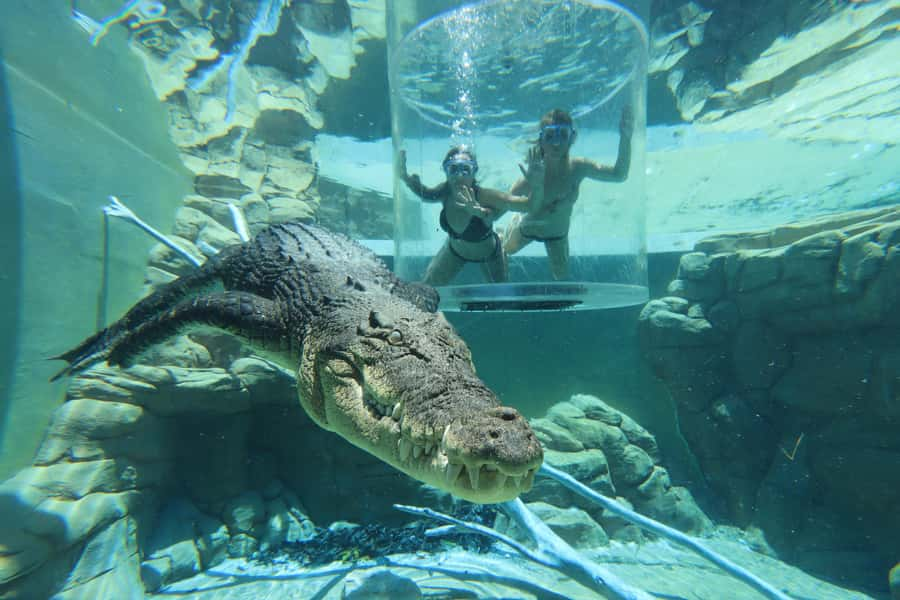
Once the cage is in the enclosure, the monorail gives you views from several angles. You may see the crocodile from above, beside it, and underwater. The clear walls are important here. They let you examine the animal at close range without the visual distance created by a conventional viewing window.
The crocodiles have individual names and personalities. The park’s well-known animals include Chopper, Axel, William, Kate, Baru, Houdini, and Leo. You cannot treat the booking as a guarantee of one particular animal or level of activity, but those names give you a sense that the experience involves resident animals with distinct temperaments.
Leo, described as more than five meters long, has provided energetic sessions for some people. Baru has also made a strong impression, especially when he came close for photographs. William and Kate are another pair used for sessions, and William has been lively at times. Yet a crocodile is not a machine. One person found William subdued, while another had to move from a sleepy Leo to a more active enclosure.
That unpredictability is worth understanding before you pay. A quiet crocodile still gives you a close look at an extraordinary animal, but it may produce fewer dramatic photographs and less sudden movement. If your main goal is action, the feeding portion usually creates the best chance of seeing the crocodile respond.
The handlers regularly feed the crocodiles during the session. This encourages movement and brings the animal toward the cage. It also changes the mood quickly. A calm few minutes can turn into an intense rush when the food appears, with the crocodile moving much more forcefully and purposefully.
A different sort of day out, same corner of Darwin:
- Sunset 3-Hour Cruise from Darwin with Dinner and Sparkling Wine
★ 5.0 · 980 reviews - Charles Darwin Dinner Cruise
★ 4.5 · 820 reviews - Cape Adieu Darwin Sunset Dinner Cruise
★ 5.0 · 750 reviews - 1 Day Corroboree Billabong Wetland Experience including 2.5 hour cruise + lunch
★ 5.0 · 501 reviews
The photography is part of the decision
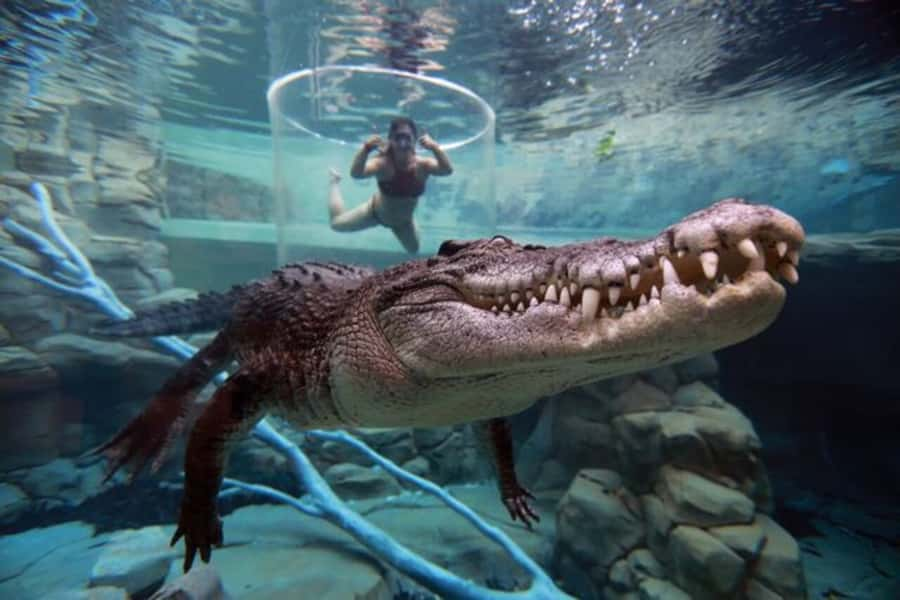
Photographers capture images from inside and outside the enclosure. That matters because you will be busy holding position, watching the crocodile, and trying to keep your goggles clear. Your phone cannot easily record the same angles, especially underwater.
The photographer may capture your face inside the cage, the crocodile passing behind you, and wide views showing the scale of the animal. The outside shots can also show the cage, the water, and the crocodile together, which gives friends and family a better sense of what you actually did.
The photo package is not included in the $208 price. Prints and digital images cost extra. Some people consider the added cost worthwhile because the photographs preserve the one part of the experience that is hardest to explain later. Others find the base price high enough that photos should be included.
My advice is to decide before you arrive. If the image is central to your reason for booking, budget for the extra charge. If you mainly want the experience itself, you can treat the photography as optional rather than feeling pressured at the end.
What the all-day Crocosaurus Cove ticket adds
The activity includes general admission to Crocosaurus Cove for the day. That improves the value, especially if you arrive early for the briefing and have time to explore before your session.
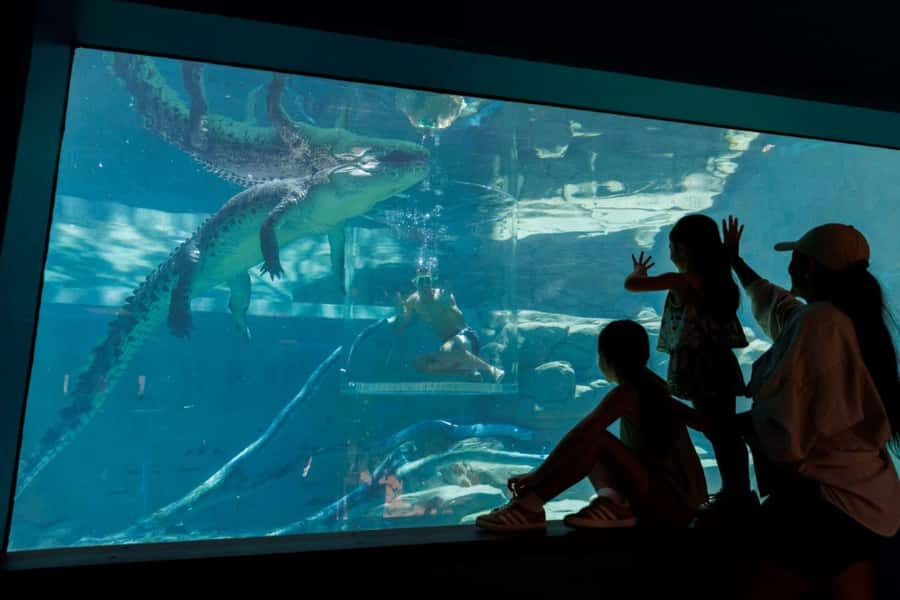
The cage experience is only 15 minutes, so the admission ticket gives your visit a fuller shape. You can spend time seeing the crocodile enclosures, learning more about the resident animals, and watching other parts of the attraction. It also lets you look at the crocodiles from outside before your session, which may help you understand their size and movement.
Afterward, you can return to the park and watch the animals with your feet firmly on dry ground. That contrast is useful. A crocodile that seemed almost abstract from the public viewing area will look very different once you have been close enough to study its eye, skin, and jaw through the cage.
The ticket is particularly helpful if you are already planning to visit Crocosaurus Cove. If you would not otherwise spend time at the park, its value depends on how much use you make of the rest of the day.
Is $208 good value for 15 minutes?
The advertised price is $208 per group of up to two people. That means a pair can share the cost, which makes the price easier to justify than a solo booking. It also includes the safety briefing and all-day general admission.
Still, the actual time inside the enclosure is 15 minutes. That is the figure to keep in mind when comparing this with other Darwin activities. You are paying for specialist equipment, trained handlers, safety procedures, the crocodile facility, and the rare chance to be close to an enormous saltwater crocodile. You are not paying for a long water activity.
I think the price makes sense for a bucket-list experience, a major birthday treat, or the single unusual activity around which you build a Darwin day. It feels less convincing if you expect a long session or a broad outdoor adventure.
The value also depends on the crocodile’s mood. An active animal can make the session feel packed with action. A sleepy one may leave you with a calmer encounter, though still an unusual one. The park admission helps soften that uncertainty.
Who should book this experience?
You should consider booking if you want a controlled but genuinely nerve-rattling encounter with a large crocodile. It suits adults, confident swimmers, wildlife enthusiasts, photographers, and anyone looking for something far beyond a standard animal display.
It is also a good choice if you appreciate staff explanation and safety structure. The team handles the briefing, cage movement, feeding, and photography, so you are not left to work out the process yourself.
Think carefully if you dislike confined spaces, feel uneasy in water, or want complete control over the animal’s behavior. The cage keeps you protected, but it does not remove the sight, sound, and movement of a huge crocodile nearby.
Children under 15 cannot take part. Participants aged 15 to 17 need parental consent, photo identification, and an adult aged 18 or over in the cage. There is no exception for an unaccompanied minor.
Practical tips for a smoother session
Arrive at least 30 minutes early. Late arrival could interfere with the safety briefing and paperwork, and the schedule may change because of weather or safety conditions.
Bring a towel, and consider bringing simple shower supplies. Wear something that makes changing easy, and take extra care on the ladder when entering or leaving the cage.
If you use goggles, check the fit carefully. One person had trouble with leaking goggles and found it difficult to stay underwater for photographs. Tell the staff promptly if your goggles are not working well, rather than trying to endure the problem until the photographer has moved on.
If you are booking for two, remember that both people share the cage. Discuss in advance who wants the best position for photographs and how you will take turns facing the crocodile.
Plan to stay at Crocosaurus Cove after the session. The general admission is part of the package, and it gives you time to enjoy the park even if the cage portion passes quickly.
Cancellation is available for a full refund up to three days in advance. Weather and safety can affect the schedule, so keep a little flexibility in your Darwin plans.
Should you book the Cage of Death?
Book it if you want a rare, highly controlled encounter with a very large saltwater crocodile and you are comfortable paying a premium for 15 minutes of close contact. The careful briefing, experienced handlers, feeding session, photographers, and all-day Crocosaurus Cove admission make this more than a quick photo stunt.
Skip it if $208 feels too high for a short session, if you are a non-swimmer, or if you need guaranteed animal action. Crocodiles have moods, and the most exciting moments depend partly on the individual animal.
For the right person, this is one of Darwin’s most memorable activities. Just budget for the optional photographs, bring a towel, arrive early, and remember that the calm crocodile beside you can become a very different animal when the food arrives.
FAQ
Where does the Cage of Death take place?
It takes place at Crocosaurus Cove, 58 Mitchell Street, Darwin, Northern Territory 0800.
How long is the Cage of Death session?
The time inside the enclosure is 15 minutes. You must also allow 30 minutes for the safety briefing before the session.
How much does the experience cost?
The price is $208 per group of up to two people.
Does the price include Crocosaurus Cove admission?
Yes. General admission to Crocosaurus Cove for the day is included.
Are photographs included?
No. Photographs taken by the on-site photographers are available to buy separately, including print and digital options.
How old must participants be?
Children under 15 cannot take part. Participants aged 15 to 17 must have parental consent, show photo identification, and share the cage with an adult aged 18 or over.
Can a non-swimmer take part?
No. The experience is not suitable for non-swimmers.
Do I need to arrive early?
Yes. Arrive 30 minutes before your confirmed time for the safety briefing and required paperwork.
Do I need to sign a form?
Yes. All participants must sign an indemnity release form before entering the cage. A parent must sign for participants aged 15 to 17.
Can the schedule change?
Yes. Times may change because of weather conditions and guest safety.
Just added around Darwin
- Tiwi Islands Cultural Experience from Darwin Including Ferry★ 4.0 · 97 reviews
- Bombing of Darwin World War II Tour with Harbour Cruise★ 4.5 · 219 reviews
- 1-Hour Thunderball WWII Adventure Jet Skiing in Darwin★ 5.0 · 70 reviews
- Royal Flying Doctor Service Tourist Facility: Two Iconic Territory Stories★ 5.0 · 256 reviews
- Darwin Combo: The Bombing of Darwin Experience & Darwin Harbour Cruise★ 4.5 · 123 reviews
- Litchfield Park & Jumping Crocodile Cruise★ 5.0 · 37 reviews
- Litchfield & Berry Springs VIP Adventure Day Tours (group of 11)★ 5.0 · 142 reviews
- Adelaide River Jumping Croc Cruise★ 4.5 · 56 reviews
Crocodile Tours, compared.
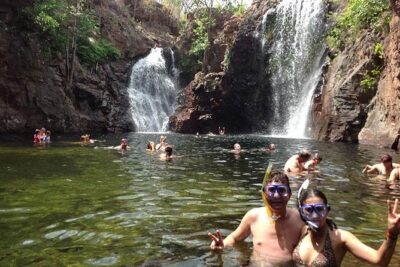
Litchfield National Park and Jumping Crocodile Cruise
Read our review →
Solar Whisper Daintree River Crocodile and Wildlife Cruise
Read our review →
Adelaide River Cruises – Jumping Crocodile Experience
Read our review →
Litchfield Park Tour & Jumping Crocodile Cruise
Read our review →
The Croc Bus to the Famous Jumping Crocodile Cruise
Read our review →
Litchfield and Jumping Crocodiles Full Day Trip from Darwin
Read our review →
Malcolm Douglas Crocodile Park Tour Including Transportation
Read our review →
Browse the lists this tour appears in