
Reviewed · DARWIN
Bombing of Darwin World War II Tour with Harbour Cruise
Darwin’s wartime story comes into sharper focus when you see it from the water. This half-day tour links military museums, bunkers, old defence sites, and the harbour where Japan’s 1942 raids struck. The small boat gives you a useful sense of distance and direction that a museum alone cannot provide.
I like the mix of land and sea, and I like the practical pacing: a guide handles the driving and storytelling while you explore two museums at your own speed. The air-conditioned minibus, hotel pickup at selected hotels, water, and even bug spray make the hot Top End climate easier to manage.
The main drawback is time. Four and a half hours covers a lot, but some people will want longer at the military museum and more time for photographs. One booking issue also deserves care: the advertised price may appear in US dollars, so check the final currency before paying.
Key points at a glance
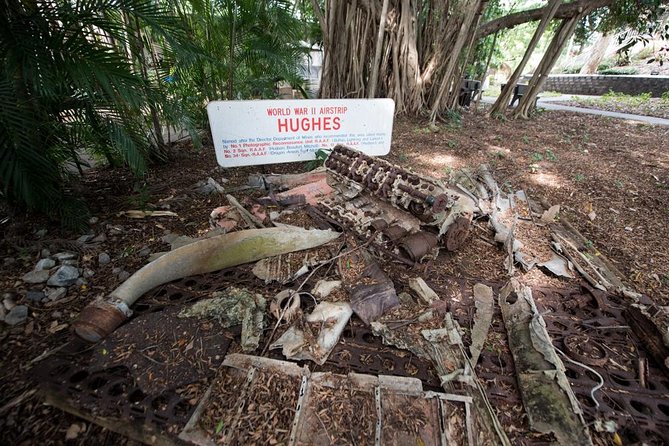
- See Darwin’s wartime sites from the harbour: The cruise passes bomb and wreck locations connected with the February 1942 raids, including the visible remains of the USS Peary.
- Visit two substantial military museums: The Darwin Military Museum and Defence of Darwin Experience put equipment, vehicles, personal stories, and wartime decisions into context.
- Explore Australia’s only wartime battleground: The East Point Military Precinct adds an important outdoor setting to the museum visits.
- Travel in a small group: The maximum is 10 people, with an air-conditioned vehicle and live commentary from the guide or driver.
- Expect guides who add personal detail: Guides named Jim, Mariette, and Betty have been singled out for clear explanations, strong local knowledge, and attentive help.
- Plan for heat and sun: Bring a hat for the boat and wear comfortable shoes for the museum and bunker stops.
Why Darwin’s 1942 story matters
Darwin is often introduced through its tropical climate, harbour, and proximity to national parks. Yet its place in Australian history changed sharply on February 19, 1942, when Japanese aircraft attacked the town and harbour. The raids brought World War II directly to Australian soil and caused major damage and loss of life.
This tour helps you understand that event as more than a date in a textbook. You see where defence positions were placed, how the harbour shaped the attack, and why Darwin became a military centre. The commentary also covers the town before the war and the events that helped shape modern Darwin.
That wider setting is one of the tour’s strengths. You are not simply moved from one war display to another. The driving section includes views and stories around Darwin and Parap, including older buildings and places of local interest. The result is a broader portrait of the city, with the war fitted into its earlier and later story.
For Australians who received little or no teaching about the bombing of Darwin at school, this can be especially worthwhile. For international visitors, it provides essential context for understanding why the harbour, airfields, bunkers, and military collections matter.
More Boat Tours in Darwin
- Litchfield National Park and Jumping Crocodile Cruise
★ 5.0 · 2,119 reviews - Sunset 3-Hour Cruise from Darwin with Dinner and Sparkling Wine
★ 5.0 · 980 reviews - From Darwin: Litchfield Park Tour & Jumping Crocodile Cruise
★ 4.9 · 829 reviews
The harbour cruise puts the bombing into perspective
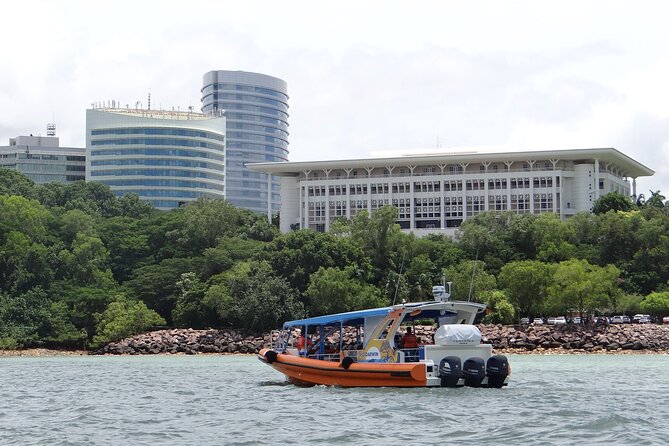
The tour begins with the Sea Darwin cruise, a small-boat trip lasting about one hour. The boat is not simply a scenic ride added to a bus tour. Its real value is spatial. From the harbour, you can look back toward the city and see how water, shore, naval facilities, and defence positions relate to one another.
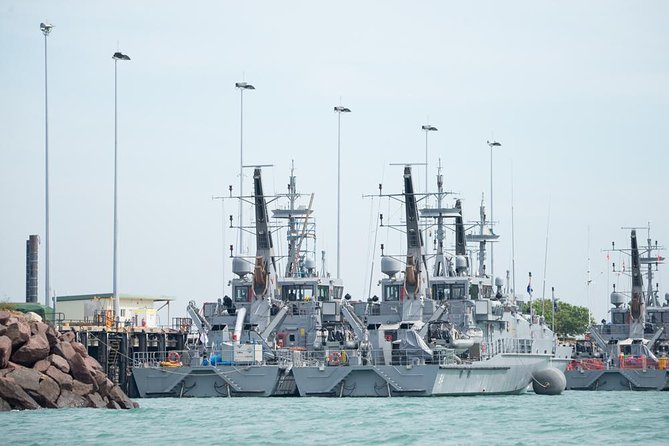
The cruise passes the modern naval base and locations connected with the Japanese attacks. You may also see wreck and bomb sites, including the remains of the USS Peary on the harbour floor. These locations can be difficult to understand when viewed only on a printed map. From the boat, the harbour becomes part of the story.
Live commentary continues onboard. Guides explain the role of different defence points and describe what happened during the raids. The boat ride also offers a cooler break from Darwin’s heat, although the open conditions mean you should bring a hat and protect yourself from the sun.
The cruise has a few limits. There is only so much physical evidence left to see from the water, and some commentary may overlap with what you hear on the minibus. If you expect a long list of dramatic wrecks or extensive ruins, adjust your expectations. The value lies in the setting, the explanations, and the sense of scale rather than in a dense collection of visible objects.
You disembark at Cullen Bay Marina after roughly an hour. The transfer itself is short, listed at about five minutes, before the tour continues by vehicle.
The Darwin Military Museum makes the past tangible
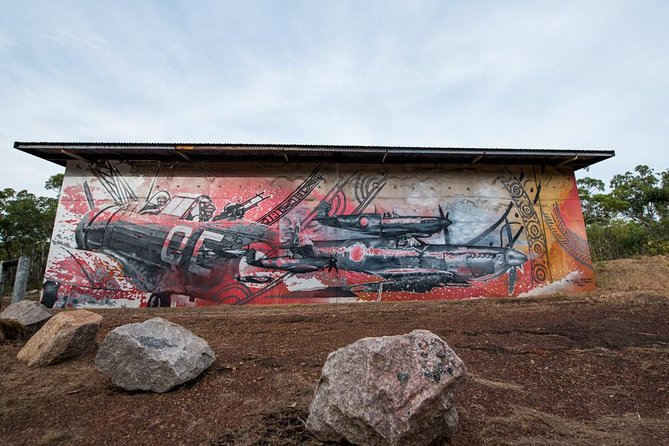
The Darwin Military Museum is one of the most important stops because it gives you physical evidence of the city’s wartime role. Instead of hearing only dates and movements, you can see weapons, vehicles, and other military displays.
Allow around 45 minutes for a self-guided visit. That is enough to get a useful introduction, but it is not generous if you read every label or want to linger over the collection. This is the stop most likely to feel hurried for anyone with a strong interest in military history.
The museum can also be emotionally heavy. Displays about invasion, defence, and loss are not presented as light sightseeing. Give yourself time to take in the human side of the story, especially if you are travelling with children or anyone who may find wartime material upsetting.
The advantage of a self-guided visit is freedom. You can spend extra moments with the objects that catch your attention rather than staying beside the group. The disadvantage is that you must manage your own time carefully. If the guide gives a clear return time, keep an eye on it.
The Defence of Darwin Experience adds the human story
The Defence of Darwin Experience is another self-guided museum stop, also allocated about 45 minutes. Together with the military museum, it helps explain the decisions, fear, confusion, and effort surrounding Darwin’s defence.
The two museums serve different purposes within the same morning. The military museum gives you hardware and material evidence. The Defence of Darwin Experience helps connect that equipment to the people and events around it.
I would pay close attention to the sequence of events. The bombing was not an isolated incident with no consequences. It affected Darwin’s population, its military role, and the way Australia viewed the danger of war closer to home. The displays help you see how the city’s identity was shaped by that period.
Again, the time limit is the trade-off. You get the convenience of fitting several major sites into one outing, but you will not study every display in detail. If museums are your main reason for visiting Darwin, consider returning independently to spend longer.
A different sort of day out, same corner of Darwin:
- Adelaide River Cruises – Jumping Crocodile Experience
★ 5.0 · 997 reviews - Charles Darwin Dinner Cruise
★ 4.5 · 820 reviews - Cape Adieu Darwin Sunset Dinner Cruise
★ 5.0 · 750 reviews - 1 Day Corroboree Billabong Wetland Experience including 2.5 hour cruise + lunch
★ 5.0 · 501 reviews
East Point and Charles Darwin National Park show the defence system
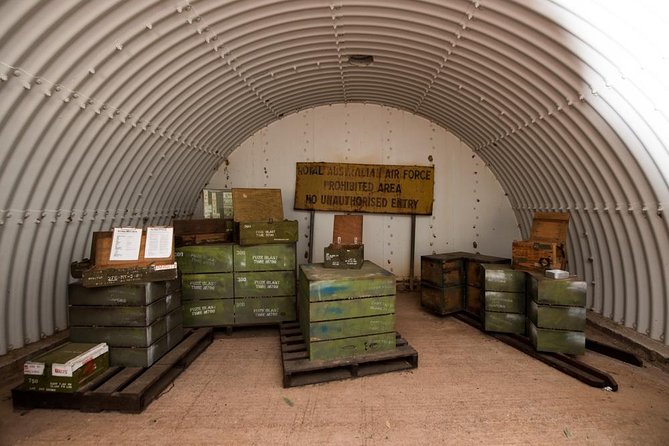
The East Point Military Precinct is described as Australia’s only wartime battleground, making it a key stop for anyone wanting to understand the physical defence of Darwin. The site gives the story an outdoor setting, away from display cases and museum panels.
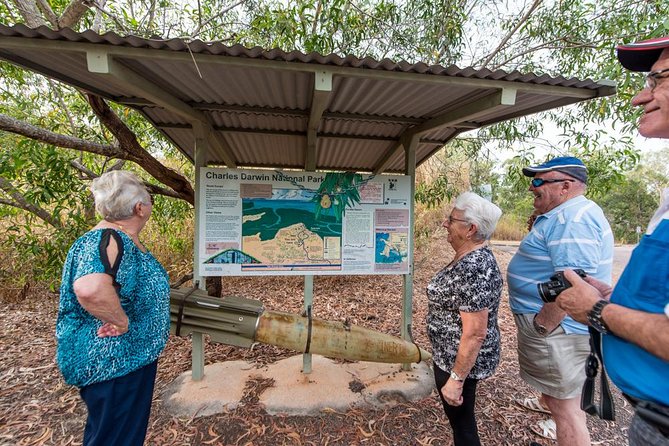
The tour also visits Charles Darwin National Park, where you see ammunition storage tanks and a bunker exhibit. The stop lasts about 20 minutes, so expect a focused visit rather than a long walk through the park.
These sites matter because war was not fought only in the harbour. Ammunition had to be stored, moved, guarded, and supplied. Defence positions had to fit the terrain and protect strategic areas. Seeing the tanks and bunker display helps you picture the practical work behind the larger military story.
Wear sensible shoes and be ready for uneven or exposed conditions. The tour calls for moderate physical fitness, though the supplied information describes the walking as easy enough for a wide range of ages. You should still be comfortable getting in and out of the minibus and walking between displays.
The minibus makes a hot morning manageable
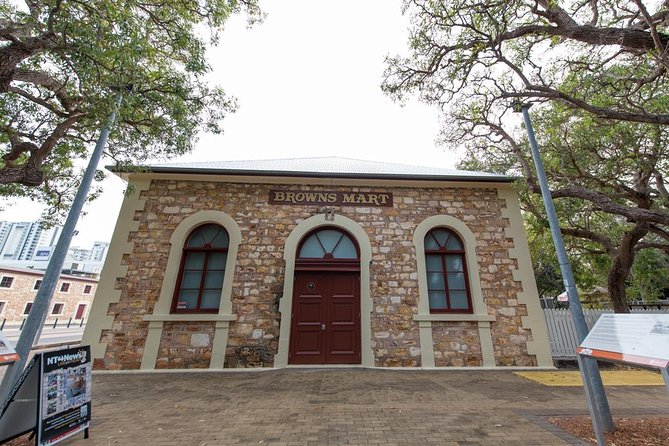
The tour uses an air-conditioned vehicle, a major benefit in Darwin. Heat can drain your attention quickly, especially when you are moving between outdoor military sites. A cool vehicle gives you a useful reset between stops.
The maximum group size is 10 people. That is small enough for the guide’s commentary to feel direct, without the scale of a large coach group. Pickup and drop-off are included at selected hotels, while the listed meeting point is the Aquascene Fish Feeding Sanctuary and Cafe on Doctors Gully Road in Larrakeyah.
Pickup details should be checked carefully. One person reported a delayed collection and a frustrating lack of updates, while other accounts describe clear communication and precise pickup times. This suggests that the service can work well, but you should confirm the time and location in advance rather than relying on assumptions.
The tour ends back at the meeting point. Food and drinks are not included, so eat beforehand or carry what you need. Water has been available in the vehicle on some outings, but it is wise not to depend on that alone.
Guides shape the quality of the morning
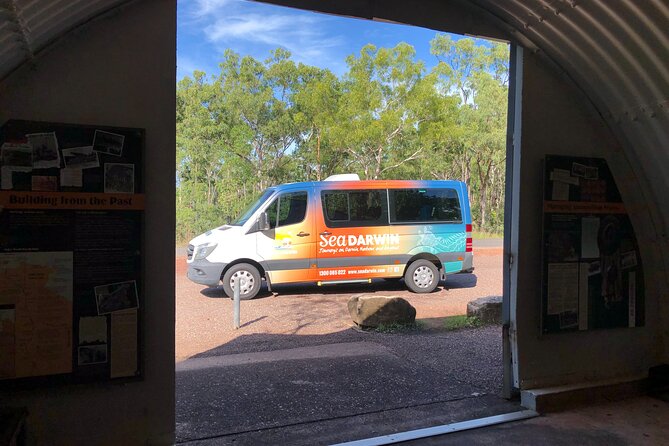
This is a story-heavy tour, so the guide matters as much as the sites. The most praised guides include Jim, Mariette, and Betty. Jim is noted for adding historical detail beyond the official record, while Mariette is praised for clear speaking and a strong grasp of the whole route. Betty has been described as kind and especially attentive to individual needs.
The best part of live commentary is the connection between places. A guide can explain why a particular harbour position mattered, then point out a related defence site later in the drive. That link is harder to get when visiting the museums alone.
The style may vary by guide and by day. Most of the feedback points to clear, enthusiastic explanations, but one person found the commentary average and the museum time too short. If you prefer quiet sightseeing and lots of independent time, the steady narration may feel like too much. If you want the background filled in as you go, it is a major advantage.
Small touches also help. Anzac biscuits and music have been part of the experience on some outings, adding a modest human touch to a serious subject. Do not book the tour for these extras, but they can make the morning feel thoughtfully put together.
Is the $106.87 price fair?
At $106.87 per person, the tour is not the cheapest way to see Darwin. The value depends on how much you would otherwise spend arranging transport, museum entry, and a harbour outing separately.
The price includes hotel pickup and drop-off at selected hotels, air-conditioned transport, a local guide or driver, live commentary, the boat cruise, and admission to the military attractions listed in the route. You are also paying for a small group, with no need to navigate between East Point, Charles Darwin National Park, the museums, and the harbour yourself.
That package makes the price reasonable for a first visit, especially if you have only half a day available. It is less attractive if you already have a rental car, prefer to explore slowly, or plan to visit the museums more than once.
Check the currency before payment. One person was surprised to find the amount stated in US dollars. The price supplied for this experience is $106.87 per person, but the booking screen should make clear whether that figure is in Australian or US currency.
Who will get the most from this tour?
I would recommend it to anyone who wants a clear introduction to Darwin’s World War II story without spending a full day arranging separate visits. It suits first-time visitors, history fans, Australians filling a gap in their national knowledge, and people who like a mix of guided explanation and self-guided museum time.
It also works well if you want to see Darwin from different angles. The minibus covers city streets and military sites, while the boat changes your view of the harbour. That variety keeps the morning moving.
You may want another plan if you are a serious museum reader. The two 45-minute museum visits are useful but tight. You might also prefer a different outing if your main interest is Darwin’s oil storage tunnels, since those are not included in this tour.
Bring a hat for the boat, comfortable shoes, water, sunscreen, and a camera if you want photographs at the outdoor sites. The cruise can be refreshing, but it is exposed. The museums are more sheltered, while the park and precinct stops place you in the Top End climate.
Should you book the Bombing of Darwin tour?
Book it if you want the main wartime sites explained in one well-organized half-day, with the bonus of seeing the harbour from a small boat. The cruise, the USS Peary site, the museum displays, and the bunker exhibit give you several ways to understand the bombing.
Do not book it expecting unlimited museum time or a quiet, self-directed morning. The schedule is full, and the guide’s commentary is central to the experience. Confirm pickup details and currency before paying, then allow for the possibility that the boat or museum time may feel brief.
For most visitors with limited time in Darwin, I think the combination offers solid value. It tells an important Australian story, connects the city to its harbour, and leaves you with a much clearer sense of how the bombing shaped Darwin.
FAQ
How long does the Bombing of Darwin World War II Tour take?
The tour lasts approximately four hours and 30 minutes.
What is included in the price?
The price includes selected hotel pickup and drop-off, air-conditioned transport, a local guide or driver, live onboard commentary, the harbour cruise, and admission to the listed military attractions.
Where does the tour start?
The listed meeting point is the Aquascene Fish Feeding Sanctuary and Cafe at 28 Doctors Gully Road, Larrakeyah, Northern Territory.
Does the tour include the Darwin Military Museum?
Yes. The Darwin Military Museum is included, with about 45 minutes for a self-guided visit.
Is food included?
No. Food and drinks are not included, so you should arrange your own refreshments.
Can I cancel for a full refund?
Yes, if you cancel at least 24 hours before the experience start time. Cancellations made less than 24 hours in advance are not refunded. Poor weather or an insufficient minimum number of participants may lead to a rescheduled experience or full refund.
Just added around Darwin
- 1-Hour Thunderball WWII Adventure Jet Skiing in Darwin★ 5.0 · 70 reviews
- Tiwi Islands Cultural Experience from Darwin Including Ferry★ 4.0 · 97 reviews
- Royal Flying Doctor Service Tourist Facility: Two Iconic Territory Stories★ 5.0 · 256 reviews
- Darwin Combo: The Bombing of Darwin Experience & Darwin Harbour Cruise★ 4.5 · 123 reviews
- Litchfield Park & Jumping Crocodile Cruise★ 5.0 · 37 reviews
- Litchfield & Berry Springs VIP Adventure Day Tours (group of 11)★ 5.0 · 142 reviews
- Adelaide River Jumping Croc Cruise★ 4.5 · 56 reviews
- Honey Ryder Sunrise Jet Skiing in Darwin★ 5.0 · 78 reviews
Cruises & Boat Tours, compared.
Great Barrier Reef Snorkeling and Diving Cruise from Cairns
Read our review →
Great Barrier Reef Cruise by Premium Catamaran
Read our review →
Whitehaven Beach and Hill Inlet Lookout Snorkeling Cruise
Read our review →
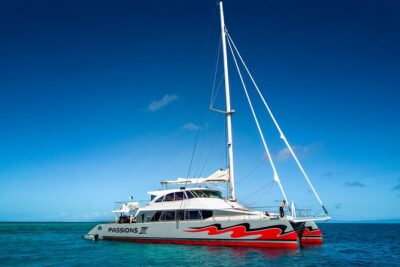
Passions of Paradise Great Barrier Reef Cruise by Catamaran
Read our review →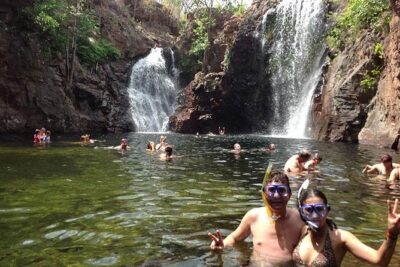
Litchfield National Park and Jumping Crocodile Cruise
Read our review →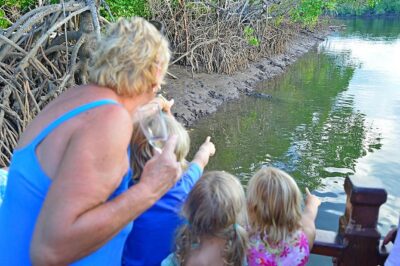
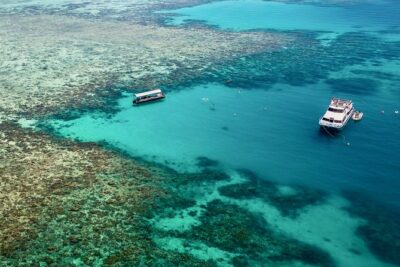
Ocean Freedom Great Barrier Reef Luxury Snorkel and Dive Cruise
Read our review →Browse the lists this tour appears in