
Reviewed · DARWIN
Royal Flying Doctor Service Tourist Facility: Two Iconic Territory Stories
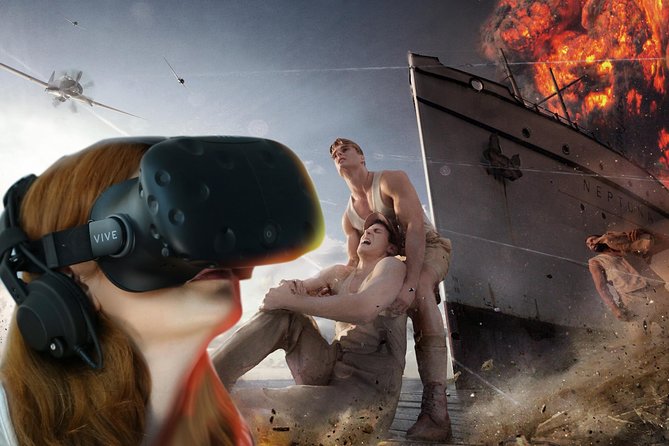
The most striking part of this Darwin attraction is the way two very different Territory stories share one compact building. One tells how the Royal Flying Doctor Service brings medical care to remote Australia. The other shows the shock and destruction of the 1942 Bombing of Darwin through film and virtual reality. The hologram cinema and VR presentations give the history a strong sense of place without turning it into a dry museum lesson.
I like the freedom to arrive at a chosen entrance time and set your own pace. I also like the chance to climb aboard a fully aero-medically equipped Pilatus PC-12, where you can see how pilots, doctors, nurses, and engineers work within a small aircraft. The main consideration is timing: although the visit is advertised at about two hours, you can see the essentials in roughly one to one and a half hours if you move briskly.
Key points to know before you go
- Two Territory stories in one visit: Learn about the RFDS and the Bombing of Darwin under one air-conditioned roof.
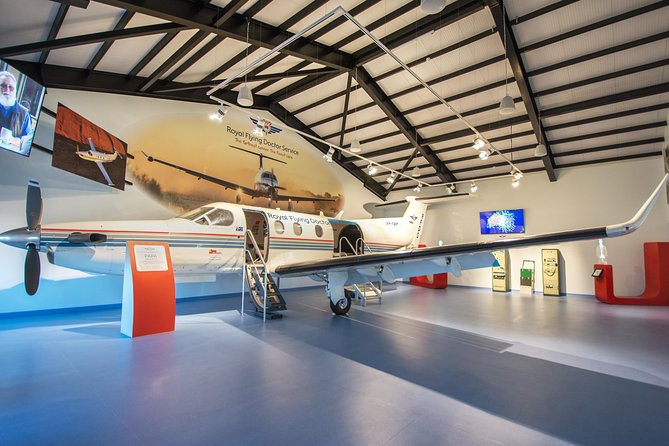
- A real aircraft you can enter: Explore a decommissioned Pilatus PC-12 fitted for aero-medical work.
- VR makes the wartime story personal: The virtual presentation recreates the impact of the bombing in a direct, memorable way.
- Self-guided and flexible: You receive an introductory overview, then explore the exhibits on your own.
- Good for families: Children can sit in the aircraft cockpit, while adults get the wider medical and wartime context.
- Useful in Darwin’s heat: The facility is indoors, air-conditioned, and fitted with seating throughout.
Two Territory stories under one roof
Darwin has many attractions tied to wartime history and outback life, but this facility joins those subjects in a useful way. The RFDS story is about distance, invention, and medical care. The Bombing of Darwin story is about war reaching Australia’s northern coast in 1942.
The connection is not forced. Both stories show how people respond when normal services are hard to reach or suddenly overwhelmed. The RFDS carries doctors and patients across enormous distances. During the bombing, Darwin faced a crisis with little warning. Seeing both stories together gives you a clearer sense of why Darwin developed the way it did.
The facility is not a formal guided walking tour. Staff provide an introductory overview, then you move through the displays independently. That arrangement works well if your group has different interests. I can spend extra time with the aviation equipment and medical stories, while you might prefer the wartime film or interactive sections.
The setting is simple and focused rather than enormous. That is helpful in Darwin, where you may be fitting several museums and historic sites into a hot day. You will not need to commit half a day just to reach the main exhibits.
A few more Darwin trips worth weighing up
- Litchfield National Park and Jumping Crocodile Cruise
★ 5.0 · 2,119 reviews - Adelaide River Cruises – Jumping Crocodile Experience
★ 5.0 · 997 reviews - Sunset 3-Hour Cruise from Darwin with Dinner and Sparkling Wine
★ 5.0 · 980 reviews
Following John Flynn’s vision through holograms
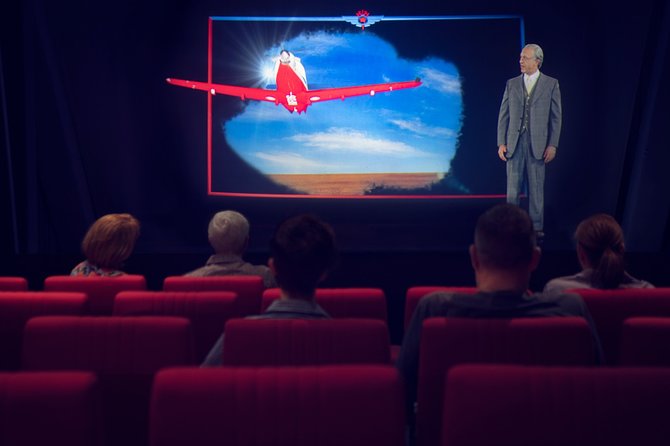
The RFDS section begins with the vision of Reverend John Flynn and the development of the service that operates today. The holographic cinema uses life-size figures and modern projection technology to show how that idea became a working medical network.
This is more than a portrait of one founder. The presentation helps explain the practical problem the RFDS was created to solve: people living far from hospitals needed medical care that could reach them. Aircraft made that possible across remote parts of Australia.
The cinema presentation is especially useful if you know little about the RFDS before arriving. It gives you a quick framework for the displays that follow. You begin to understand why aircraft design, radio communication, medical equipment, and trained crews all matter.
Audio translation is available for the hologram cinema in Japanese, German, French, and Simplified Chinese. That is a practical touch for mixed-language groups. The main facility may also operate with a multilingual guide, though the experience itself is primarily self-guided.
The technology is impressive, but it works best when you pay attention to the human story behind it. The point is not simply that a hologram looks lifelike. The point is that the presentation links a bold early idea with the daily work of transporting and caring for patients in remote places.
Inside the decommissioned Pilatus PC-12
The aircraft is the most concrete part of the RFDS visit. You can climb aboard a decommissioned Pilatus PC-12 that has been fitted for aero-medical use. Instead of only seeing photographs of medical flights, you can look inside the aircraft and consider how much equipment and care must fit into a restricted cabin.
The displays explain the roles of RFDS pilots, engineers, doctors, and nurses. They also address the patients who are carried and cared for. That wider view matters because the service is not just about an airplane. It depends on maintenance, flight planning, clinical skill, and calm teamwork.
Families should make time for the aircraft rather than treating it as a quick photo stop. Children can get into the cockpit, and that simple hands-on moment may hold their attention better than a panel of text. Adults can look more closely at the medical layout and imagine the practical demands of treating someone while in flight.
One useful detail is how much the aircraft appears to contain in a limited space. You get a better feel for the scale of the work than you would from a standard museum case. The plane is also a good pause between the film and digital presentations.
The aircraft is decommissioned, so you are seeing a preserved example rather than an operating medical flight. That means the exhibit is about understanding the service, not watching a live departure or receiving a technical aviation demonstration.
Experiencing the Bombing of Darwin in VR
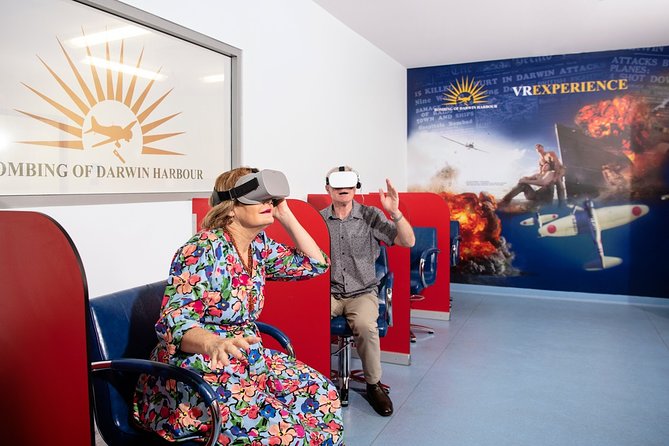
The second major story covers the Bombing of Darwin in 1942. The facility uses film, virtual reality, and interactive displays to recreate the attack and its effect on Darwin Harbour.
The VR section is one of the strongest reasons to visit. Wearing a headset gives the event a more immediate scale than a wall map or a written account. You can understand the harbour setting and the sudden nature of the attack in a way that still photographs cannot quite convey.
The subject is handled with respect. This is not presented as a theme-park thrill ride. The technology is used to help you grasp the danger and confusion of the event, along with the role of people serving Australia at the time.
The museum also includes two theatre presentations. One focuses on the bombing and wartime history, while the other explains the RFDS. They give you a fuller account than the short VR sequences alone.
If you are visiting with children, use your judgment. The interactive format will attract them, but the Bombing of Darwin story deals with real violence and loss. Older children and teenagers may gain the most from the historical context. Younger children may focus mainly on the equipment and aircraft.
The VR experience can also be less comfortable for some people than a standard film. Seating is available throughout the facility, which helps if you need a break between presentations or prefer to watch rather than use a headset.
A different sort of day out, same corner of Darwin:
- From Darwin: Litchfield Park Tour & Jumping Crocodile Cruise
★ 4.9 · 829 reviews - Charles Darwin Dinner Cruise
★ 4.5 · 820 reviews - Cape Adieu Darwin Sunset Dinner Cruise
★ 5.0 · 750 reviews - 1 Day Corroboree Billabong Wetland Experience including 2.5 hour cruise + lunch
★ 5.0 · 501 reviews
How long to allow and when to fit it in
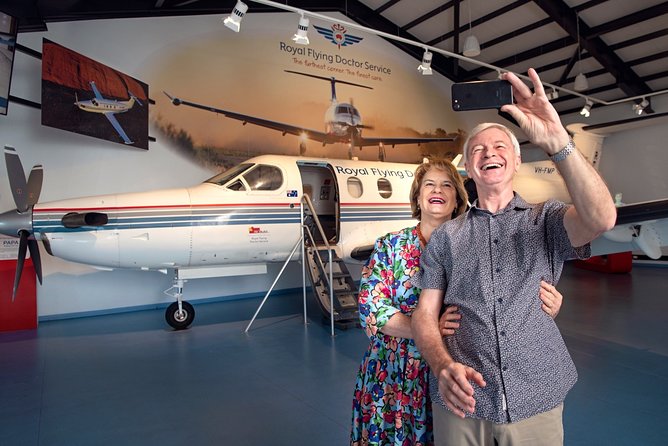
The official estimate is about two hours, which gives you time to watch the presentations, use the interactive displays, enter the aircraft, and read the supporting material. If you are efficient, the main visit can take about an hour to an hour and a half.
I would allow the full two hours if you enjoy aviation, military history, or museum technology. The self-guided format makes that extra time worthwhile because you are not being pushed from one stop to the next.
Entrance times are available throughout the day, so you can fit the facility around other Darwin plans. A midday visit works well because you can spend the hottest part of the day indoors. Afterward, you can go out onto the nearby wharf for lunch, a practical combination noted by the facility’s visitors.
If you are arriving from a cruise ship, check the available transport information before setting off. A free shuttle bus may take cruise passengers to the facility. That can make this an easy first stop, but allow enough time for the return journey and your ship’s boarding schedule.
The building is air-conditioned, and seating is placed around the facility. That matters more than it may sound in Darwin. You can take your time without fighting the heat, and older visitors or anyone with limited stamina can break up the visit.
Is the $21.52 price good value?
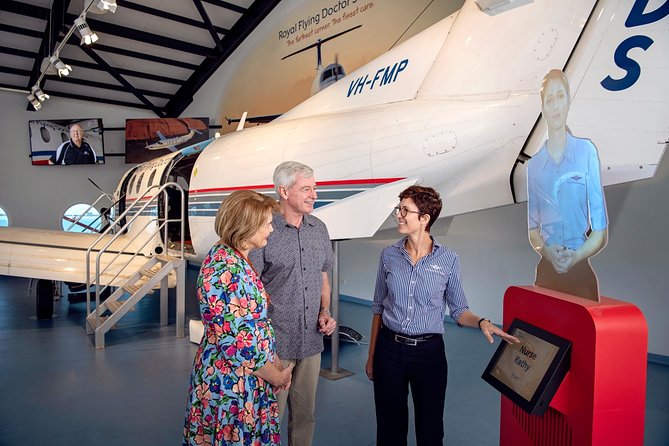
At about $21.52 per person, this is a reasonable paid museum visit if you use the interactive features and watch the presentations. The value comes from the variety: hologram cinema, VR, films, displays, and a walk-through aircraft are all included in one compact experience.
You are not paying for a long coach tour or a personal guide. You are paying for access to a well-produced indoor attraction that combines technology with local history. That distinction helps set expectations. If you prefer a quiet museum filled with original objects and long written explanations, the digital elements may feel a little dominant.
For families, the price can make sense because different ages have something to do. Children can explore the cockpit and interactive displays. Adults can focus on the RFDS origin story, the medical work, and the wartime account.
The facility also works well as a short cultural stop between larger Darwin activities. You do not need to give up an entire day, and the air-conditioning adds real value during the hotter hours.
Souvenirs cost extra. The central gift shop sells RFDS and Bombing of Darwin items, including shirts, hats, books, collectibles, and a co-branded RFDS and R.M. Williams clothing and belt range. You can easily skip it, but it provides a practical place to find books or gifts tied to the two stories.
Access, comfort, and who will enjoy it most
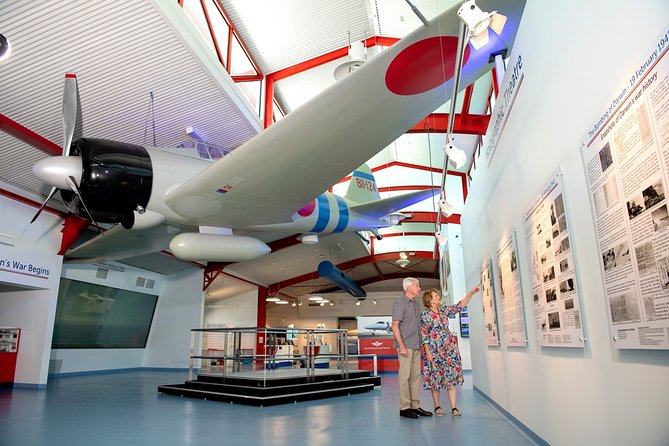
The facility has complete disability access, service animals are allowed, and seating is available throughout. Those details make the self-guided layout easier to manage. You can move between sections at your own speed rather than keeping up with a walking group.
Most people can take part, and the experience is private to your group rather than a shared guided tour. That gives you some control over how long you spend at each display.
I would recommend it most to:
- Families wanting an indoor Darwin activity with hands-on elements
- People interested in aviation, emergency medicine, or Australian history
- Visitors who want context before seeing other Defence of Darwin attractions
- Cruise passengers looking for a manageable shore activity
- Anyone seeking a break from the heat without giving up local content
You may enjoy it less if you dislike headsets, films, or interactive museum displays. The attraction depends heavily on technology. The aircraft and physical exhibits help balance that, but the main storytelling still comes through screens, sound, holograms, and VR.
How it fits with other Darwin history sites
The facility is useful on its own, but it can also prepare you for other Defence of Darwin museums and sites. The Bombing of Darwin section gives you a starting point before you visit places that focus more closely on military equipment, defence planning, or the wartime city.
The RFDS story adds a different side of Territory life. Instead of concentrating only on conflict, it shows how distance shapes everyday services in northern and remote Australia. That contrast makes the visit feel broader than a standard war museum.
You should not expect every detail of Darwin’s wartime past here. The attraction selects two main stories and presents them in a compact, technology-led format. For a fuller account, you would need to add other historic sites. But for a first introduction, the pairing is efficient and clear.
Practical booking and cancellation details
Confirmation is provided when you book, and you select from entrance times during the day. The experience is self-guided after the introductory overview, so you do not need to coordinate with a long walking group.
Free cancellation is available if you cancel at least 24 hours before the scheduled start time. Cancellations within 24 hours are not refunded, and changes in that final 24-hour period are not accepted. The cut-off uses Darwin local time.
Plan for an indoor, air-conditioned visit, but wear something comfortable for standing and moving between displays. You can use the seating when needed, and the facility is accessible for visitors with disabilities.
Should you book the RFDS Tourist Facility?
I would book this if you want a concise, family-friendly introduction to two important Darwin stories and you like museums that use VR, holograms, and film to make history easier to picture. The walk-through aircraft and Bombing of Darwin VR are the strongest reasons to come.
The visit is particularly good on a hot day, before lunch, or as a cruise stop. At roughly $21.52, it offers enough variety to justify the price, provided you give yourself at least 90 minutes and take time with the presentations.
Skip it only if you want a purely object-based museum or a fully guided tour with detailed discussion at every stop. For most visitors interested in Darwin’s past, the RFDS, or practical family sightseeing, this is a worthwhile and well-sized experience.
FAQ
How long does the RFDS Tourist Facility visit take?
The experience lasts approximately two hours. You can see the main displays in about one to one and a half hours, but extra time allows you to watch the presentations and explore the aircraft at a slower pace.
Is the tour guided?
The facility provides an introductory overview, then you explore the exhibits independently. It may be operated by a multilingual guide, but the main experience is self-guided.
What stories does the facility cover?
It covers the history and work of the Royal Flying Doctor Service and the 1942 Bombing of Darwin. Both are presented through films, interactive exhibits, holographic technology, and virtual reality.
Can I go inside an RFDS aircraft?
Yes. You can climb aboard a decommissioned Pilatus PC-12 aircraft that is equipped to show its aero-medical function. The exhibit explains the roles of pilots, engineers, doctors, and nurses.
Is the facility suitable for children?
Yes. The interactive museum is designed for families, and children can explore the aircraft cockpit and other interactive displays. The Bombing of Darwin content deals with wartime violence, so parents should decide how much is suitable for younger children.
Is the facility accessible?
The facility has complete disability access and seating options throughout. Service animals are allowed.
Can I cancel for a refund?
You can receive a full refund if you cancel at least 24 hours before the experience start time. Cancellations or changes made within 24 hours are not accepted for a refund.
Just added around Darwin
- 1-Hour Thunderball WWII Adventure Jet Skiing in Darwin★ 5.0 · 70 reviews
- Tiwi Islands Cultural Experience from Darwin Including Ferry★ 4.0 · 97 reviews
- Bombing of Darwin World War II Tour with Harbour Cruise★ 4.5 · 219 reviews
- Darwin Combo: The Bombing of Darwin Experience & Darwin Harbour Cruise★ 4.5 · 123 reviews
- Litchfield Park & Jumping Crocodile Cruise★ 5.0 · 37 reviews
- Litchfield & Berry Springs VIP Adventure Day Tours (group of 11)★ 5.0 · 142 reviews
- Adelaide River Jumping Croc Cruise★ 4.5 · 56 reviews
- Honey Ryder Sunrise Jet Skiing in Darwin★ 5.0 · 78 reviews
Darwin Tours, compared.
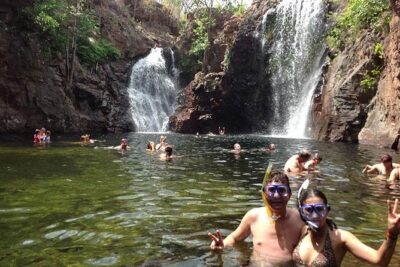
Litchfield National Park and Jumping Crocodile Cruise
Read our review →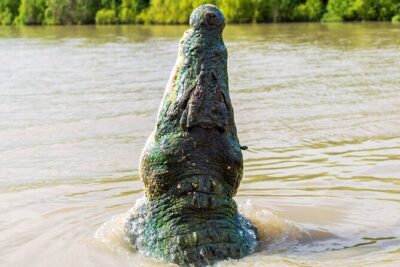
Adelaide River Cruises – Jumping Crocodile Experience
Read our review →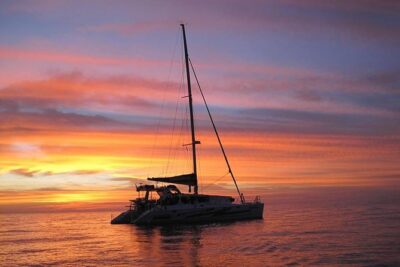
Sunset 3-Hour Cruise from Darwin with Dinner and Sparkling Wine
Read our review →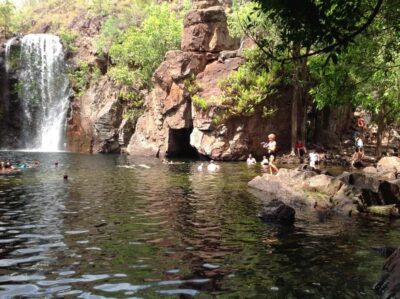
Litchfield Park Tour & Jumping Crocodile Cruise
Read our review →

1 Day Corroboree Billabong Wetland Experience including 2.5 hour cruise + lunch
Read our review →
The Croc Bus to the Famous Jumping Crocodile Cruise
Read our review →Browse the lists this tour appears in