
Reviewed · ADELAIDE
Around the Square Adelaide Walking Tour
Adelaide’s Victoria Square is more than an open patch of lawn. It is the stage for stories about saints, explorers, politicians, judges, engineers, and the city’s early power brokers. This two-hour walk uses the square and nearby streets to explain how Adelaide grew, with local guide Graeme bringing the buildings and statues to life through well-told anecdotes.
I like the short, easy pace, which makes this a smart first morning in Adelaide. I also like the focus on details you can miss alone, such as the Torrens land-title system, the former Treasury Building’s tunnels, and the marble staircase inside the old department store turned court building.
The main consideration is that this is an outdoor walking tour in all weather, and some of the stops are viewed from outside. You’ll need comfortable shoes and a moderate level of fitness, and indoor access can vary.
Key points to know before you book
- Graeme’s local storytelling: Expect history explained through people, scandals, buildings, and memorable side stories rather than a dry list of dates.
- A useful first-day orientation: The route begins at Adelaide Town Hall and ends at the Queen Victoria Statue, right in the heart of the city.
- More than a square: The walk includes St Francis Xavier Cathedral, courts, government buildings, statues, fountains, and former commercial buildings.
- Small-group feel: The activity allows up to 20 people, with a maximum of 15 people per booking.
- Good value at $36.93: You get about two hours with a local guide and no extra admission fees are listed.
- Plan for the weather: The tour runs in all conditions, so bring suitable clothing and wear walking shoes.
Why this two-hour Adelaide walk works well
I see this tour as a city orientation with a strong history focus. You are not simply circling Victoria Square and hearing a few facts about Queen Victoria. The route links the square to the civic, religious, legal, and political buildings around it, showing how Adelaide’s institutions developed side by side.
That matters because Adelaide can seem easy to understand at street level. Its central grid is orderly, and the distances around the square are manageable. Yet the city’s buildings often hide their best stories. A guide can point out why a building matters, who used it, and what changed inside it over time.
Graeme is the guide named throughout the experience. His approach is especially suited to you if you enjoy a human story. He talks about founders and public figures, but does not present them as perfect heroes. One past participant particularly enjoyed learning that some early figures were fond of drinking, a useful reminder that civic history is made by ordinary, complicated people.
The tone is relaxed rather than academic. Several parts of the feedback praise Graeme’s preparation, clear speaking, humour, and ability to answer questions. One person joined alone and still received the same careful attention, while another appreciated that Graeme adjusted to the group’s questions and energy.
More Walking Tours in Adelaide
- Ultimate Adelaide Walking Tour
★ 5.0 · 222 reviews - Cultural Caper Adelaide Walking Tour
★ 5.0 · 122 reviews - Welcome to Adelaide Walking Tour
★ 5.0 · 119 reviews
Starting at Adelaide Town Hall at 10am
You meet outside Adelaide Town Hall, 128 King William Street, at 10am. This is a practical meeting point in the centre and gives the guide a good place to explain the route, the timing, and basic housekeeping before the walk begins.
The Town Hall stop also sets the scene for Adelaide’s development. You hear about early local government in South Australia and the civic decisions that shaped the city. It is a useful opening because the rest of the tour keeps returning to the relationship between public buildings, state government, courts, and commercial life.
The walk is listed at about two hours. The individual stops add up to less than that, leaving time for moving between locations, questions, and possible entry into buildings when access allows. The route is easy-paced, but it is still a walking tour, not a seated talk.
St Francis Xavier Cathedral and Mary MacKillop
The first major stop is St Francis Xavier Cathedral, a significant Catholic landmark in Adelaide. The guide covers its history, architecture, and role today, giving you a clear sense of why it belongs near the start of the route.
You then look at the statue of Mary MacKillop. Her story adds a personal and social side to the tour. Graeme explains her sainthood, the order of nuns she founded, and her charity work. This is a brief stop, but it gives the tour more range than a building-by-building survey.
I like this opening because it moves quickly from architecture to people. You begin with a major religious building, then learn how one person’s work affected education, charity, and the wider community. If your interest is mainly in modern food, art, or shopping, this may feel more historical than you want. If you like understanding the people behind a city, it is a strong beginning.
Admission is free at this stop. The tour does not list paid entry to the cathedral or any other attraction, so you should not expect an included museum visit or formal interior tour at every location.
Victoria Square and Tarntanyangga
The centrepiece is Victoria Square, also known as Tarntanyangga. Here, the guide explains the square’s development and its Indigenous connections, then discusses the monuments placed within it.
The Queen Victoria Statue is one focus. You learn about its significance rather than simply taking a photograph and moving on. The square also brings in Charles Cameron Kingston, with the guide outlining his place in South Australian public life.
This is likely the part of the walk that gives you the clearest sense of Adelaide’s civic identity. The open space connects several eras and viewpoints. You are looking at colonial development, public leadership, Indigenous connections, and later changes to the square in one location.
The stop lasts about 23 minutes, making it one of the longer pauses. That gives the guide time to answer questions, but it also means the tour is not a fast sightseeing loop. If you want to cover a large number of attractions, the pace may feel slow. I think that slower rhythm is a benefit if you want to remember what you are seeing.
A different sort of day out, same corner of Adelaide:
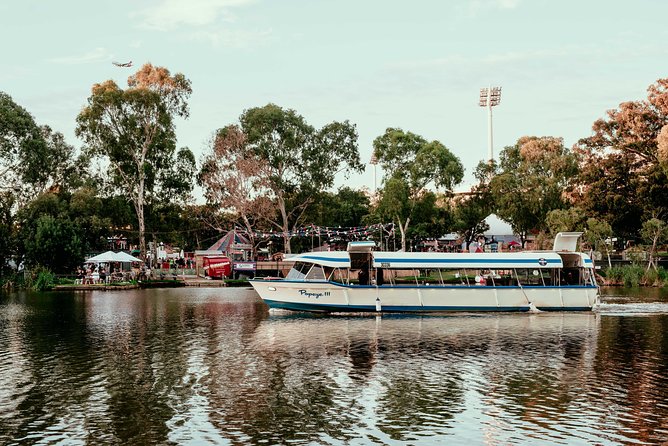
- Adelaide: River Torrens Popeye Sightseeing Cruise
★ 4.6 · 949 reviews - From Adelaide: Barossa to Hahndorf Wine Tasting and Lunch
★ 4.6 · 877 reviews - Adelaide Oval Stadium Guided Tour
★ 4.8 · 760 reviews - Torrens River Cruise in Adelaide
★ 4.5 · 624 reviews
The Torrens Building and Adelaide’s land-title story
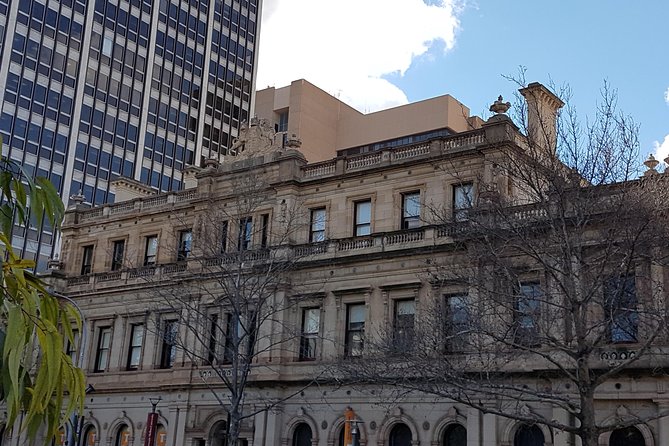
The Torrens Building receives a shorter stop, but the subject is important. Graeme explains the building’s history, its occupants, and Sir Richard Torrens, whose name is linked to the land-title system.
This is the sort of detail you are unlikely to pick up from a casual walk around the square. A building can look like another old government office until you know that it connects to a system that changed how land ownership was recorded.
The stop lasts about four minutes, so expect an introduction rather than a long architectural inspection. The value comes from the link between one building and a wider legal idea. It is a good example of the tour’s method: use the street in front of you to explain a larger part of South Australia’s past.
The former Treasury Building and its hidden details
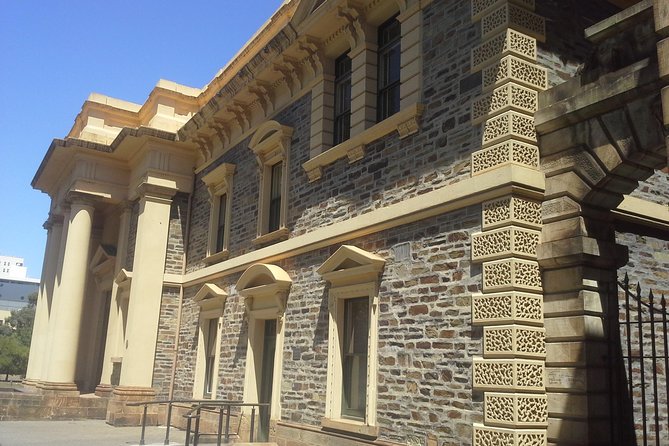
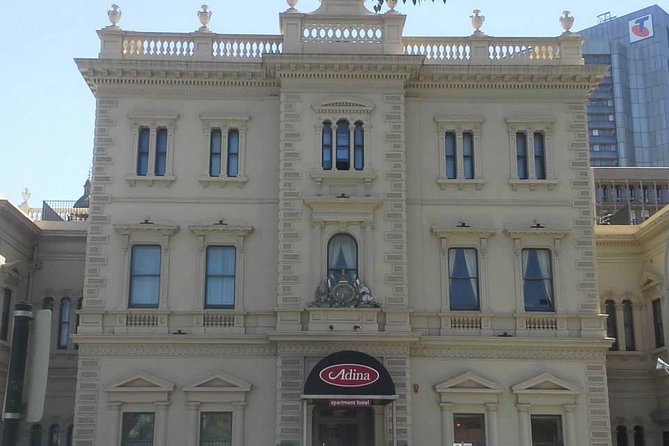
The former Treasury Building, now associated with Adina Apartments, gets more time. Graeme discusses the building’s history, courtyard, tunnels, and the people who have visited or used it. You also hear about the role of Cabinet before 1968.
This is one of the more intriguing stops because it connects government work with the physical layout of the building. Tunnels and courtyards make the site easier to picture, while the Cabinet detail shows how political business once operated in Adelaide.
The building’s present-day use also helps you read the city. Older structures are not frozen museum pieces. They can change function while keeping traces of their earlier role. That contrast is useful if you are interested in architecture but do not want a tour limited to façades.
Some feedback describes being taken inside historic buildings where possible, including a visit to the Mortlock Library in the State Library on one outing. The supplied route does not promise a State Library visit, so treat interior access as a possible bonus rather than a guaranteed feature. The same applies to any building entrance: listen to the guide’s plan on the day.
Stuart, the State Administration Centre, and public power
The John McDouall Stuart Statue brings exploration into the walk. Graeme explains Stuart’s role in exploration and the legacy attached to his name. It is a compact stop, but it adds a different kind of figure to the tour after the religious and political subjects.
You then get a brief look at the State Administration Centre, where state government ministers and staff work. This is a useful present-day link. The tour is not only about old monuments and former buildings. It also shows where government functions continue today.
The two stops together take about seven minutes. That timing tells you what to expect: a focused explanation, not a long visit inside the administration centre. You will hear why the places matter, then move on.
Water, law, and the old department store

The SA Water Building provides a short look at the building’s use and educational focus. It is a quick stop, but it adds another civic service to the route.
The nearby Dame Roma Mitchell Commonwealth Law Courts broaden the story again. Graeme outlines the building’s use and the kinds of courts it contains. For many people, courts are simply formal buildings passed on the way to somewhere else. Here, you get enough context to understand their place in the city’s working centre.
The Sir Samuel Way Court Building receives a longer explanation. Its earlier life as a department store and its marble staircase are central to the story. That change of use is exactly the kind of detail that makes old Adelaide easier to read. A former shop becoming a court building tells you something about changing commerce, government, and the value placed on older interiors.
You should not expect a full legal-history lecture. The stop is about ten minutes, and the guide keeps the focus on the building’s past, its memorable features, and its current use.
Three Rivers Fountain and the final buildings
The Three Rivers Fountain is another key stop. Graeme explains why it was erected, its history, and its significance. Fountains can be easy to overlook, especially in a square filled with statues and large buildings. A short explanation gives it a place in the larger story of Adelaide.
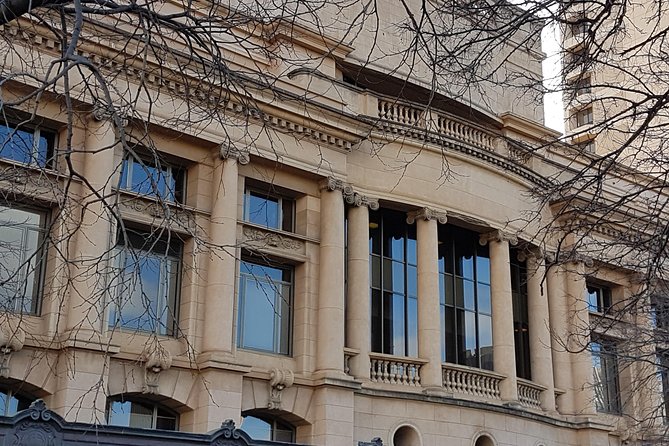
The final group of buildings includes the former SGIC Building, the former Harbour Board Building, and the former MLC Building. The SGIC stop covers its history, architecture, and related stories. The Harbour Board Building brings in engineering and design, while the MLC Building connects to South Australia’s wider history.
This last section is useful for architecture fans because it encourages you to compare buildings rather than treat them as one old civic block. The topics also shift from government and religion to insurance, harbour operations, finance, and engineering. You finish with a broader picture of how the city worked.
The tour ends in front of the Queen Victoria Statue in Victoria Square. That makes the route convenient for continuing your own sightseeing, though you will need to arrange your own transport to the starting point and from the end. Hotel pickup, drop-off, food, drinks, and transport are not included.
Price, group size, and practical value
At $36.93 per person, the tour offers about two hours of guided walking with no listed admission charges. I consider that fair value if you want context rather than just a route map. The price pays for local explanation, preparation, and the ability to ask questions as you go.
The group limit is listed as a maximum of 20 people overall, with no more than 15 people per booking. That should keep the walk manageable, though the exact group size can vary. Smaller groups are likely to make it easier to hear Graeme and ask about buildings that catch your eye.
Wear comfortable shoes. The walking is described as easy-paced, but a moderate level of fitness is advised. The tour operates in all weather, so rain protection, sun protection, or warm clothing may make a real difference depending on the day.
Children must be accompanied by an adult. Since the content focuses on history, architecture, law, and public figures, older children and teenagers with an interest in cities may get more from it than very young children.
Free cancellation is available if you cancel at least 24 hours before the start time. Changes or cancellations inside that window are not accepted for a refund.
Who should book Around the Square?
I would book this for a first morning or early afternoon in Adelaide. It gives you street bearings, introduces the central landmarks, and helps you decide which buildings or nearby sights deserve a closer look later.
It suits you especially well if you enjoy:
- Local history told through people and buildings
- A relaxed two-hour walk rather than a packed sightseeing schedule
- Architecture, statues, government, courts, and civic life
- Asking questions during a small-group experience
- A local guide who adds humour and personal knowledge
I would choose something else if you want paid interior attractions, food tasting, transport, or a broad tour of all Adelaide neighbourhoods. This walk stays concentrated around Victoria Square and nearby civic streets. It also does not promise entry to every building, even though interior access may sometimes be arranged.
Should you book it?
Book it if you want Adelaide to make sense before you explore on your own. The strongest features are Graeme’s clear storytelling, the number of buildings covered in two hours, and the small details that are easy to miss without a guide.
The tour is not flashy, and it does not try to cover the whole city. That is its strength. You get a focused look at Victoria Square, with enough context to understand Adelaide’s religious, political, legal, and commercial past. At $36.93, it is a sensible introduction for first-time visitors and a worthwhile refresher for anyone who likes learning the story behind familiar streets.
FAQ
Where does the Around the Square Adelaide Walking Tour start?
The tour starts at Adelaide Town Hall, 128 King William Street, Adelaide SA 5000.
What time does the tour begin?
The scheduled start time is 10am.
Where does the tour finish?
The walk finishes in front of the Queen Victoria Statue in Victoria Square, Adelaide.
How long does the tour last?
The tour lasts approximately two hours.
What is included in the price?
A local guide is included. Food, drinks, hotel pickup and drop-off, and transportation to or from attractions are not included.
How much walking is involved?
The tour involves an easy-paced walk with a moderate amount of walking. A moderate level of physical fitness is advised, and comfortable shoes are recommended.
Does the tour operate in bad weather?
Yes. The tour operates in all weather conditions, so you should dress appropriately for the forecast.
Can children join the tour?
Yes, but children must be accompanied by an adult.
Just added around Adelaide
- 4 Night Murray River Explorer – PS Emmylou★ 5.0 · 26 reviews
- Victor Harbor and Southern Highlights from Adelaide★ 4.0 · 47 reviews
- Wild Dolphin Swim Cruise★ 5.0 · 55 reviews
- Victor Harbor and Fleurieu Peninsula Tour★ 4.5 · 145 reviews
- Adelaide Twilight Cruise from Glenelg★ 4.5 · 94 reviews
- Ultimate Adelaide City and Hahndorf Tour★ 4.5 · 45 reviews
- Western Ridge & Valley Floor: 20-Minute Helicopter Flight★ 5.0 · 24 reviews
- Hahndorf Walking Tour, South Australia★ 5.0 · 34 reviews
Walking Tours, compared.
Sydney Opera House Official Guided Walking Tour
Read our review →
Blue Mountains Tour with Waterfall Walk & Lunch
Read our review →

Ultimate Melbourne Walking Tour: History, Laneways & Culture
Read our review →

Great Ocean Road Tour Plus Koalas, Forest Walk and Morning Tea
Read our review →
Blue Mountains Small Group Tour with Waterfall Walk & Fresh Lunch
Read our review →
Maria Island Cruise and Guided Walk Day Tour with Lunch and Drinks
Read our review →Browse the lists this tour appears in