
Reviewed · MARGARET RIVER
Bunbury: Swim with Dolphins Tour
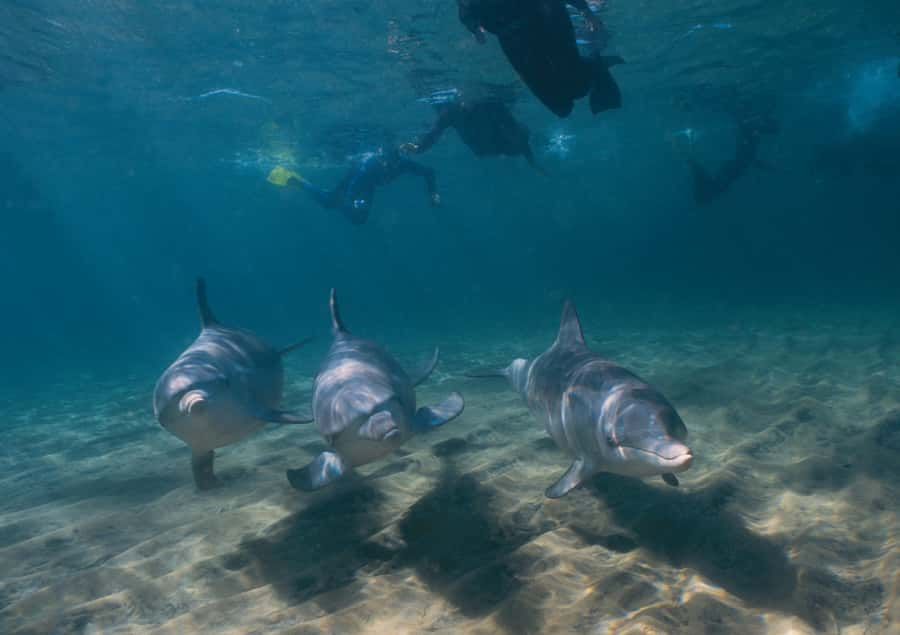
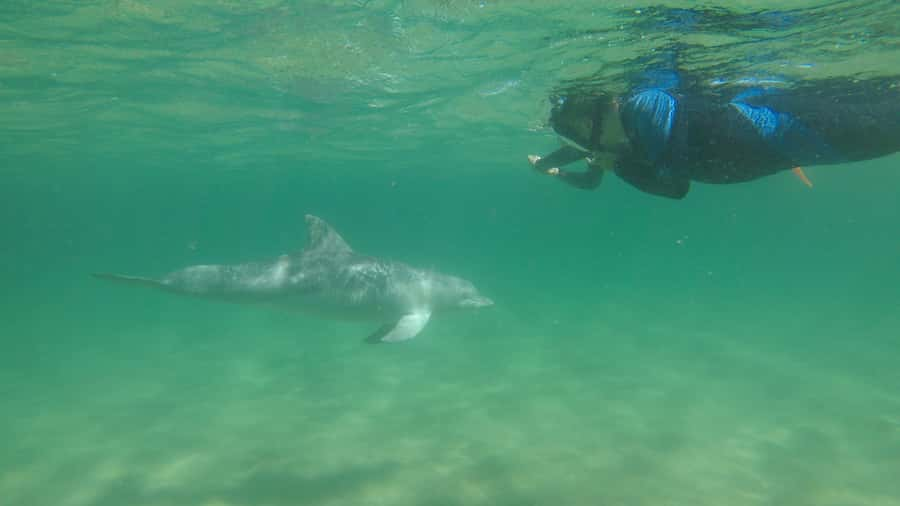
Bunbury’s dolphin tour gets you into Koombana Bay with wild bottlenose dolphins, not trained animals performing on command. You may watch them feed, play, rest, or pass beneath you, then enter the water if the dolphins choose to come near. That wild-card element is the heart of the experience.
I like the careful, well-supported approach, with marine biologists, guides, and trained volunteers keeping the group together. I also like that your fee supports rescue, education, research, and conservation work through the not-for-profit Dolphin Discovery Centre.
The main thing to accept is that interaction is never guaranteed. You are promised dolphins in the water, but not a close swim, and the bay can be murky. The animals decide what happens.
Key points to know before you book
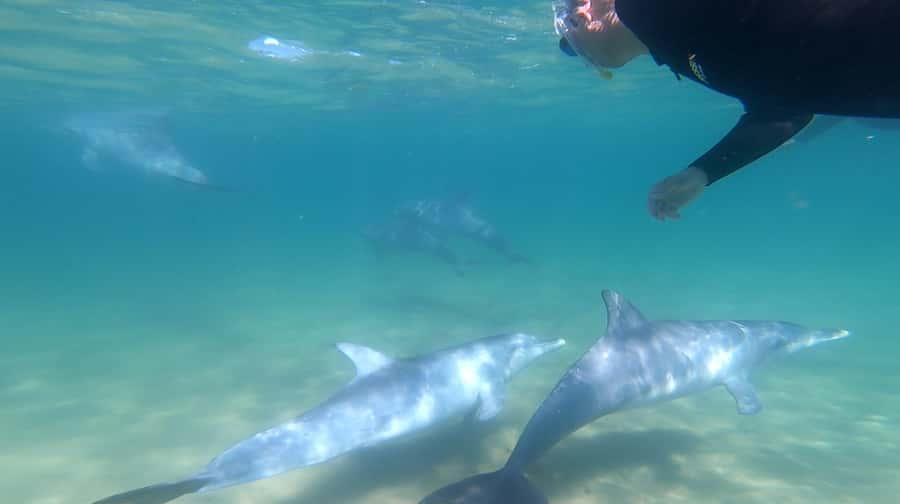
- Wild dolphins set the terms: You may swim near them, but they choose if and when to approach.
- Kathy and the crew add real value: Guides explain how to identify dolphins and help less confident snorkelers feel safe.
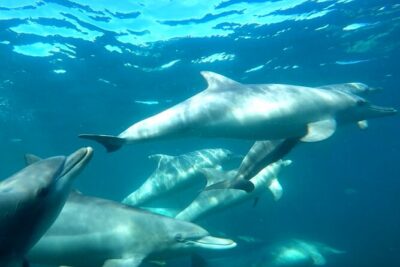
- Koombana Bay is home to more than 100 bottlenose dolphins: Sightings may include feeding, socializing, jumping, resting, and swimming under the group.
- The four-hour outing includes several useful extras: Wetsuit, mask, fins, snorkel, boat trip, snack, drink, changing rooms, storage, and hot showers are included.
- You can repeat the tour if no dolphins are seen in the water: The free return is subject to availability.
- Children must be at least eight: Ages eight to eleven need an adult with them in the water.
Meeting the dolphins at Koombana Bay
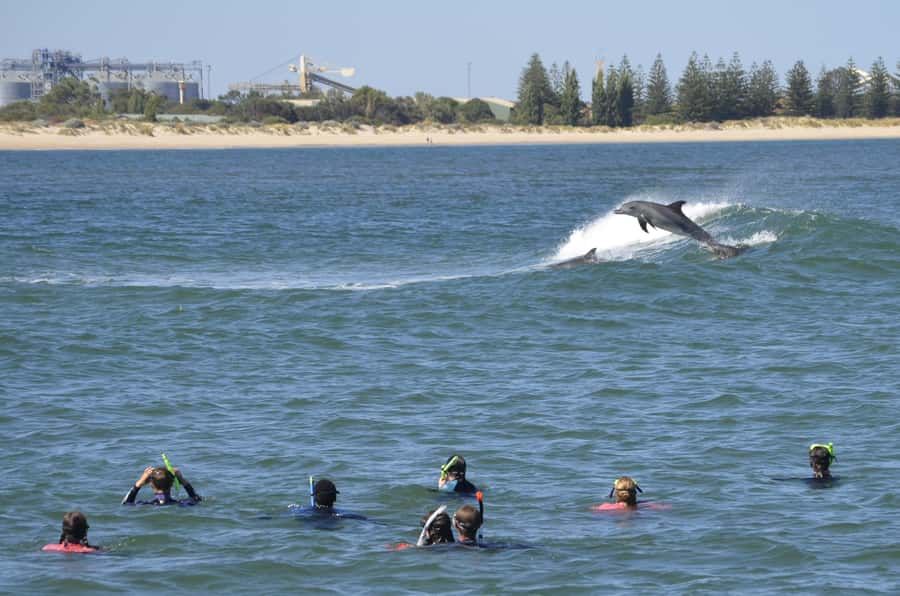
The experience begins at the Dolphin Discovery Centre on Koombana Drive in Bunbury. Go to the front counter first, where staff direct you to the meeting point and help prepare you for the outing.
This is not a quick boat ride with a chance sighting tacked on. The full experience lasts about four hours and combines a cruise, wildlife watching, marine education, and possible swims. That longer format gives the crew time to locate dolphins and wait for suitable conditions instead of rushing through one short encounter.
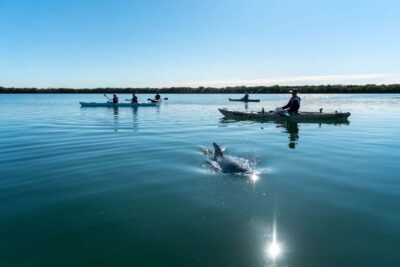
Koombana Bay is home to more than 100 bottlenose dolphins. You might see animals playing, feeding, socializing, jumping, or resting. Sometimes a dolphin may pass close to the boat or move beneath the swimmers. You may even sense the clicking of echolocation as an animal checks out the people nearby.
That sound can be hard to imagine until you hear it in the water. It is one of the more unusual parts of this experience because you are not simply looking at dolphins from a distance. You are sharing their surroundings, with the animals deciding how much attention to give you.
The setting is protected, but these are still wild animals. The crew cannot order a dolphin to approach, and the dolphins do not perform a set routine. For me, that makes the encounter more meaningful, but it also means you should book this as a wildlife experience rather than a guaranteed close-contact photo session.
More Dolphin Tours in Margaret River:
- Koombana Bay: Dolphin Eco Cruise
★ 4.7 · 131 reviews - Guided Dolphin Eco-Cruise in Koombana Bay
★ 5.0 · 36 reviews - Swim With The Dolphins Experience in Bunbury Australia
★ 4.5 · 22 reviews
What the four hours actually involve
The day begins with preparation at the centre. You should arrive ready to change, with swimwear, a towel, and warm clothing for afterward. The centre provides storage, changing rooms, and hot showers, which matter after several hours around cool water.
You are fitted with a warm wetsuit, mask, snorkel, and fins. A buoyancy vest is available if you need one. The crew also provides drinking water and a snack on board, so you do not need to pack a full meal for the boat.
From the centre, the group heads into Koombana Bay by boat. The cruise is not just transport. It gives the team a wider view of the bay and time to look for dolphins, while your guide explains dolphin behavior and how to identify individual animals.
The exact number of water entries can vary. One outing included three swims, while another took time to locate dolphins before the group had a strong interaction. That is useful context: the experience can involve waiting, watching, and several short swims rather than one continuous period in the water.
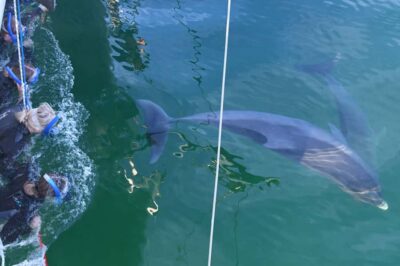
When conditions and dolphin behavior are suitable, the guide leads the swimmers into the bay. The crew encourages everyone to stay together and tells you when to look down. Dolphins may pass below, alongside the group, or keep their distance.
That group guidance is especially helpful if you are new to snorkeling. You are not expected to manage the situation alone. Guides and volunteers swim with less confident participants, offer reassurance, and help everyone remain in a safe, compact group.
The boat also serves as a comfortable base between sightings and water entries. If the dolphins move away, you return to watching and listening rather than chasing them. That restraint is important for an experience built around animal welfare.
Why the guides matter in the water
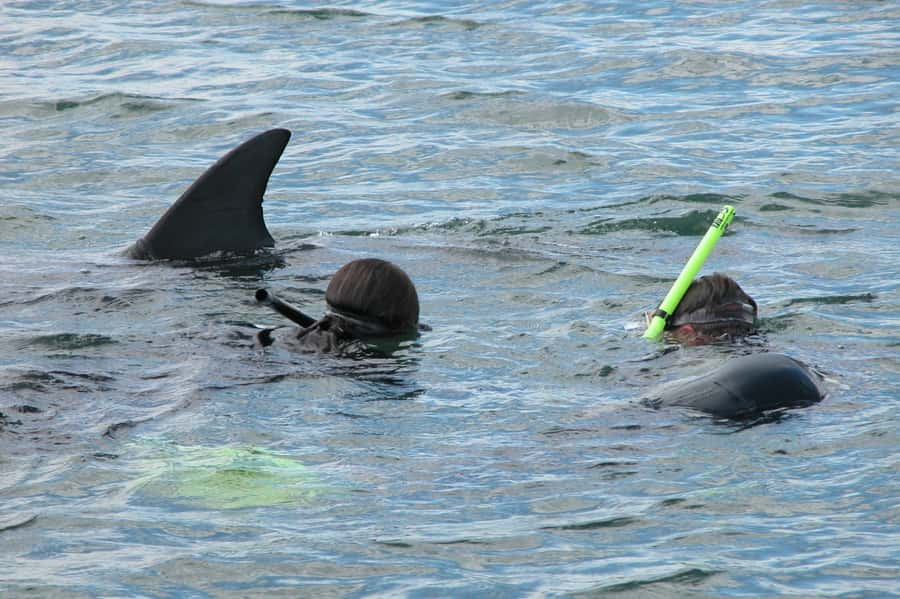
The guide can make or break a wildlife tour, and the staff here are a major part of the value. Kathy is a particularly visible member of the team, bringing strong enthusiasm for the dolphins as well as practical direction in the water.
Cathy has also led outings and is praised for explaining the animals clearly. Yvette has handled crew leadership and equipment support, including fitting thick 5-millimeter wetsuits. Julie has helped welcome and reassure first-time snorkelers before they even reach the boat.
The names matter because this is a hands-on trip. The staff are not simply giving a short talk before sending you off. They check equipment, explain how to stay together, point out where to look, and support people who are uneasy in open water.
You will learn how to identify dolphins and understand more about their lives, social habits, feeding, and behavior. The crew also explains what the dolphins may be doing around the boat and in the water, which turns a quick sighting into a more informed wildlife encounter.
The operation uses trained volunteers as well as paid staff. That gives the outing a friendly, community-based feel, though it also means the service is part of a larger conservation program rather than a polished luxury cruise.
The staff’s excitement can be infectious. When a dolphin appears, the crew is focused on the animal and the group, not simply on keeping the schedule. That enthusiasm helps you notice small moments, such as a dolphin passing below or several animals moving together.
Wild behavior means no fixed script
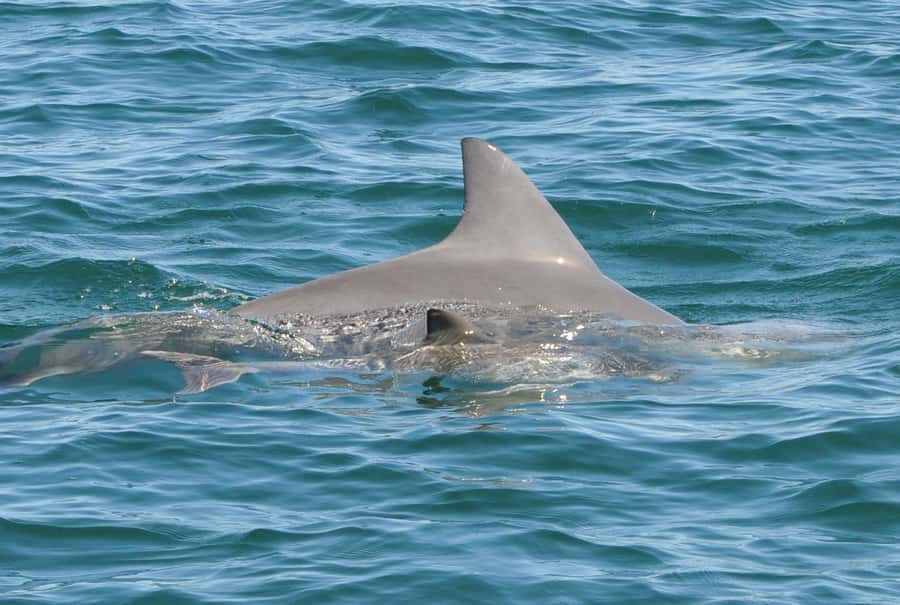
The tour promises to show you wild dolphins in the water. If no dolphins are seen in the water, you can take part in another tour for free, subject to availability. That is a useful safeguard, especially given the price and the travel time involved.
The free repeat does not promise a close swim on the second attempt. It only gives you another chance to see the animals in the water. You should also understand that seeing dolphins and swimming with them are two different outcomes.
On a strong day, you might be surrounded by several dolphins, with animals moving under the group and alongside swimmers. One outing had seven dolphins pass beneath a swimmer, while another produced plenty of dolphins around and under the group. Those moments can be extraordinary.
On a quieter day, the dolphins may remain farther away. You could spend more time watching from the boat, waiting for the right behavior, or making a brief water entry. That is not a failure of the tour. It is the basic condition of meeting wild animals.
Water clarity is another variable. The bay can be murky, which may limit how far you can see underwater. If your main goal is clear underwater photography, this could disappoint you. If your priority is being in the animals’ environment and seeing whatever the conditions allow, it is easier to accept.
The best attitude is patient and flexible. Keep your expectations focused on observation, natural behavior, and the chance of a close swim. Do not treat the dolphins as a show with scheduled tricks.
A few more Margaret River trips worth weighing up
- The Margaret River wine tour for people who don’t do tours!
★ 5.0 · 1,969 reviews - Hidden Gems: Boutique Full-Day Wine, Farm & Lunch Tour
★ 5.0 · 881 reviews - Margaret River Wine, Brewery & Distillery Tour with Lunch
★ 4.5 · 488 reviews - Margaret River Winery, Brewery Tour with Gourmet Lunch.
★ 5.0 · 401 reviews
The conservation side adds real value
The Dolphin Discovery Centre uses every tour as a research and conservation opportunity. Staff and volunteers document dolphin populations, behavior, and other information during their work in the bay.
That gives your four hours a purpose beyond recreation. You are helping support education, animal rescue, rehabilitation, and ongoing research through an environmental charity and not-for-profit organization.
I like this model because it connects the money you spend with the place you are visiting. The tour is not built only around getting people close to dolphins. It also helps fund the work needed to care for the bay and its wildlife.
You receive a 50 percent discount to the Marine Discovery and Interpretive Centre with the tour. Entry to that centre is not included, so you will need to pay the remaining admission cost if you choose to visit. Still, the discount makes it a sensible add-on if you want more background after the boat trip.
The centre can help you put the encounter into context. The boat ride shows you animals in their surroundings, while the interpretive side can provide more structured information about marine life and conservation.
What to bring and what the centre provides
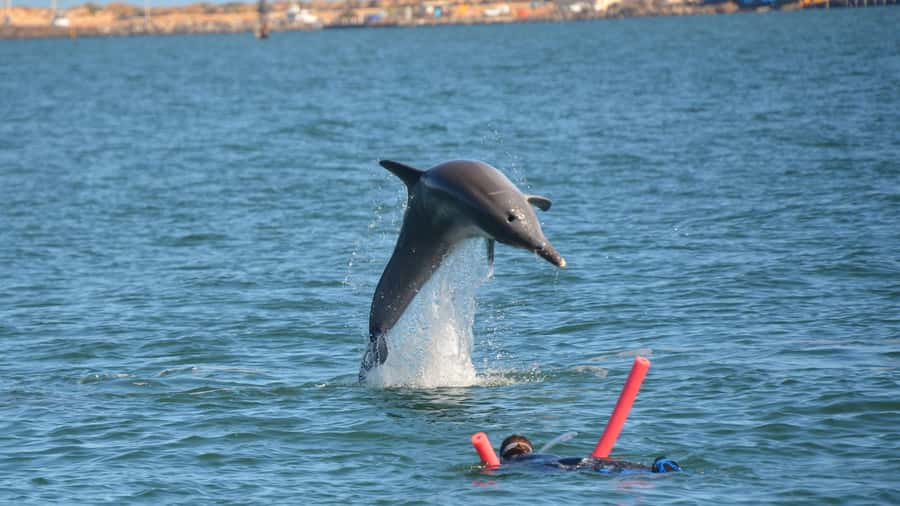
Pack swimwear and a towel. You should also bring warm clothing because you may feel chilled after leaving the water, even if the day itself is pleasant.
The centre supplies the major water equipment:
- Warm wetsuit
- Mask
- Snorkel
- Fins
- Buoyancy vest if required
- Water and a snack on board
Changing rooms, hot showers, and storage are available at the centre. These practical details make the tour easier to manage, especially if you are fitting it into a full day in Bunbury.
After the tour, the centre provides hot barista-made coffee or another beverage. That is a small but welcome finish after time in the water.
Alcohol and drugs are not allowed. The minimum age for swimmers is eight, and children aged eight to eleven must have an adult with them in the water. The supplied information does not state a maximum age or a specific swimming test, so ask the centre directly if you have a particular concern about your fitness or water confidence.
Is $155 a fair price?
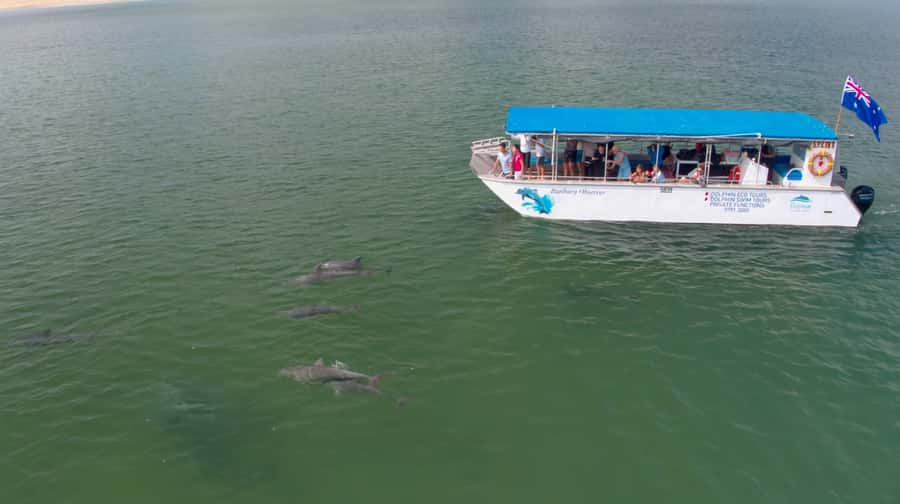
At $155 per person, this is not a cheap morning activity. The value depends on what you want from a dolphin encounter.
You are paying for four hours, a guided boat trip, specialist equipment, staff support, snacks, drinks, changing facilities, hot showers, and access to a conservation-focused operation. You also receive the option of a free repeat tour if no dolphins are seen in the water, subject to availability.
The price looks stronger if you use the equipment and facilities. Buying or hiring a wetsuit, fins, mask, and snorkel separately would add cost and hassle. The included guide support is also important if you are not a confident snorkeler.
The conservation work adds another layer of value. Your fee supports research, education, rescue, and rehabilitation rather than going only toward transport and entertainment.
Still, you should not measure the price by the number of minutes you spend swimming. The dolphins control the encounter, and the water may be murky. You are paying for a well-run chance to meet wild animals, not for guaranteed close contact.
For a family with children old enough to swim, a couple seeking a special wildlife outing, or anyone who values responsible animal experiences, the price can make sense. If you want a low-cost boat ride or a guaranteed underwater photo, choose something else.
Who will enjoy this most?
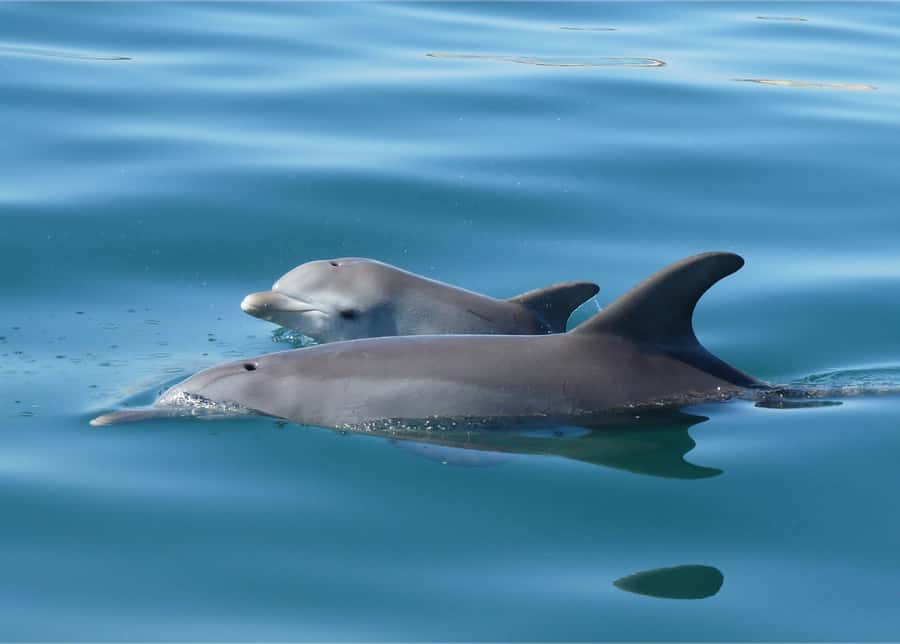
This tour suits you if you are curious about marine life and willing to let the animals set the pace. It is also a strong choice if you are a beginner snorkeler, since the crew gives guidance and swims alongside less confident participants.
You do not need to be an expert in the water, but you should be comfortable taking part in a supervised boat and swimming activity. A buoyancy vest is available if needed, and staff help with equipment and reassurance.
Families need to plan around the age rules. Children under eight cannot swim on the tour, and children aged eight to eleven need an adult in the water with them.
The trip is less suitable if you dislike cool water, waiting for wildlife, or uncertain conditions. It may also disappoint you if you expect every dolphin to approach the swimmers.
Bring a patient frame of mind. A good day can include several water entries and dolphins passing beneath you. A quieter day may focus more on watching from the boat and learning from the crew.
Practical booking advice for Bunbury
The tour starts and ends at the Dolphin Discovery Centre on Koombana Drive in Bunbury, Western Australia. The activity lasts four hours, and starting times vary, so check availability when you book.
You can cancel up to 24 hours before the start for a full refund. You can also reserve now and pay later, which helps if your Western Australia plans are still changing.
The tour is conducted in English. That includes the safety guidance, dolphin information, and directions given during water entries.
Plan some breathing room around the four hours. The dolphins may take time to locate, and water activity depends on their behavior and the conditions. It is best not to schedule an important appointment immediately afterward.
A useful plan is to treat the tour as the main event of your Bunbury day. Add the Marine Discovery and Interpretive Centre if you want more marine education, using the 50 percent discount included with the tour.
Should you book the Bunbury dolphin swim?
I would book this if you want a responsible, close-to-nature wildlife outing and can accept that the dolphins make the decisions. The strongest reasons are the careful guides, solid equipment, conservation work, and the chance to hear and feel wild bottlenose dolphins around you.
I would skip it if you need clear water, guaranteed touching, or a fixed amount of swimming time. Murky conditions are possible, and a dolphin may choose to remain at a distance.
For most people who approach it with patience, the chance to float in Koombana Bay while wild dolphins pass nearby is worth the $155. Just remember what you are buying: not a performance, but a carefully guided opportunity to share the bay with animals that owe you nothing.
FAQ
Where does the Bunbury dolphin swim tour start?
It starts at the Dolphin Discovery Centre on Koombana Drive, Bunbury, Western Australia. Staff at the front counter direct you to the meeting point.
How long does the tour last?
The experience lasts four hours and returns to the Dolphin Discovery Centre.
What animals might I see?
The main focus is wild bottlenose dolphins in Koombana Bay. You may see them playing, feeding, socializing, jumping, resting, or swimming near the group.
Can I swim with the dolphins?
You may be guided into the water when dolphin sightings and behavior are suitable. The dolphins decide whether they approach or interact with swimmers.
What happens if no dolphins are seen in the water?
You can take part in another tour for free, subject to availability.
Is snorkeling equipment included?
Yes. The tour provides a wetsuit, mask, snorkel, and fins. A buoyancy vest is available if required.
What should I bring?
Bring swimwear, a towel, and warm clothing for before or after the time in the water.
Are changing facilities available?
Yes. The Dolphin Discovery Centre has changing rooms, hot showers, and storage facilities.
What is the minimum age?
Swimmers must be at least eight years old. Children aged eight to eleven must have an adult with them in the water.
Is entry to the Marine Discovery and Interpretive Centre included?
Entry is not included, but the tour provides a 50 percent discount to the centre.
Just added around Margaret River
- Whale Watching from Augusta in Western Australia★ 5.0 · 124 reviews
- Whale Watching Dunsborough★ 5.0 · 26 reviews
- Margaret River Coastal and Wildlife Eco Trip from Busselton or Dunsborough★ 5.0 · 107 reviews
- Self-Guided Ngilgi Cave Ancient Lands Experience★ 4.5 · 154 reviews
- Margaret River Wine and Sights Discovery Tour from Busselton or Dunsborough★ 5.0 · 155 reviews
- Full-Day Wine, Beer, Gin, Cider Private Guided Margaret River Tour★ 4.0 · 34 reviews
- Nocturnal Wildlife Tour from Busselton★ 5.0 · 218 reviews
- Forest Adventures★ 5.0 · 170 reviews
Dolphin Watching, compared.
Moreton Island: Dolphin & Tangalooma Wrecks Snorkel Cruise
Read our review →
Browse the lists this tour appears in