
Reviewed · MELBOURNE
Melbourne: Gangsters, Brothels and Lolly Shops Tour
Melbourne’s old Little Lon district was not simply a place of brothels and crime. It was a small, fiercely contested world where women ran businesses, madams faced down gangsters, and police battled an all-female crime syndicate called The Combine. This two-hour walk brings that vanished quarter back to street level, using present-day buildings and lanes as its map.
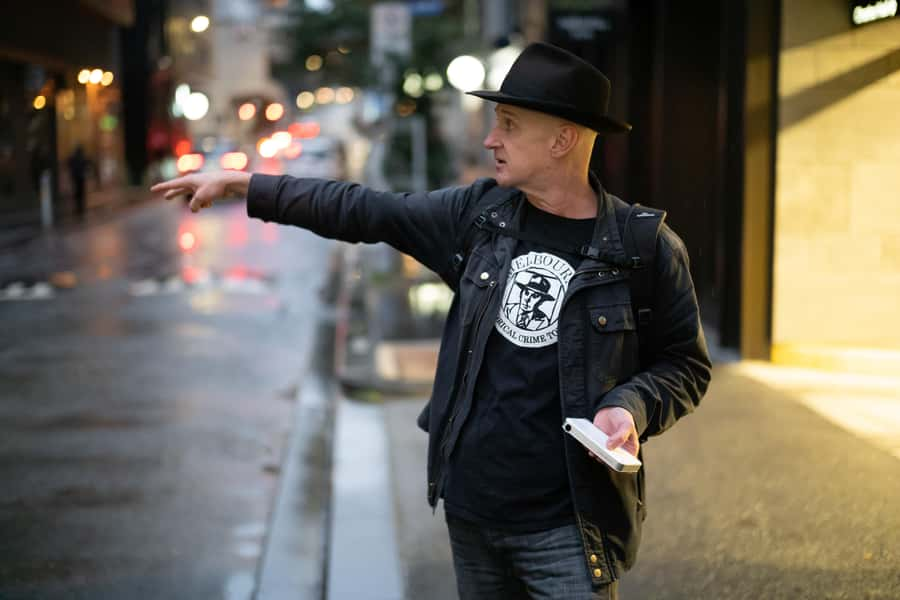
I like the tour’s tight walking route, since you see a lot without wearing out your feet, and the way Michael Shelford connects buildings to real people rather than offering a string of dates. The main consideration is that much of the tour involves standing while listening, so wear good shoes and bring weather protection.
Key points at a glance
- Little Lon’s female-run underworld: Learn how madams and other women controlled much of the district and resisted gangsters and police.
- Squizzy Taylor’s former home: Stop outside the Melbourne gangster’s old address and hear about the power struggles around him.
- Brothels, sly grog shops, and lolly stores: Discover why a confectionery shop could offer far more than sweets and soft drinks.
- Opium dens and cocaine cafes: See sites linked to drug use and all-night businesses from the late nineteenth and early twentieth centuries.
- A rare surviving cottage: Visit the last remaining single-storey cottage in Melbourne’s back lanes.
- Good value for a short city walk: At $35 per person, the tour gives you two hours with a specialist guide and a free photo booklet.
Starting at the Coopers Inn on Exhibition Street
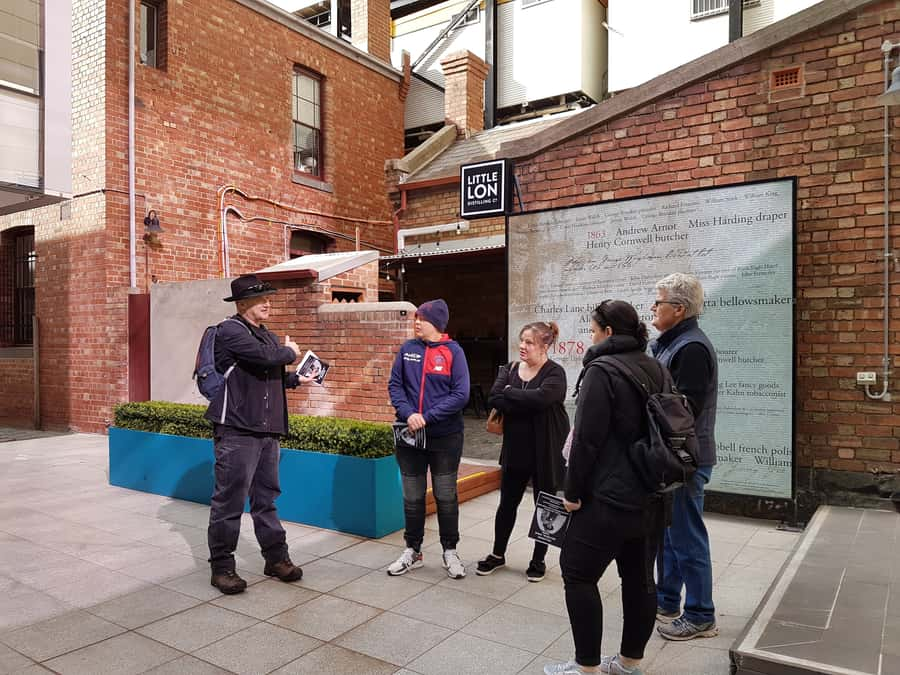
The meeting point is outside the Coopers Inn Hotel at 282 Exhibition Street. The group leaves at the stated starting time, so arrive a few minutes early. If you are delayed, check the small paved park across the lane, where the group may be waiting.
From here, the tour moves into central Melbourne’s older streets and lanes. You are not heading to a preserved museum district with signs on every wall. The appeal is seeing ordinary city buildings and realizing that their earlier lives were anything but ordinary.
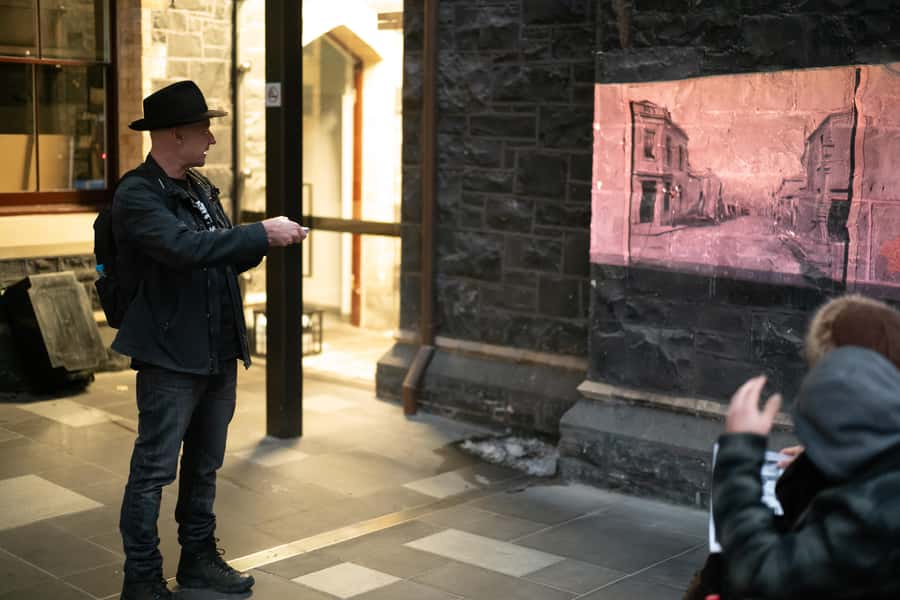
That setting matters. Modern Melbourne can make its rougher past easy to miss. Office buildings, hotels, shops, and traffic now cover ground that once held cramped cottages, brothels, drinking rooms, and small businesses tied to the city’s criminal networks. Michael Shelford uses the streets as evidence, helping you connect the current view with the people who lived and worked there.
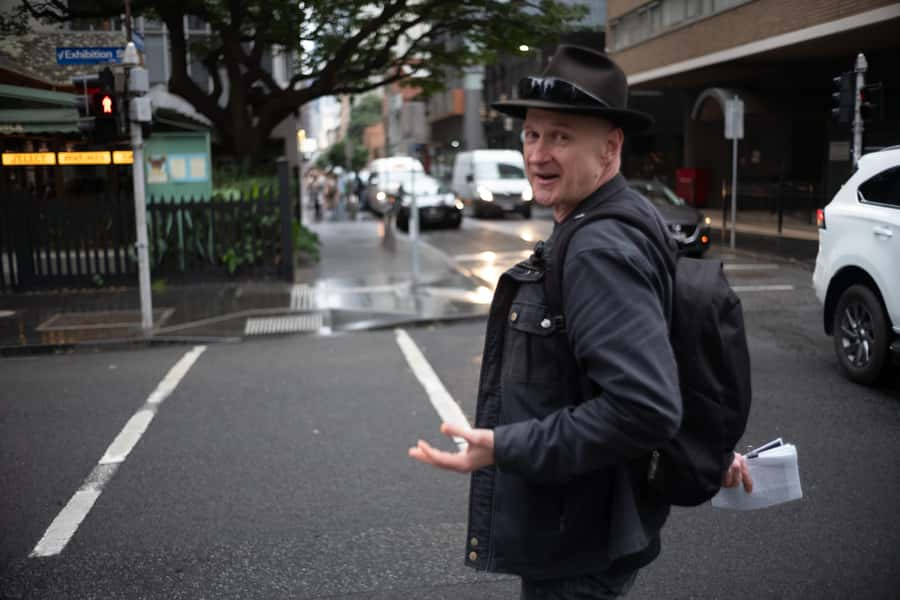
The route is compact, which helps if you have only a short time in the city. One recent booking described the group as seeing plenty without walking far, while another visitor would have preferred a little more walking and less standing. That is a useful guide to the pace: expect a story-led walk with frequent stops, not a brisk hike through downtown.
More Shopping Tours in Melbourne:
- Queen Victoria Market Ultimate Foodie Tour
★ 5.0 · 295 reviews - Melbourne Flavors: Queen Victoria Market Food Tour
★ 4.7 · 39 reviews - Adelaide Central Market Discovery Tour
★ 5.0 · 203 reviews
Little Lon, Melbourne’s former slum quarter
The central subject is Little Lon, the name given to Melbourne’s former slum and red-light district. The tour looks at the area from roughly the 1850s through the 1940s, a period when the city grew quickly and its poorer quarters became crowded, rough, and commercially inventive.
You hear about the people who made the district work, not only the criminals whose names later became famous. Women played a major role in running houses, managing money, arranging protection, and dealing with police pressure. Madams were not passive figures in the story. They defended their businesses and sometimes challenged men who expected to control the district.
This is one of the tour’s strongest features. Crime stories can easily become a parade of gangsters, shootouts, and colorful nicknames. Here, the focus also falls on women who built their own influence in a male-dominated city. The account of The Combine, an all-female crime syndicate, gives the area a different shape from the usual gangster tale.
You should expect stories of violence and exploitation alongside stories of independence and enterprise. The tour covers shootings, bombings, bashings, robberies, prostitution, illegal alcohol, opium, and cocaine. It is not a sanitized walk, though the tone is designed to entertain as well as inform.
The women who challenged Melbourne’s gangsters
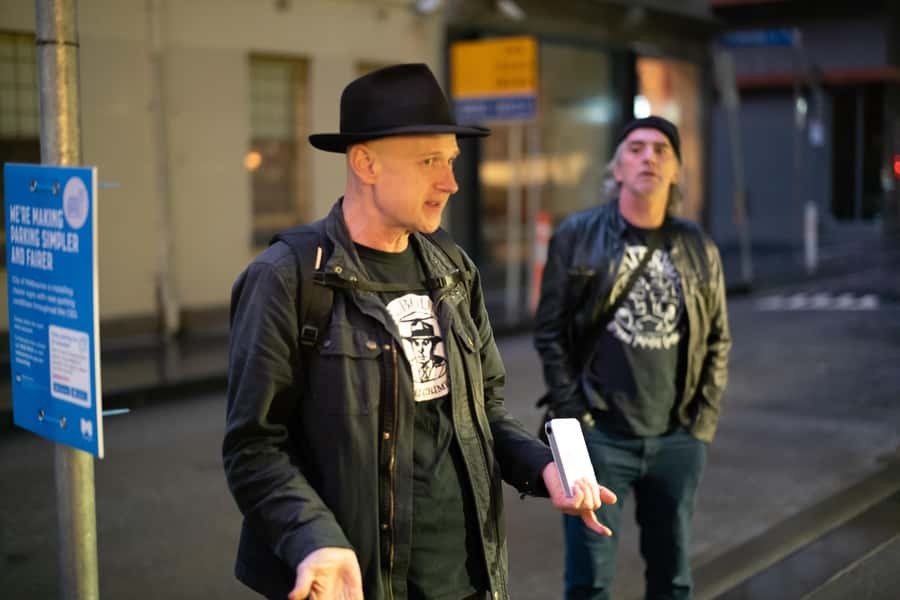
Squizzy Taylor is one of the best-known names connected with Melbourne’s criminal past, and the tour stops outside his former home. This is not a visit inside the residence, so the value lies in the explanation of the address and its place in the wider struggle for control.
The point is not simply that Squizzy Taylor lived there. You learn how his reputation fitted into a district already shaped by women who had their own networks and loyalties. The stories of madams standing their ground against Taylor and other gangsters show that power in Little Lon was contested, not handed to one famous man.
I like this approach because it keeps the tour tied to physical places. You are not hearing a free-floating biography of a gangster. You are standing outside a real building and considering what its location meant in the streets around it.
Michael’s delivery is central here. He has written about Melbourne’s past and has a strong command of the characters and incidents. His style is conversational, with room for questions, humor, and the odd detail that turns a name into a person. Several bookings praised his ability to tell a good story, and that matters on a walking tour where the buildings alone may not look dramatic.
Brothels and houses of ill-fame
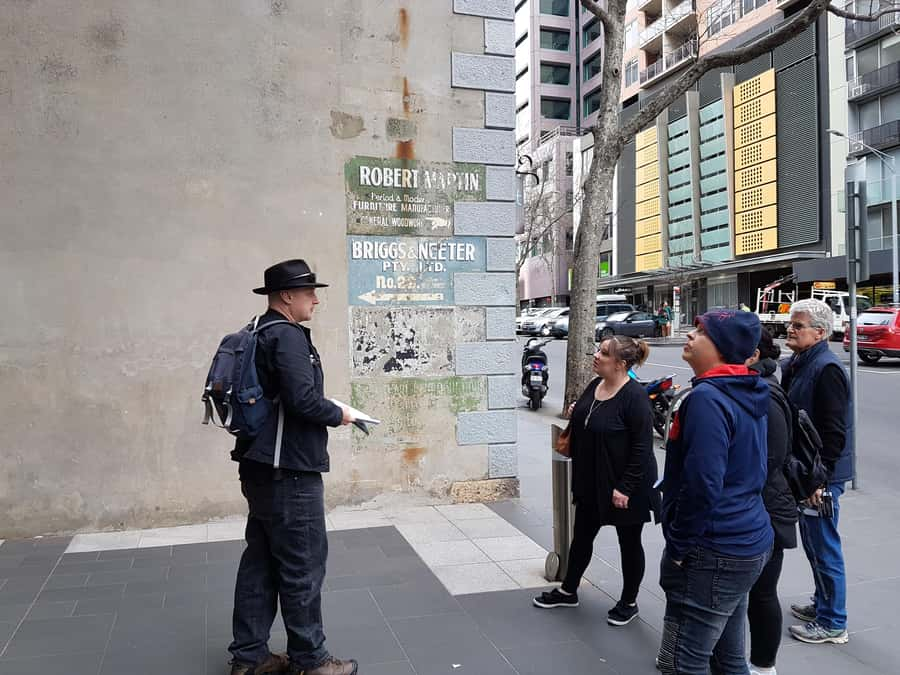
As you move through the district, the tour identifies buildings that were once houses of ill-fame, the period term for brothels. You stop outside rather than entering preserved interiors, then hear what took place behind the walls and in the lanes nearby.
That format requires some imagination. Many sites have changed use, and the city around them no longer resembles the Little Lon of a century ago. The reward is learning to read details that are easy to pass without a guide: a building’s position, a lane’s narrowness, or the relation between one address and another.
The stories also put prostitution into its working setting. You hear about the women who ran the houses, the men who sought to profit from them, and the police who tried to regulate or suppress the trade. The district’s history comes across as a battle over money, space, and authority rather than a collection of scandalous anecdotes.
This part may not suit young children, depending on your family’s comfort with adult subjects. The tour deals openly with brothels, crime, drug use, and violence. For adults interested in social history, though, those subjects explain why Little Lon developed as it did.
A few more Melbourne trips worth weighing up
- Melbourne: 2-Hour City Highlights River Cruise
★ 4.1 · 1,804 reviews - Spirit of Melbourne Dinner Cruise on the Yarra River
★ 4.5 · 1,470 reviews - Ultimate Melbourne Walking Tour: History, Laneways & Culture
★ 5.0 · 1,451 reviews - Melbourne: Puffing Billy & Healesville Sanctuary Scenic Tour
★ 4.7 · 1,220 reviews
Sly grog shops and the old lolly-store surprise
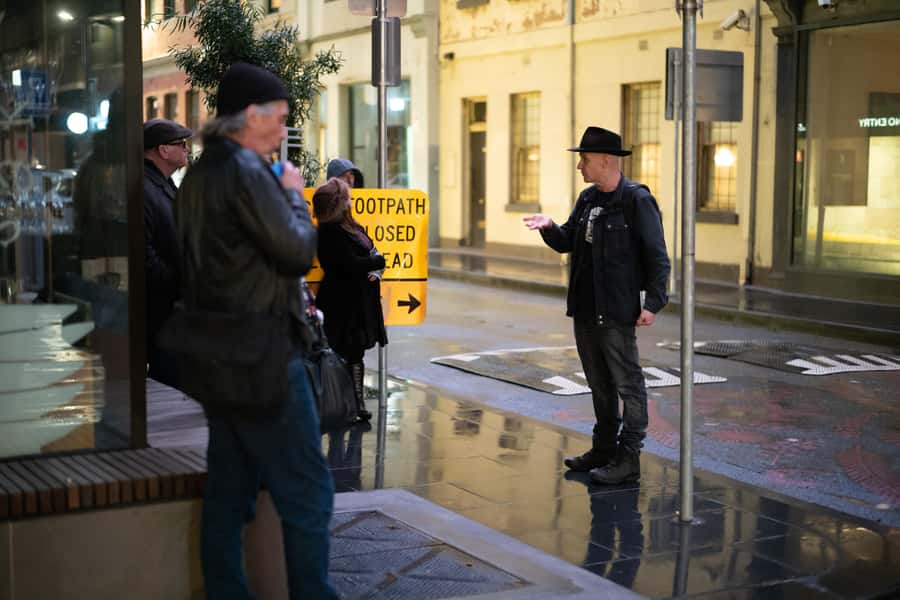
The title’s lolly shops point to one of the tour’s most memorable ideas. A confectionery shop could sell sweets and soft drinks, but it might also serve as a cover for other trade. The phrase more than lollies is not just a playful title hook. It introduces the way small businesses could connect with Melbourne’s illicit economy.
You also stop outside former sly grog shops. These were illegal drinking places, similar in function to speakeasies, where alcohol was sold outside the rules governing licensed premises. The tour explains what happened in and around these rooms and how they fit into the district’s social life.
I like this section because it widens the story beyond brothels. A city’s underworld depends on ordinary-looking businesses, informal networks, and places where people can meet. The confectionery shops and sly grog premises show how crime was woven into daily commerce rather than kept in a separate criminal quarter.
The subject also helps you see why a city’s old buildings can matter even when their original purpose has disappeared. A shopfront may look harmless today. Knowing its former role changes how you read the street without pretending that the past is still visible in every detail.
Opium dens and all-night cocaine cafes
The tour also points out former opium dens and all-night cocaine cafes. These sites introduce another side of Melbourne between the 1850s and 1940s, when drug use, nightlife, migration, commerce, and policing overlapped in ways that may surprise you.
You hear about the people who visited these establishments and the culture around them. The focus is not only on substances but on the businesses that supplied them, the customers who used them, and the public attitudes of the time.
This section is useful because it challenges the idea that recreational drug use is a recent urban problem. Melbourne had its own drug venues and drug markets more than a century ago. The names and settings have changed, but the tension between demand, profit, and law enforcement is familiar.
Expect some standing as Michael builds the story around each site. One person who enjoyed the tour would have liked more movement between stops, while others appreciated the comfortable pace. If you prefer a fast-moving walking tour, this may feel talk-heavy. If you want time for questions and detail, the pauses work in your favor.
Melbourne’s last single-storey back-lane cottage
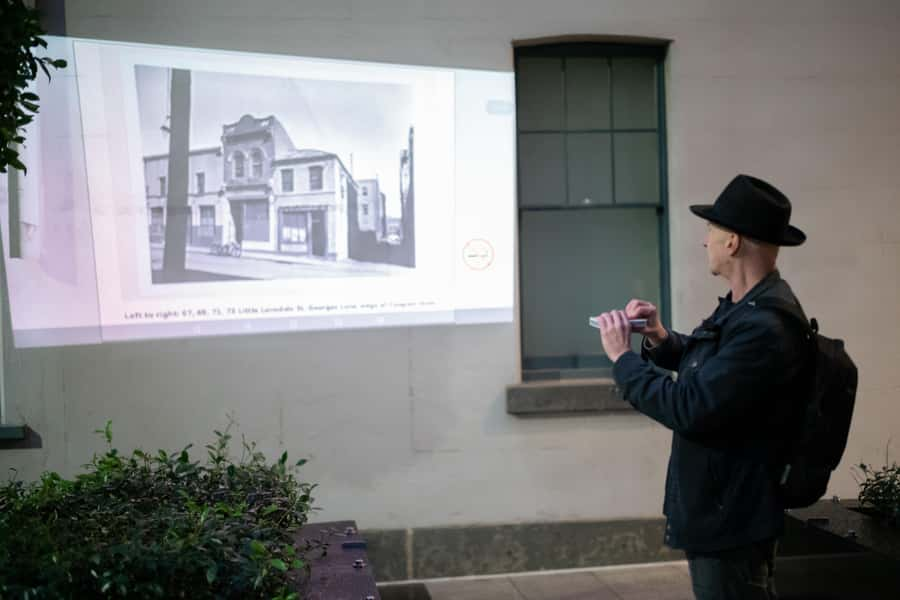
One of the more unusual sights is the last remaining single-storey cottage in Melbourne’s back lanes. It gives you a physical reminder of the small-scale housing that once filled the area.
This cottage helps place the district’s crime stories in an everyday setting. Little Lon was not only a collection of businesses and notorious figures. It was also a place where people lived in modest homes close to work, drinking rooms, brothels, and narrow lanes.
The cottage is valuable because it makes the social setting easier to picture. Large modern buildings can hide the scale of older neighborhoods. A surviving low cottage suggests how cramped and personal the area once was.
Do not expect a large museum or an elaborate interior visit. The experience is about seeing the remaining building from the street and understanding its place in the old quarter. For me, that is exactly why it works as a stop: it is modest, but it gives the tour a human scale.
Michael Shelford’s storytelling style
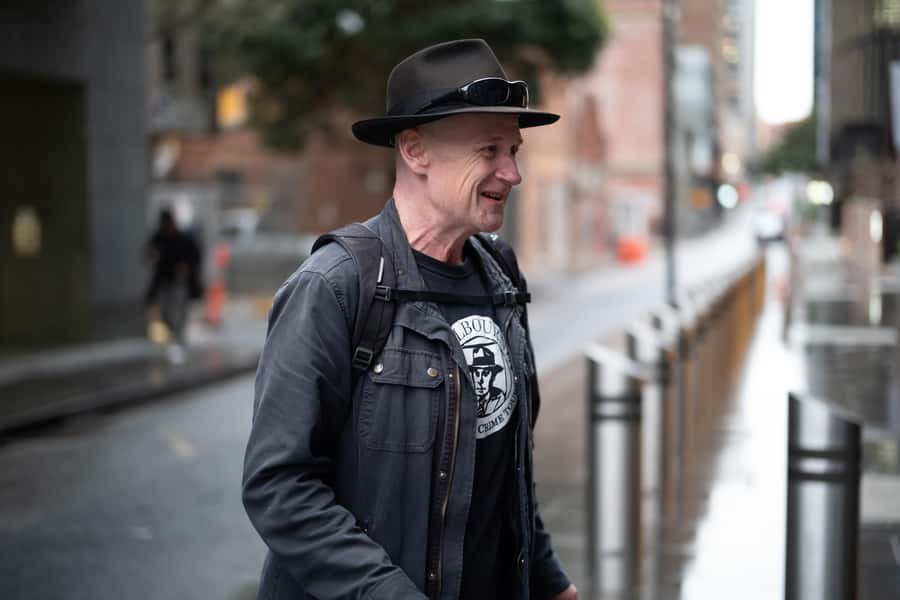
Michael Shelford is both a writer and historian, and his role shapes the entire experience. His strength is research delivered as a narrative, with names, rivalries, incidents, and locations tied together.
You can ask questions during the walk, and the guide is prepared to handle them. Several bookings singled out his ability to keep a group interested while sharing detailed information. Local residents have also found plenty to learn, which tells you this is not only for first-time visitors to Melbourne.
The free booklet adds value. It includes photographs of the characters featured on the tour, giving you faces to match with the names. That is helpful when several gangsters, madams, police figures, and business owners enter the story over two hours.
The tone includes humor, but the subject is not treated as a joke. Expect an entertaining presentation that still gives attention to the people affected by poverty, crime, addiction, and police pressure. The balance is important. A darker city walk should be lively enough to hold your attention, but not so glib that real hardship disappears.
Is $35 a fair price for two hours?
At $35 per person, this is a reasonable buy for a specialist walking tour in central Melbourne. You receive two hours with a guide who has spent years researching the subject, a focused route through an area that is easy to overlook, and a booklet with character photographs.
The price makes the most sense if you enjoy guided storytelling. You are not paying for entry to a large attraction, a meal, or transport. You are paying for context that you would be unlikely to gather by wandering through Exhibition Street and the surrounding lanes on your own.
One booking questioned a higher last-minute price of $50, so check the amount shown when you reserve. At the stated $35 rate, I see strong value, especially for local residents who want a fresh look at familiar streets.
The two-hour length is another plus. It fits neatly into a day of sightseeing and leaves time for museums, food, or another city walk. Because the route is compact, you do not need to plan transport between stops.
Practical advice before you go
Wear comfortable shoes, even though the walk is not long. You will move through downtown streets and lanes, with stops where you listen to the guide.
Melbourne weather can change quickly, so bring sunscreen and suitable weather protection. A winter booking specifically called for warm clothing, and another took place in cold rain. The tour operates outdoors, so conditions can affect your comfort even when the stories remain engaging.
The tour is offered in English and is wheelchair accessible. The group leaves at the starting time from 282 Exhibition Street, so do not rely on catching up after the departure. If you are a few minutes late, check the small paved park across the lane.
This is an adult-oriented history walk because of its subject matter. You will hear about prostitution, violence, drug use, illegal drinking, and robberies. The presentation is lively, but the material is not suitable for anyone expecting a light general tour of Melbourne.
Who should book the Little Lon walk?
I would choose this tour if you like city history told through streets, buildings, and personalities. It suits visitors who have already seen Melbourne’s main sights and want something less conventional, as well as locals who pass through the central district without knowing what came before.
It is also a good pick if you enjoy social history rather than only famous architecture. The women who ran businesses, the customers who used the district, the police who tried to control it, and the residents of its small cottages all matter here.
You may want another experience if you dislike standing, adult themes, or guided talks with frequent pauses. The route is not a demanding walk, and the emphasis is on explanation rather than covering a large area.
Should you book this tour?
Book it if you want Melbourne’s old underworld explained by someone who has researched its characters in detail. The best reasons are the female-run side of Little Lon, the stop outside Squizzy Taylor’s former home, the unusual links between lolly shops and illegal trade, and the rare back-lane cottage.
At $35, the compact two-hour format offers good value. Bring comfortable shoes, dress for the weather, and expect more standing than strenuous walking. If you want a focused, story-led look at a side of Melbourne most people miss, this is an easy recommendation.
FAQ
How long is the Gangsters, Brothels and Lolly Shops Tour?
The tour lasts two hours.
How much does the tour cost?
The listed price is $35 per person.
Where does the tour meet?
The group meets at 282 Exhibition Street, outside the Coopers Inn Hotel.
What happens if I arrive a little late?
The group leaves at the scheduled starting time. If you are running late, check the small paved park across the lane, where the group may be waiting.
Who leads the tour?
The tour is designed and delivered by writer and historian Michael Shelford.
What language is the tour in?
The tour is conducted in English.
Is the tour wheelchair accessible?
Yes, the activity is listed as wheelchair accessible.
What should I wear?
Wear comfortable shoes for walking, and bring sunscreen and suitable protection from the weather. Warm clothing is useful in winter.
Just added around Melbourne
- Melbourne: Ghosts of Williamstown Guided Ghost Walking Tour★ 4.4 · 47 reviews
- Melbourne: 3-Hour Foodie Discovery Walking Tour★ 4.9 · 313 reviews
- Melbourne: Spirit Of Melbourne Yarra River Lunch Cruise★ 4.9 · 65 reviews
- Melbourne City Cruise with Tea, Coffee, and Commentary★ 4.3 · 189 reviews
- From Melbourne: Mt Buller Snow Day Small Group Boutique Tour★ 4.8 · 78 reviews
- Moonlit Sanctuary Conservation Park Entry Ticket★ 4.5 · 163 reviews
- Melbourne: MONOPOLY DREAMS Admission Ticket★ 4.3 · 39 reviews
- Melbourne: VR Escape Game Adventure 2+ Players★ 4.9 · 52 reviews
Shopping Tours, compared.
Small-Group Adelaide Central Market Early Breakfast Tour
Read our review →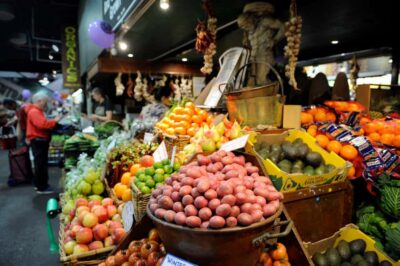
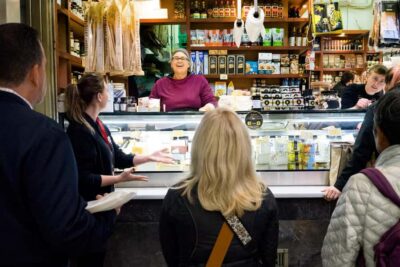
Melbourne Flavors: Queen Victoria Market Food Tour
Read our review →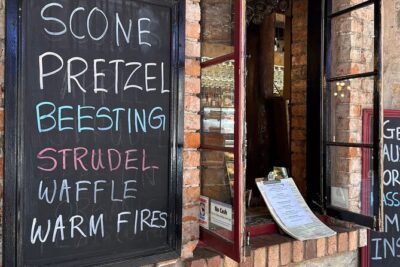
“Discover Hahndorf: Wine, Cheese, Beer, Shops & Lunch Day Trip”
Read our review →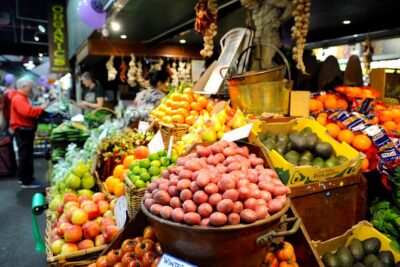
Browse the lists this tour appears in